 +91 93730 08466
 Screen tubes and pipes
 Screen cylinders
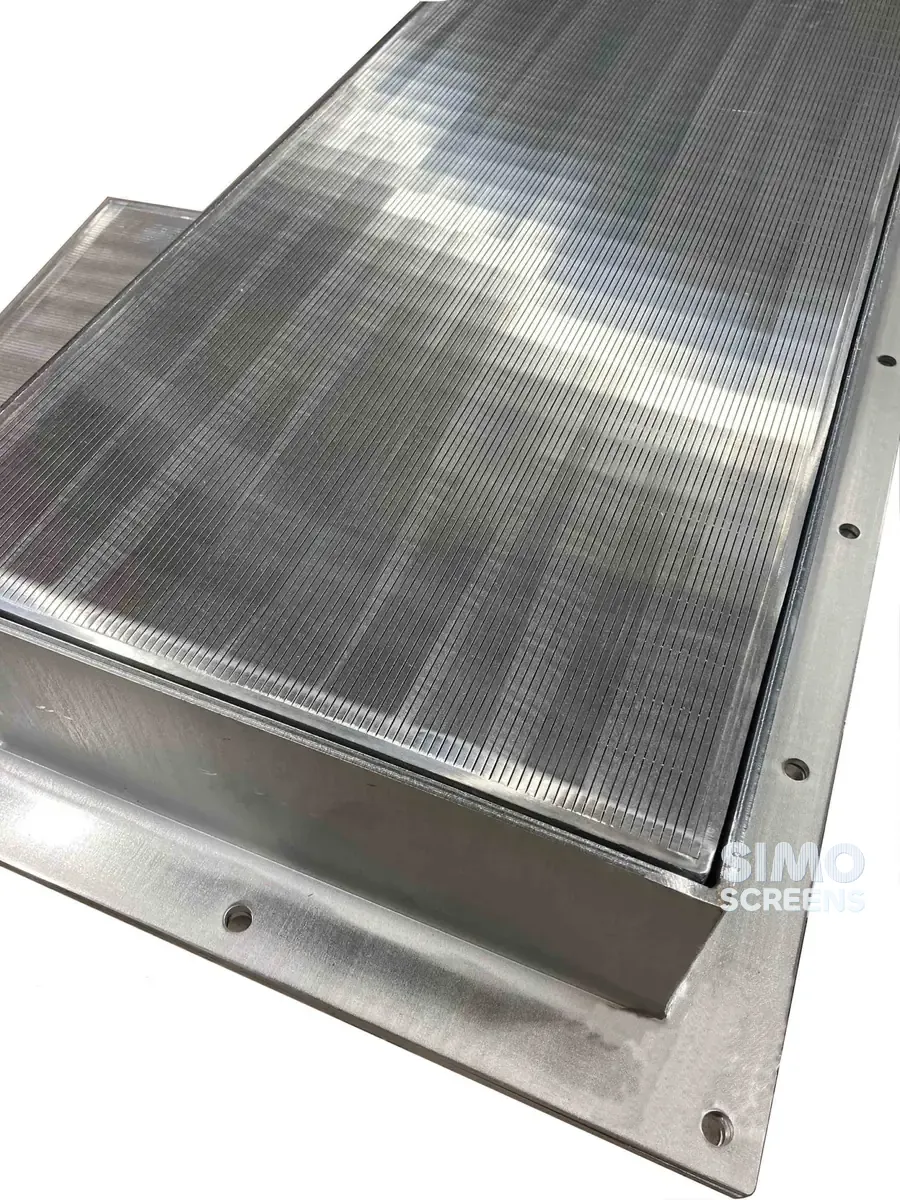
 Flat panels and false bottoms
 Candle filter elements
 Water well screens
 Header and hub laterals
 Filter nozzles
 Resin traps
 Support grids
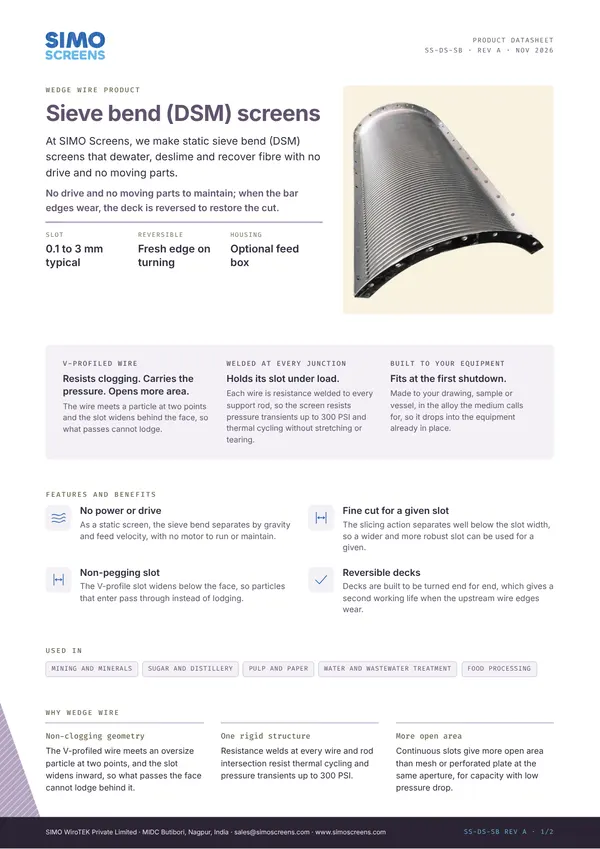
 Sieve bend (DSM) screens
 Centrifuge baskets
 Pressure screen baskets
 Screw press screens
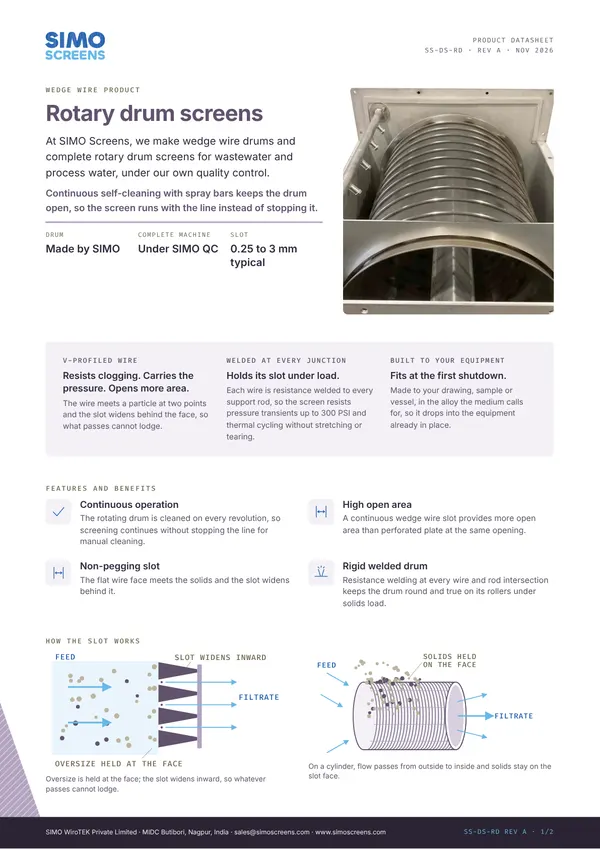
 Rotary drum screens
 Passive intake screens
 Coanda intake screens
 Water and wastewater treatment
 Water wells and groundwater
 Sugar and distillery
 Brewing, malting and beverages
 Food processing
 Mining and minerals
 Oil, gas and petrochemicals
 Chemicals, fertilisers and pharma
 Power generation
 Pulp and paper
 Buildings and drainage
Food and beverage screening applications
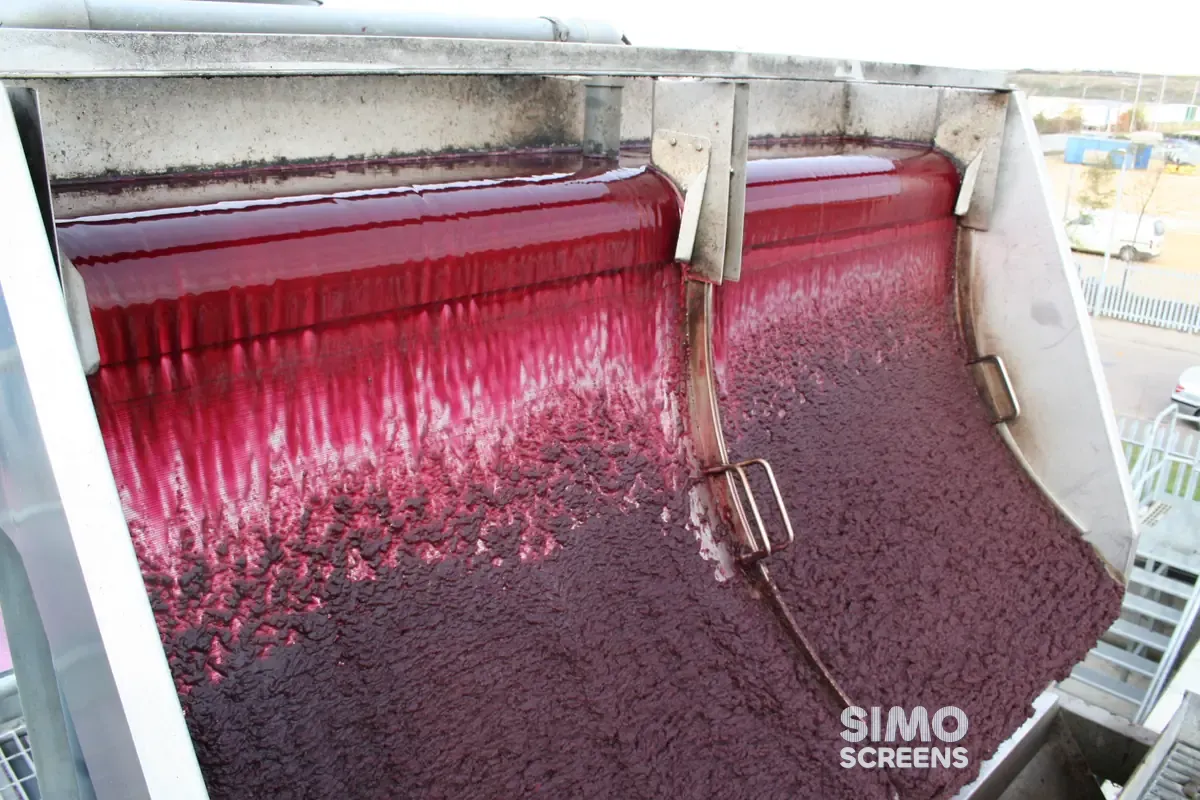
SIMO Screens supplies wedge wire screens for food and beverage plants that screen wet, sticky and fibrous material every shift and then wash the screens down. In this service a screen must separate cleanly, resist corrosion from cleaning chemicals and leave no crevices where product can collect.
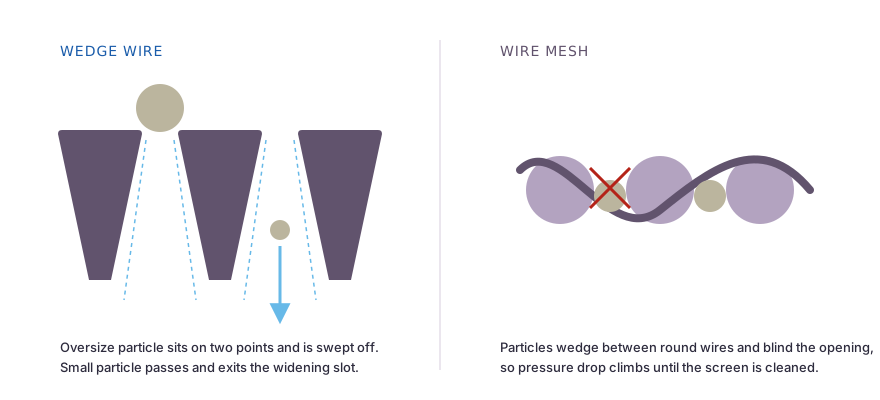
Woven mesh blinds with peel, pulp and starch fibre, and its crossing wires hold residue between washdowns. Perforated plate has a low open area and loses capacity as the holes fill. Both need frequent stops for cleaning, and torn mesh can release wire fragments into the product. Wedge wire performs better because of its slot geometry: the smooth, flat-topped V-wire lets fibre slide across the face, while the slot widens inward so that fines pass instead of wedging in the opening.
Swipe to see the full drawing.
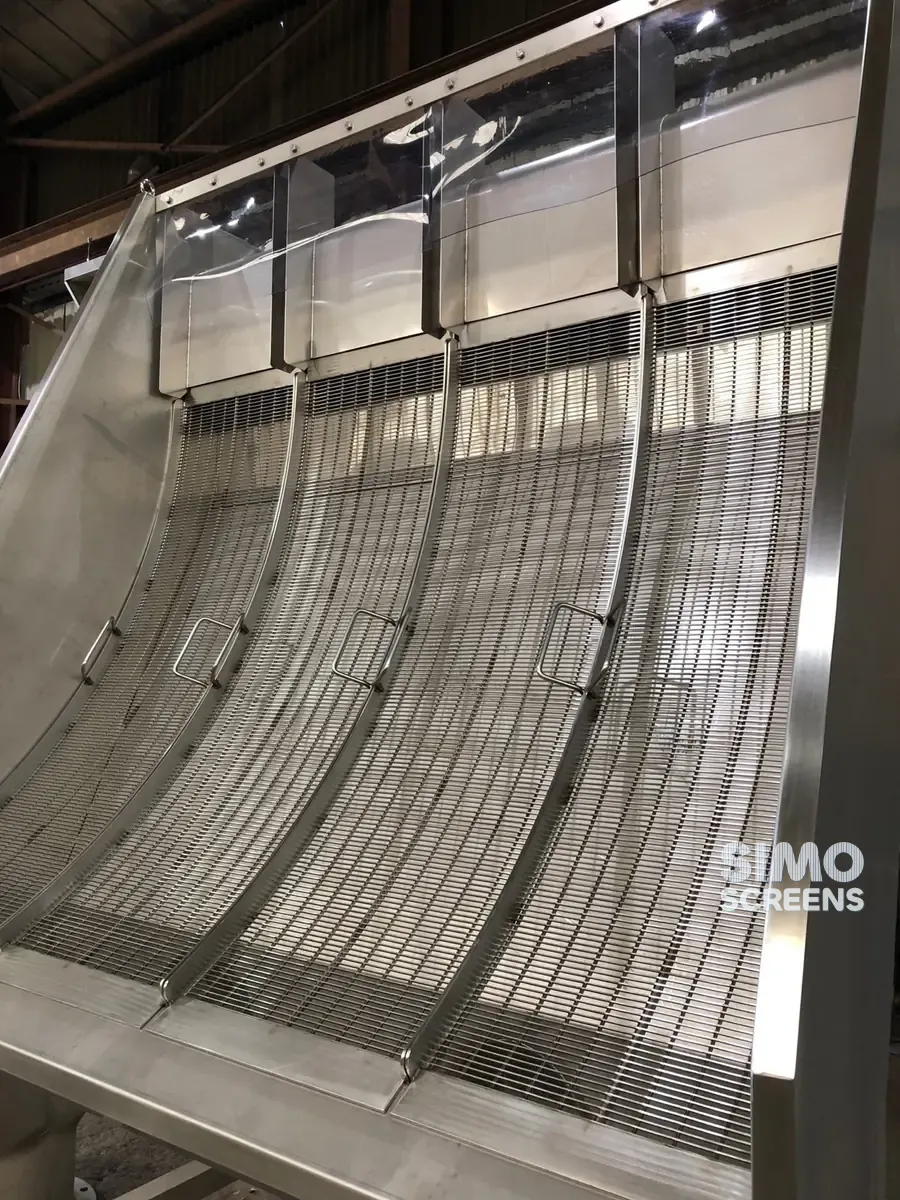
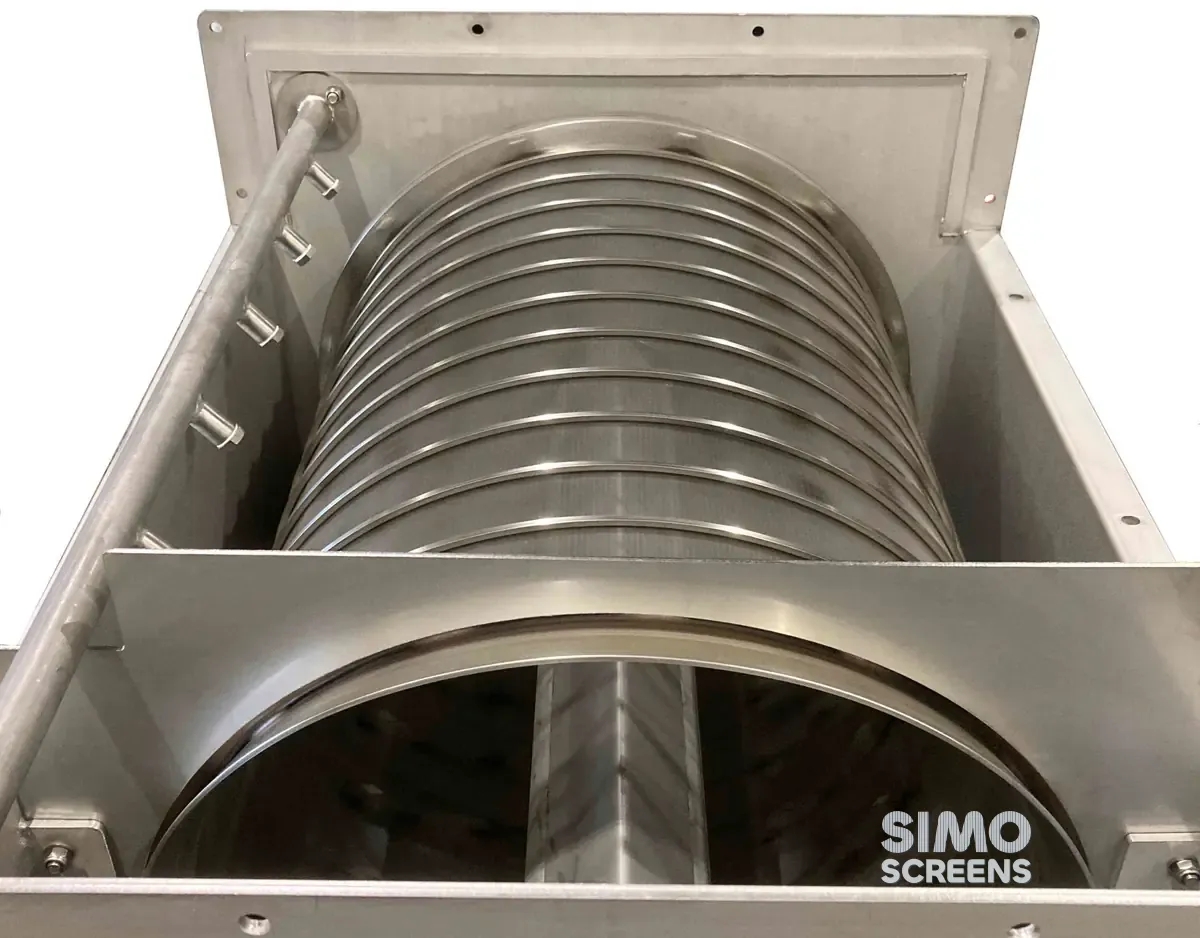
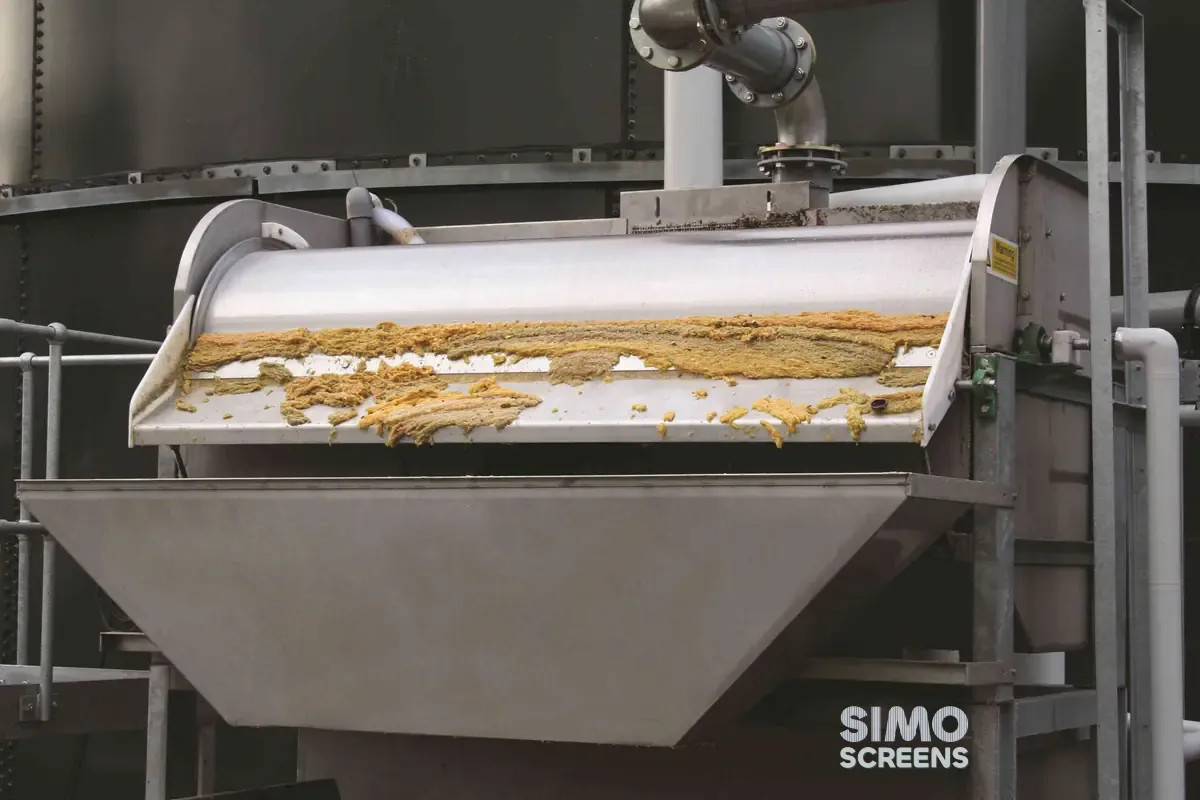
Raw material is washed on arrival, and vegetable, fruit and tuber wash water is screened by rotary drum screens or sieve bends so that the water can be reused or treated. In starch and corn wet milling, the fibre washing stages use sieve bends to separate fibre from the starch slurry. A sieve bend also serves as a beverage dewatering sieve, draining juice or process water from pulp, peel and spent solids.
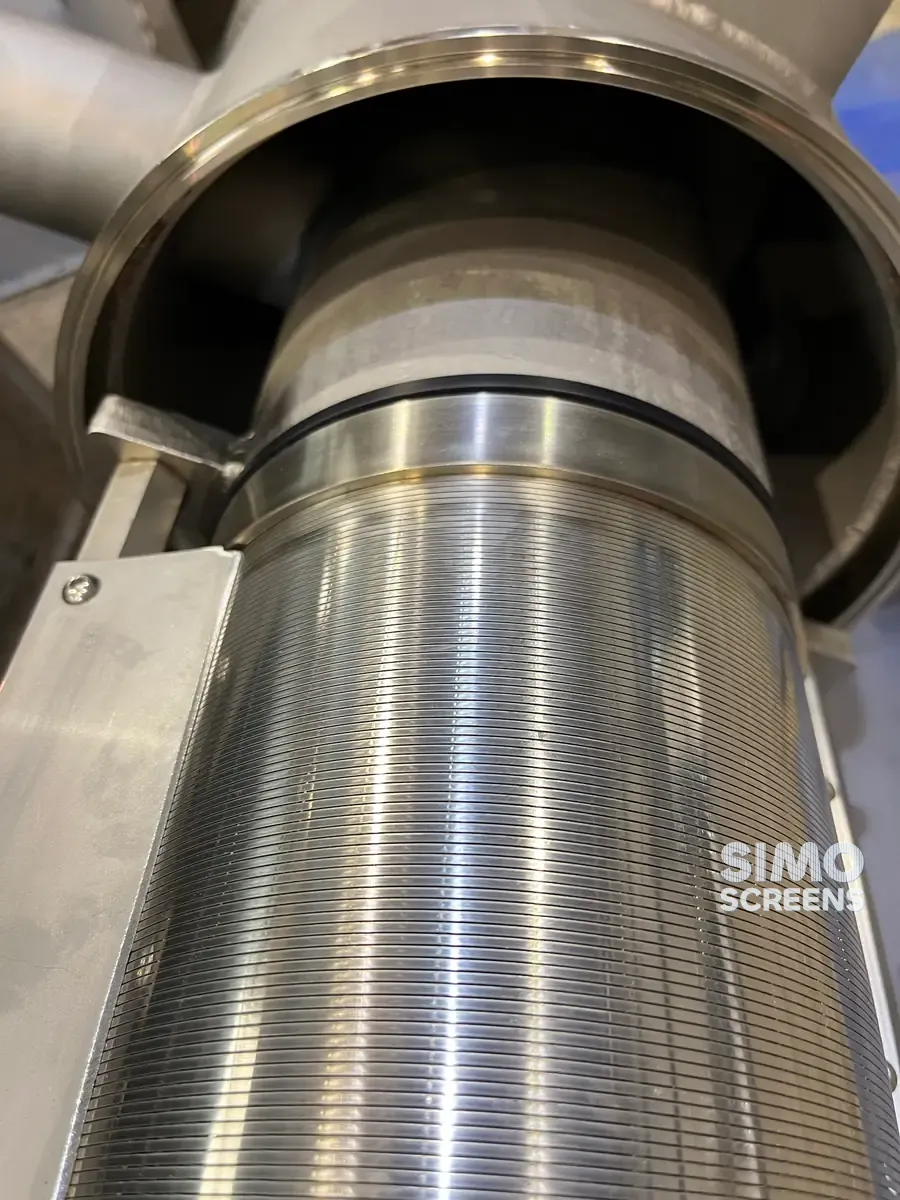
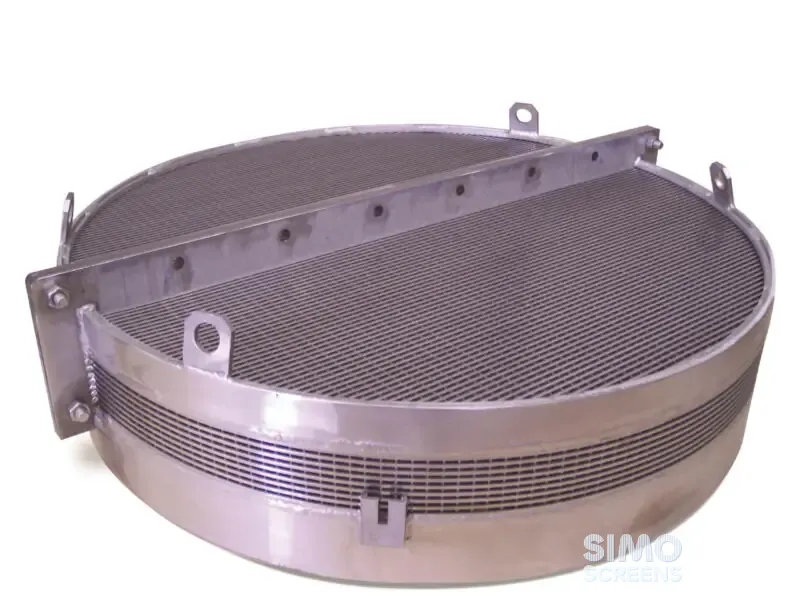
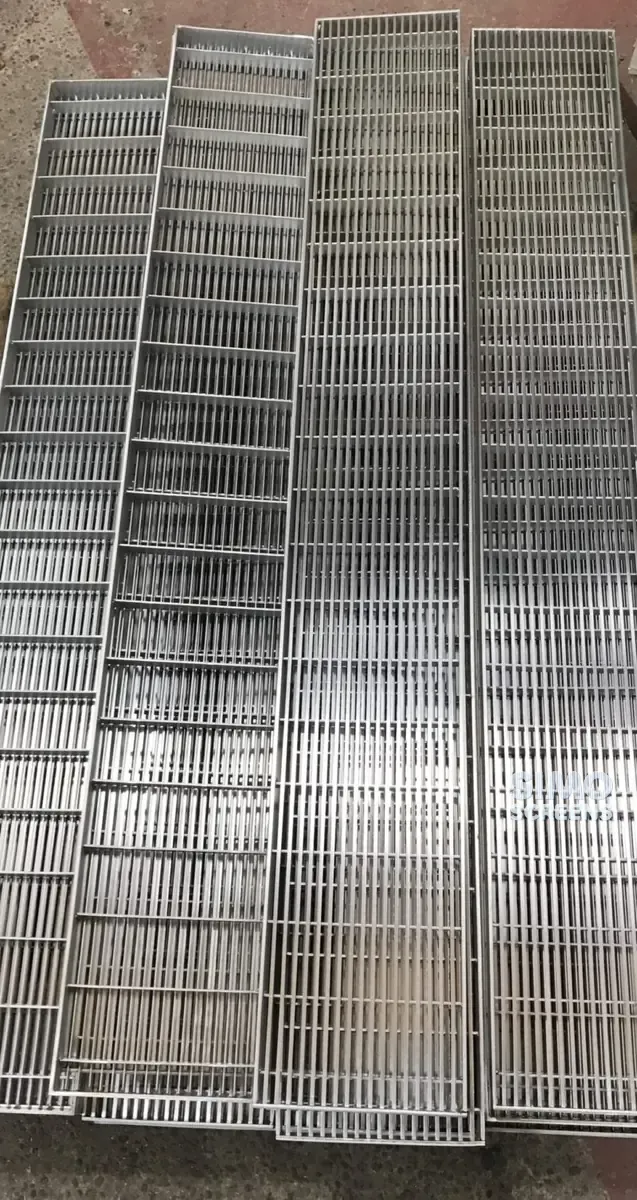
Edible oils and other food liquids pass candle filters or outlet baskets that hold back solids and protect pumps and downstream equipment. Across the plant floor, wedge wire drainage grates cover channels and trench drains, taking washdown water and spills while carrying foot and trolley traffic.
Swipe to see the full drawing.
Equipment and screen selection for food processing
| Equipment | Screen function | SIMO product |
|---|---|---|
| Starch and corn wet milling fibre washing | Separates fibre from starch slurry across a static curved screen | Sieve bend screens |
| Vegetable, fruit and tuber wash water | Removes peel, pulp, soil and fines so that water can be reused or treated | Rotary drum screens, sieve bend screens |
| Beverage pulp, peel and spent solids | Drains juice or process water from the solids by gravity | Sieve bend screens |
| Process water and effluent screening | Removes solids from process water ahead of the ETP | Rotary drum screens, sieve bend screens |
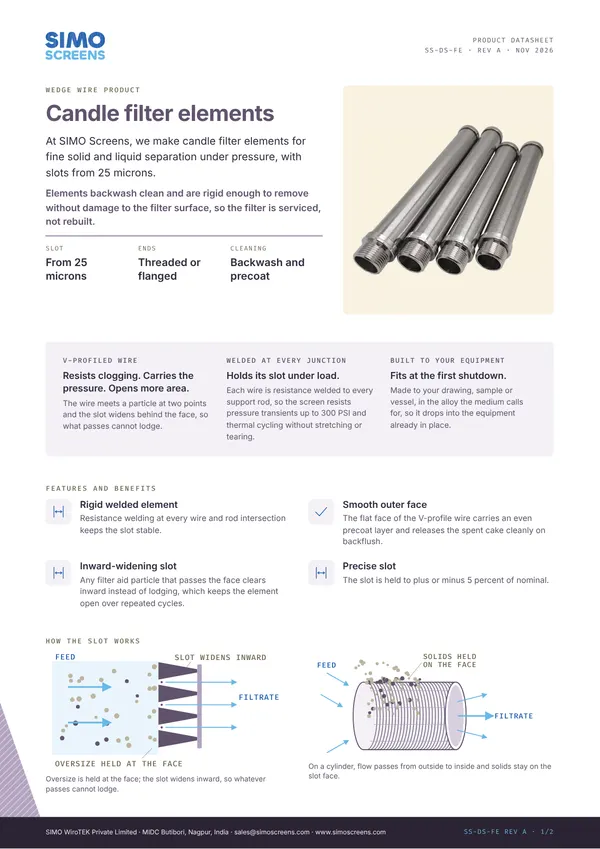
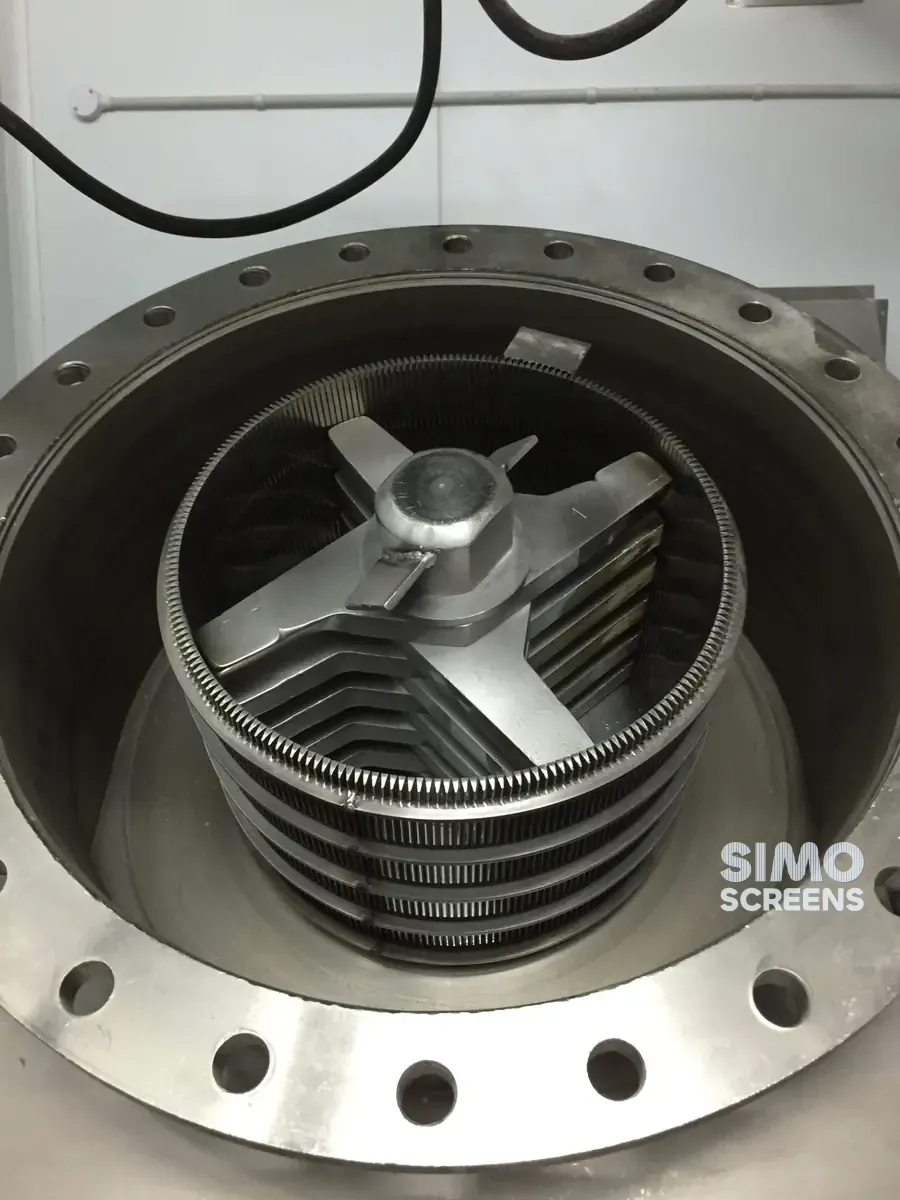
| Edible oil and food liquid filtration | Holds back solids or filter aid while clear liquid passes | Candle filter elements |
| Pump and line protection | Captures solids before they reach pumps, valves and nozzles | Outlet baskets and collectors |
| Food plant floor drainage and trench drains | Covers channels, carries traffic and passes washdown water | Drainage grates |
Swipe sideways to see the whole table.
Materials and design considerations for food grade screens
The points below reflect general engineering practice. The design for each process is confirmed during engineering review.
Slot and orientation
The slot follows the smallest solid that must be retained or removed. For fibrous solids the slots are usually set across the flow, so that fibres bridge the wires and slide off. A sieve bend separates at a size smaller than its slot width, which is taken into account when the slot is selected. Open area follows from the slot and wire width, Open area (%) = Slot x 100 / (Slot + Wire width), and options can be compared in the open area calculator.
Material
SS 304 suits most food processing applications. SS 316L is the usual choice for salt brines, acidic products and stronger cleaning chemicals, and Duplex 2205 may be considered where chloride levels are high.
Hygiene and cleaning
Welded construction avoids the crevices of crimped or clamped joints, and screens should be easy to reach and remove for washdown. A sieve bend can often be reversed to present fresh wire edges as the upstream edges wear. The cleaning and maintenance guide covers routine care.
Drainage grates
Floor grates in food plants are designed for the traffic, whether foot, trolley or forklift, and the load class is agreed per order against the buyer's specification. Narrow slots reduce trip hazards and hold back more solids from the drain.
SIMO Screens capability for food processing
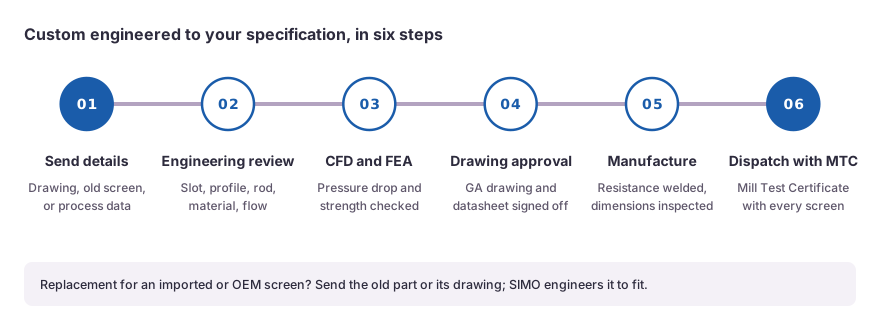
Each screen is engineered to the customer's line, flow and layout, and the custom engineering process moves through engineering review and drawing approval before production. Complete rotary drum screen machines are supplied on request: SIMO makes the wedge wire drum, while the drive, frame, tank and spray bar are sourced and assembled under SIMO quality control.
Profile wire is formed in house to SIMO profile codes and resistance welded to the support rods at every intersection. Slot width is checked with feeler gauges at set-up, during the run and at the end of each screen, against a standard tolerance of plus or minus 5 percent of nominal. FEA is used to check large sieve bends and grates under load.
Every screen ships with a Mill Test Certificate, and the dimensional inspection report is supplied on request. Production is at the SIMO works in MIDC Butibori, Nagpur, under an ISO 9001:2015 quality system.
What to send for a quotation
- Equipment and application: fibre washing, wash water, pulp dewatering, liquid filtration, pump protection or floor drainage.
- Flow rate and solids content, with a description or sieve analysis of the solids.
- Product or liquid, temperature and pH, and the cleaning chemicals you use.
- Your current screen type and slot or hole size, and any problem you see today.
- Dimensions of the existing screen, filter housing or drain channel.
- For grates: channel width and length, and the traffic and load class.
- Material preference and any hygiene or surface finish specification.
- Quantity.

 Upload a drawing