 +91 93730 08466
 Screen tubes and pipes
 Screen cylinders
 Flat panels and false bottoms
 Candle filter elements
 Water well screens
 Header and hub laterals
 Filter nozzles
 Resin traps
 Support grids
 Sieve bend (DSM) screens
 Centrifuge baskets
 Pressure screen baskets
 Screw press screens
 Rotary drum screens
 Passive intake screens
 Coanda intake screens
 Water and wastewater treatment
 Water wells and groundwater
 Sugar and distillery
 Brewing, malting and beverages
 Food processing
 Mining and minerals
 Oil, gas and petrochemicals
 Chemicals, fertilisers and pharma
 Power generation
 Pulp and paper
 Buildings and drainage
 Datasheet

Wedge wire screen panels overview
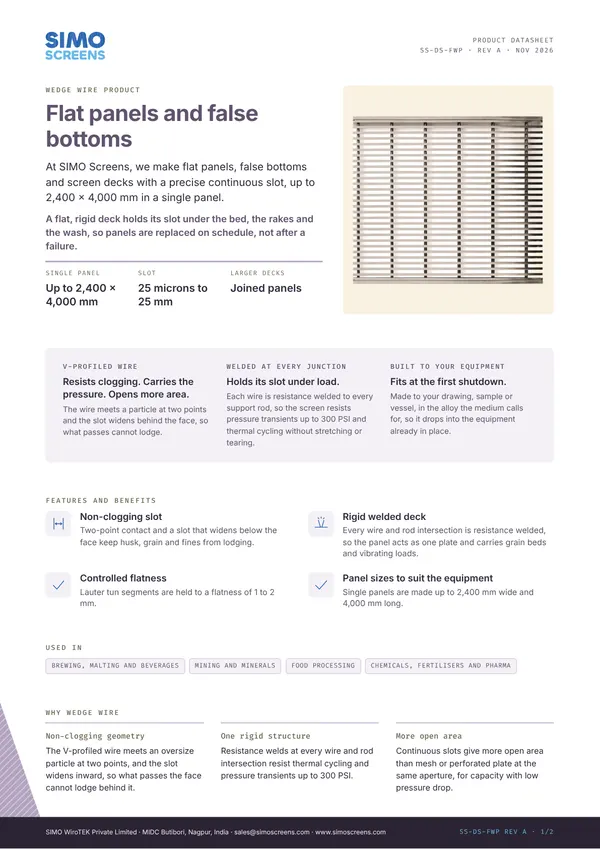
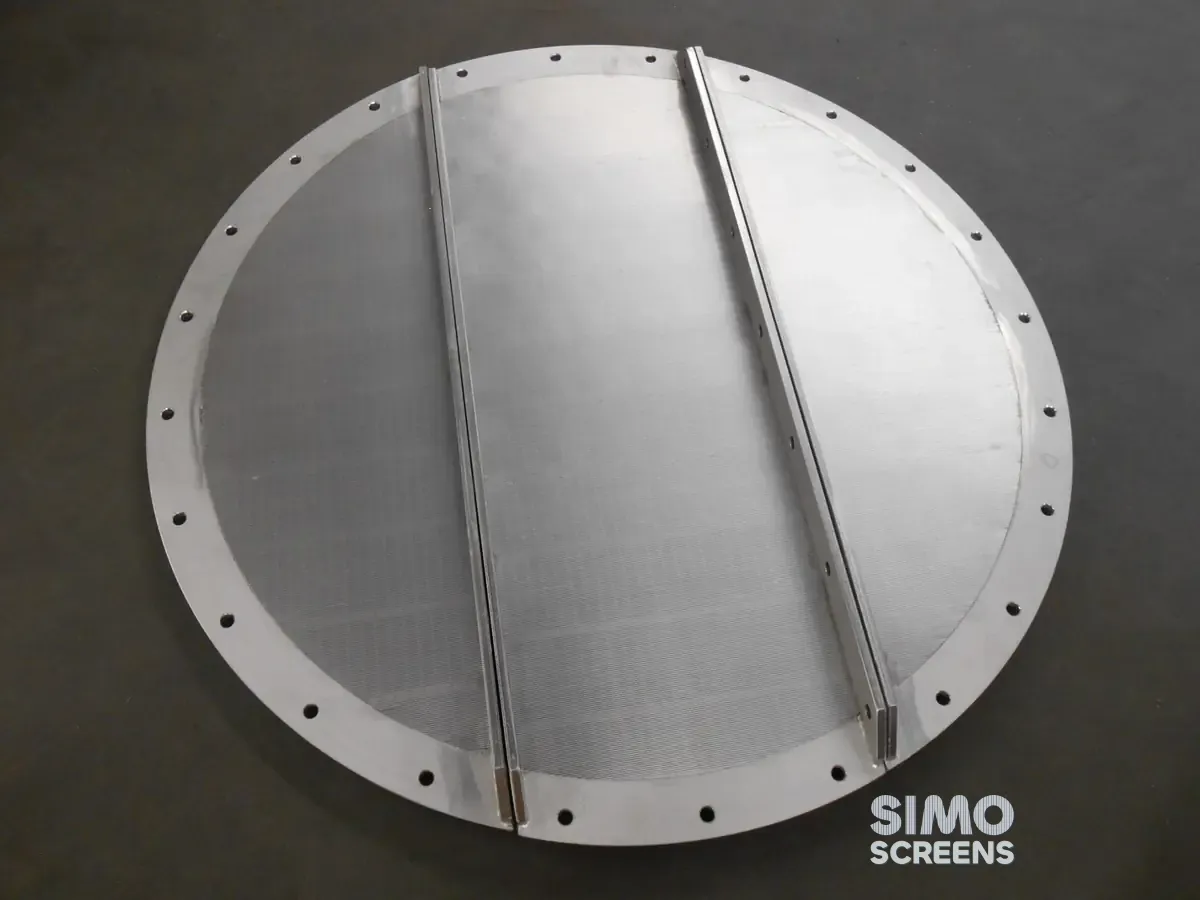
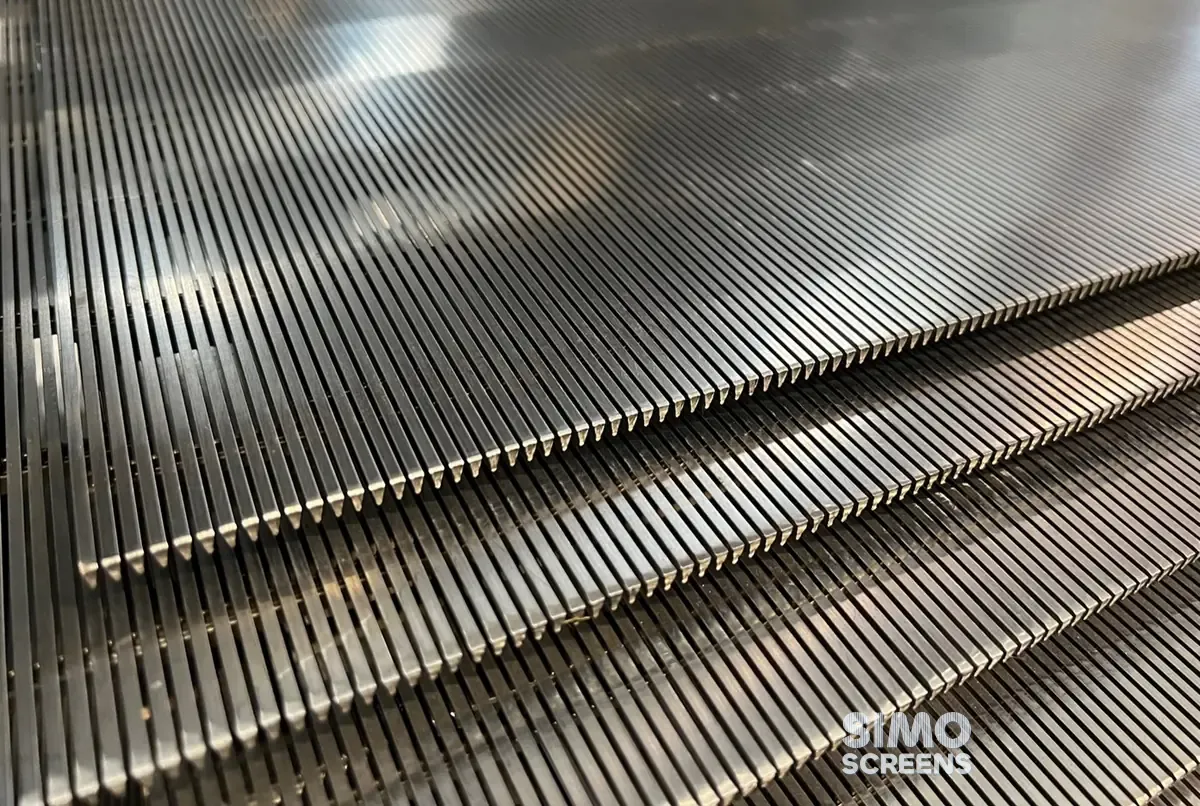
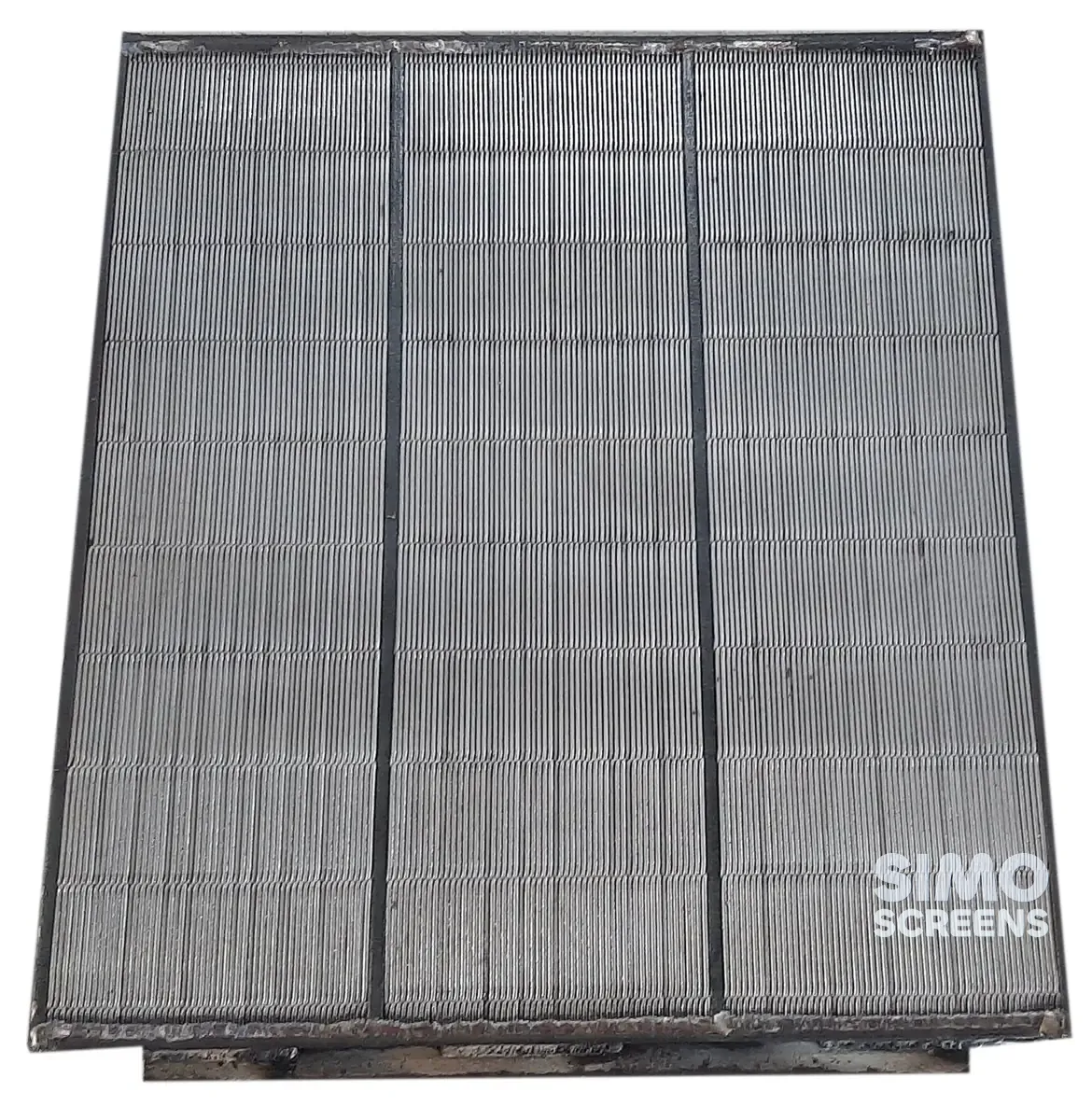
SIMO Screens wedge wire screen panels are rigid, welded flat decks with continuous parallel slots formed by V-profile wire on support rods. They serve as lauter tun and mash tun false bottoms, malt germination and kiln floors, filter floors in process vessels, and drain and rinse, dewatering and sizing decks on vibrating screens.
On a flat deck, woven mesh tends to tear under abrasive load and perforated plate tends to blind. A wedge wire panel keeps its open area and carries the bed load, and it cleans with a simple spray.
Features and benefits
- Non-clogging slot. Two-point contact and a slot that widens below the face keep husk, grain and fines from lodging, which holds steady run-off and drainage between cleanings.
- Rigid welded deck. Every wire and rod intersection is resistance welded, so the panel acts as one plate and carries grain beds and vibrating loads without distortion.
- Controlled flatness. Lauter tun segments are held to a flatness of 1 to 2 mm, so that joints sit level on the supports and the grain bed lies evenly across the vessel.
- Panel sizes to suit the equipment. Single panels are made up to 2,400 mm wide and 4,000 mm long, while larger decks are engineered as joined panels sized to pass the manway.
- Matched replacements. Replacement panels are made to the original outline and clamping arrangement from a sample or drawing, so they fit the existing machine.
Applications
Brewing, malting and beverages
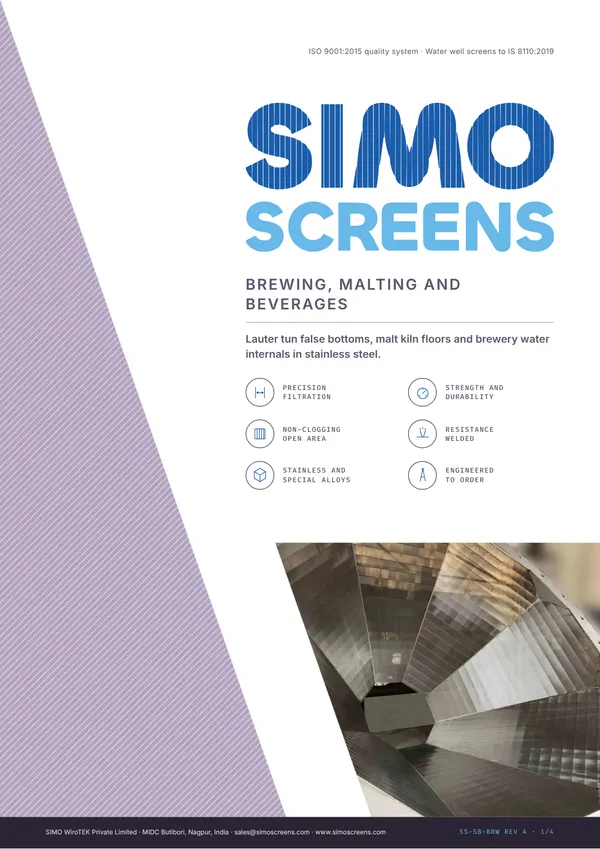
- Lauter tun and mash tun false bottoms, most commonly with a 0.7 mm slot and from 0.5 to 1 mm according to the mill and grist. See lauter tun false bottoms.
- Malt steeping, germination and kiln floors with slots from about 0.7 mm upward, where air must pass evenly through a deep grain bed. See malt kiln and germination floors.
Mining and minerals
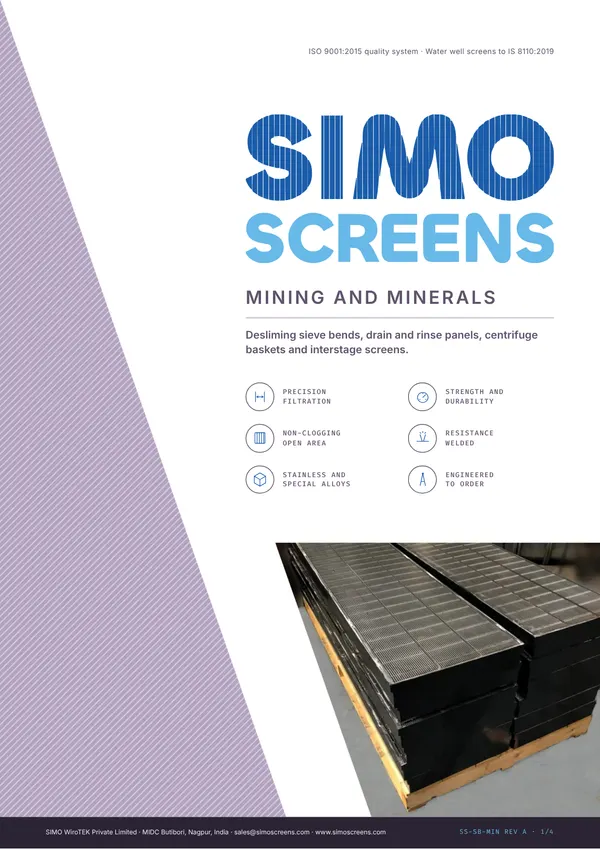
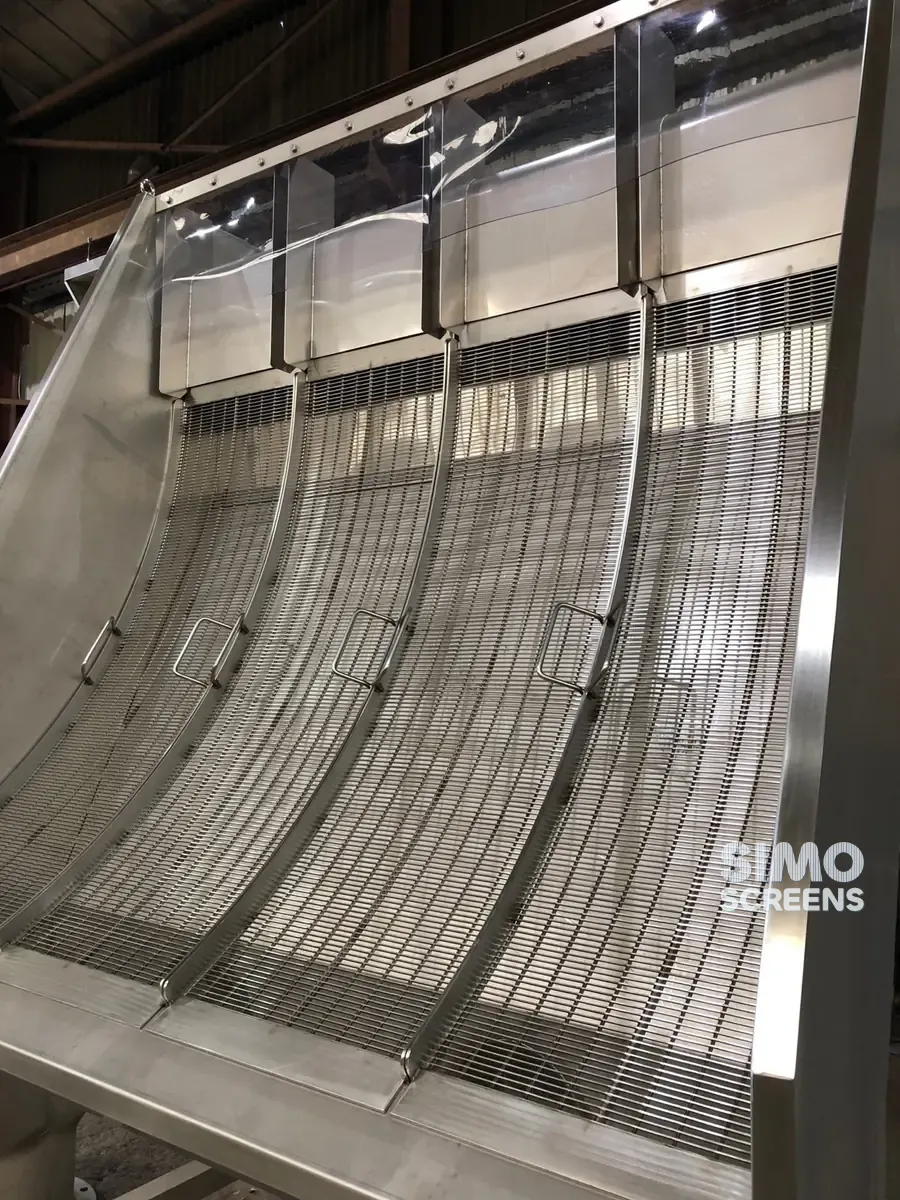
- Drain and rinse panels on vibrating screens in coal washeries, typically with a 0.5 to 1 mm slot and 1.5 mm where specified. See coal washery screens.
- Dewatering and sizing decks, and iron ore and sand classification decks.
Food, chemicals and pharmaceuticals
- Dewatering and drainage decks in food processing, and filter floors in process vessels, including Nutsche filter dryers.
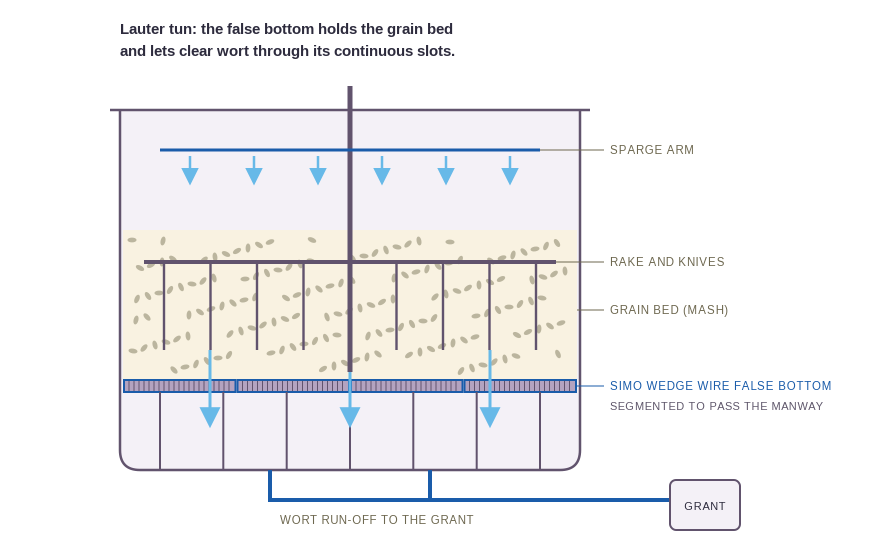
Swipe to see the full drawing.
Construction and specifications
Profile wires run parallel and are resistance welded to support rods set underneath at right angles. Flat panels are usually cut from a welded cylinder and flattened, then fabricated to suit the equipment:
- Frames in flat bar or angle, with holes or clamping edges to match the machine.
- Segments shaped to a round vessel and sized to pass through the manway.
- Rolled or curved sections where the deck follows a radius.
- Fixings to match the screen machine: side clamps, bolted panels and hook strips, or support members and lock pins for polyurethane modular decks.
Deeper flat rods such as F123, F203 and F253 carry heavy grain beds over wider spans, and for the heaviest loads the panel can sit on a separate support grid.
| Parameter | SIMO range |
|---|---|
| Slot opening | 25 microns (0.025 mm) to 25 mm |
| Slot tolerance | Plus or minus 5% of nominal, stated on the drawing |
| Single panel size | Up to 2,400 mm wide and 4,000 mm long |
| Flatness | 1 to 2 mm on lauter tun segments |
| Profile wire | Light, standard, heavy duty or custom: 12SB to 56SB |
| Support rods | Q23, Q35, Q55, 35SB, F123, F203, F253, round 120, round 140 |
| Materials | SS 304, SS 316L, Duplex 2205, Super Duplex 2507, Hastelloy, Monel |
| Slot orientation | Across or along the direction of flow or material travel |
| Construction | Resistance welded at every wire and rod intersection |
| Finishes | Pickling, passivation or electropolishing through an approved agency, on request |
Swipe sideways to see the whole table.
Materials
SS 304 suits most brewing, malting and food applications, and SS 316L is selected where chlorides or cleaning chemicals are a concern. In mineral processing abrasion usually governs, so the profile wire is selected heavier before the alloy is upgraded. Duplex grades add strength and corrosion resistance where both matter.
Engineering and quality
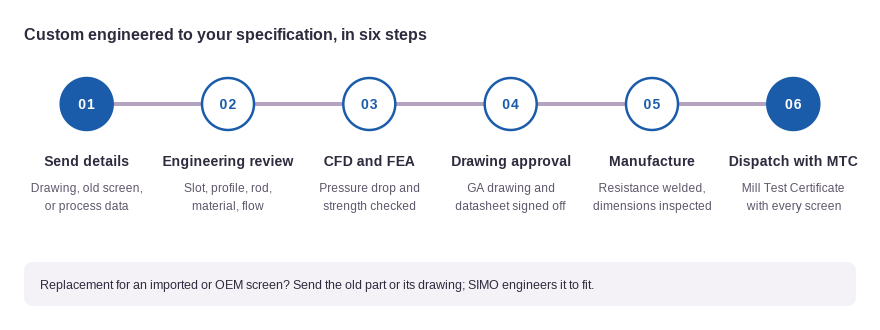
Each design is checked for slot, open area, support rod depth and span against the bed load, with FEA for structural validation of custom designs. The open area calculator compares slot and wire options. Replacement false bottoms are made from a sample, a drawing, the general arrangement drawing (GAD) or measurements taken at a site visit, and every design is issued for approval before production.
Slots are checked with feeler gauges at set-up, during the run and at the end of each panel. The final inspection report records the minimum, maximum and mean slot together with flatness and outline dimensions. Panels carry a QR-coded tag with the job number, item and slot, and are laser marked as well where the client requires it. The Mill Test Certificate is standard, and the dimensional inspection report and quality assurance plan are supplied on request.
What to send for a quotation
- Equipment type: lauter tun, mash tun, kiln, germination vessel, Nutsche filter, vibrating screen or other.
- Vessel diameter or deck outline, with a drawing or GAD if available.
- Manway size, if the deck is installed in a closed vessel.
- Slot required, or the particle size to retain.
- Bed depth or load on the deck, and the support spacing below it.
- Fixing method: side clamps, bolted, hook strips, loose laid or welded.
- Process fluid, temperature and cleaning chemicals.
- Material grade and the documents you require.
 Upload a drawing