 +91 93730 08466
 Screen tubes and pipes
 Screen cylinders
 Flat panels and false bottoms
 Candle filter elements
 Water well screens
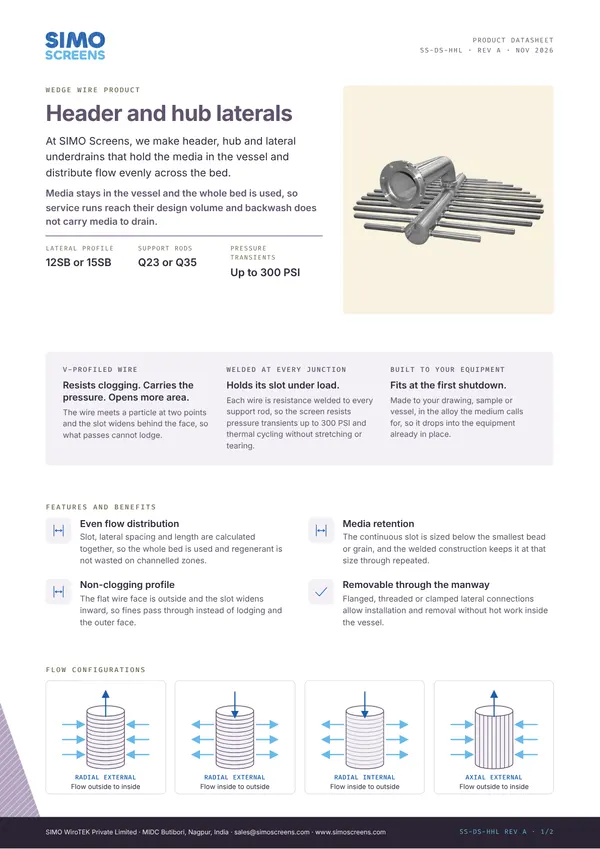
 Header and hub laterals
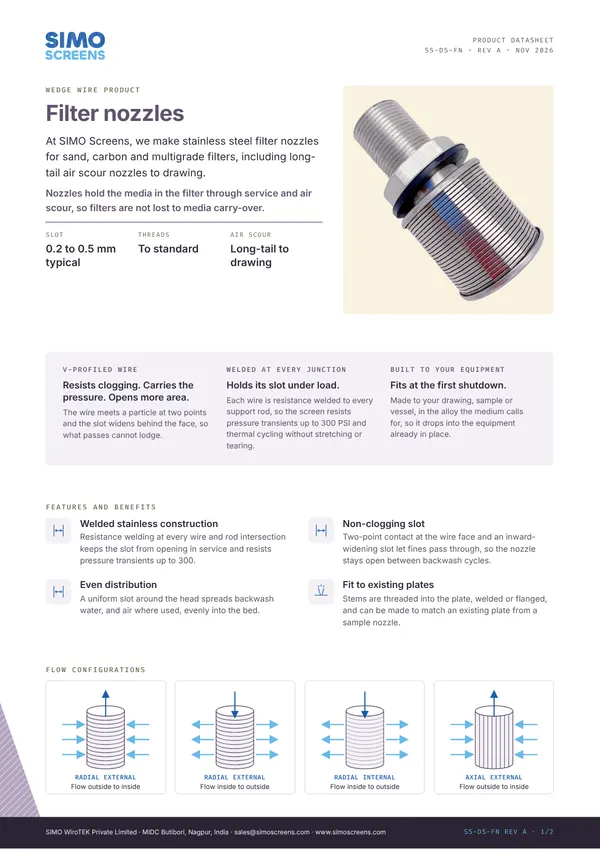
 Filter nozzles
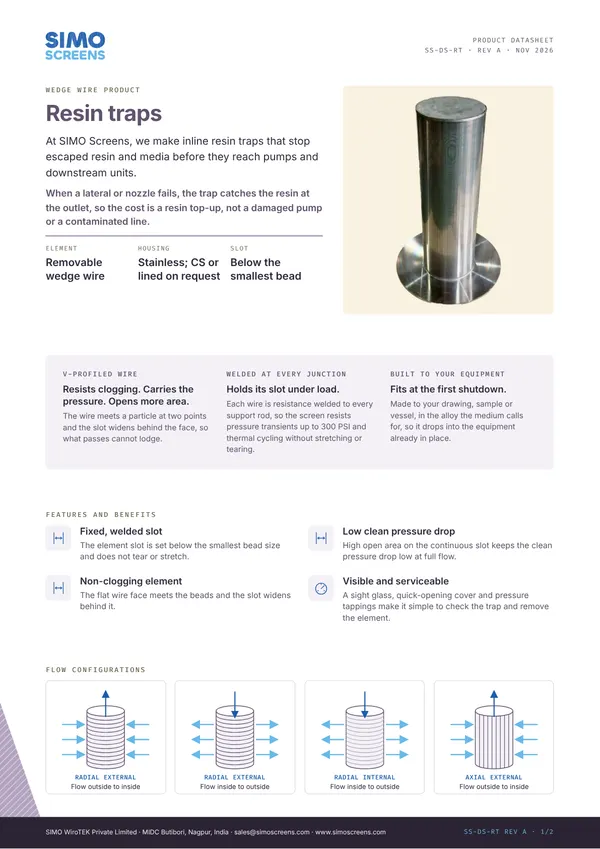
 Resin traps
 Support grids
 Sieve bend (DSM) screens
 Centrifuge baskets
 Pressure screen baskets
 Screw press screens
 Rotary drum screens
 Passive intake screens
 Coanda intake screens
 Water and wastewater treatment
 Water wells and groundwater
 Sugar and distillery
 Brewing, malting and beverages
 Food processing
 Mining and minerals
 Oil, gas and petrochemicals
 Chemicals, fertilisers and pharma
 Power generation
 Pulp and paper
 Buildings and drainage
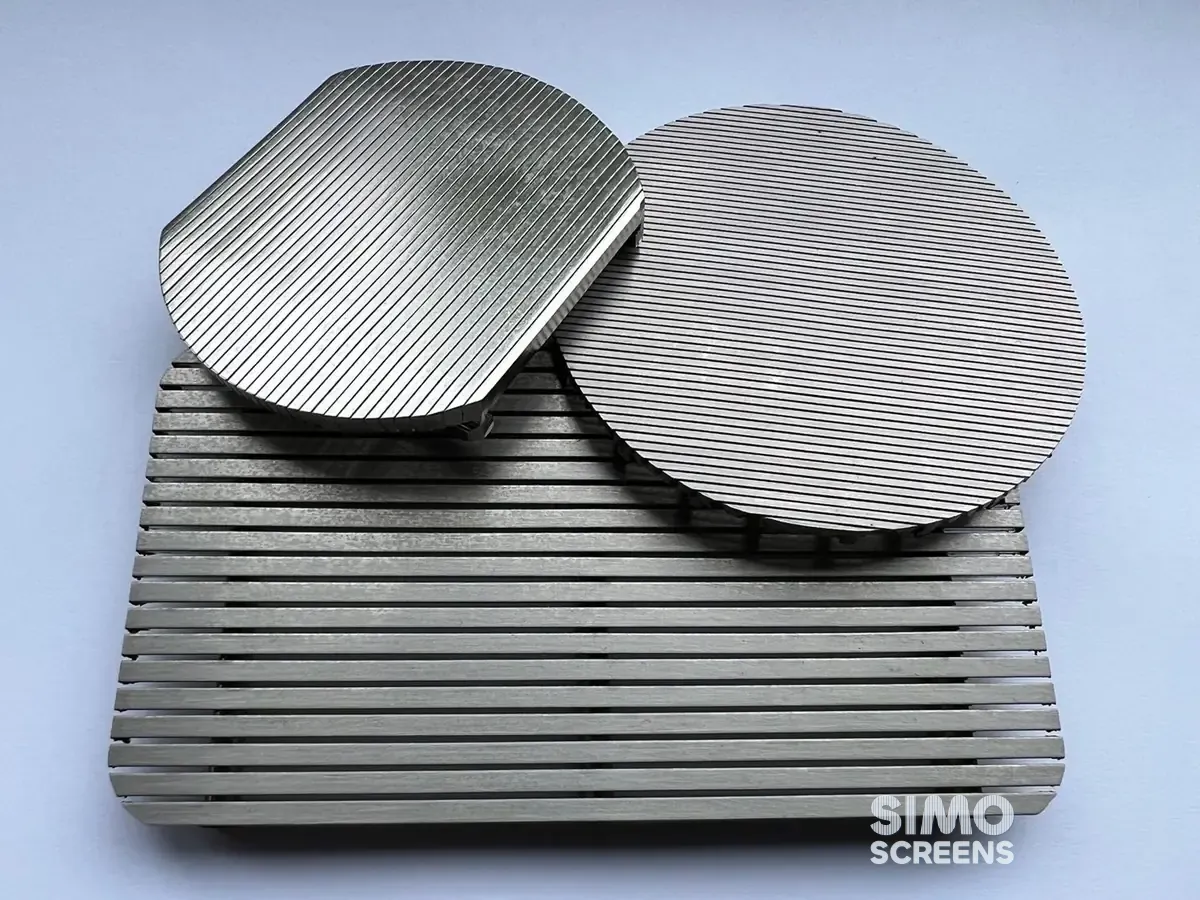
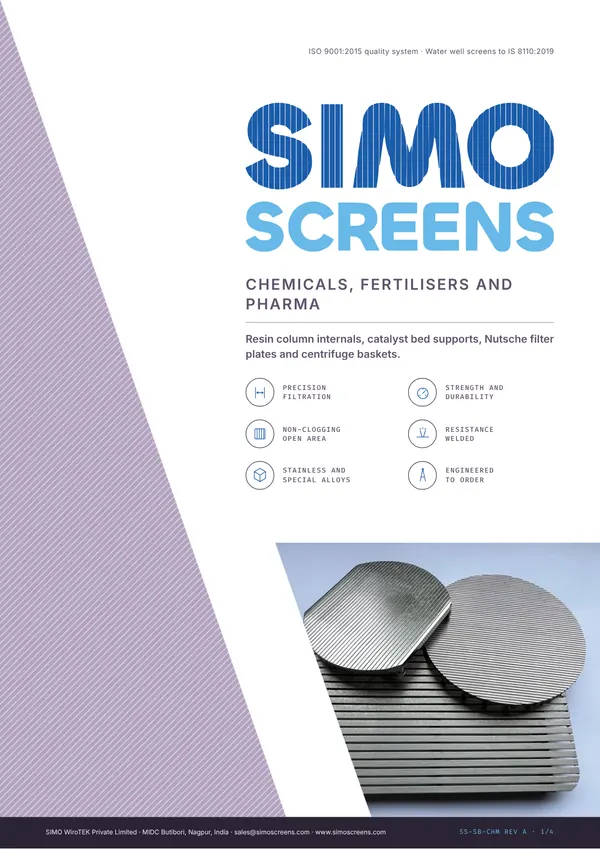
Chemical, fertiliser and pharmaceutical screening applications
SIMO Screens supplies wedge wire screens for chemical, fertiliser and pharmaceutical plants, where they retain resin, catalyst or crystals in acids, alkalis, solvents and chloride solutions. In this service corrosion usually limits screen life before wear does, so material selection and fully welded construction carry as much weight as slot size.
A screen in the wrong material pits, cracks or thins, and media escapes into the product. In a resin column this means lost resin and contaminated product, while in a packed bed a failed support allows the bed to slump and channel. Woven mesh blinds with crystals and is difficult to clean between batches, and crimped or bonded joints can loosen under thermal cycling and chemical attack. Wedge wire provides a rigid, welded screen with a continuous slot that widens inward, so crystals and fines pass rather than blinding it.
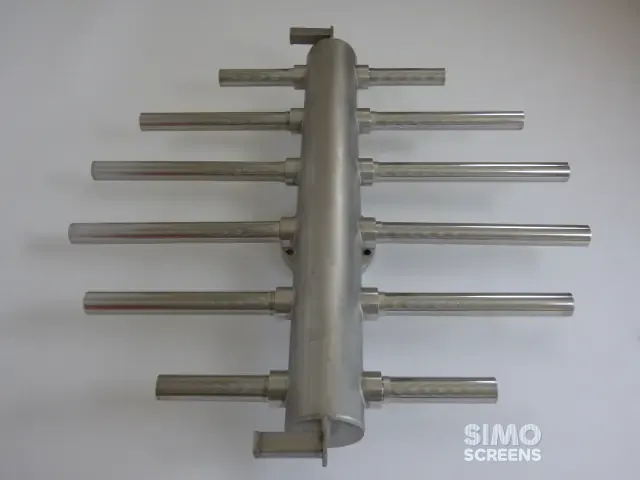
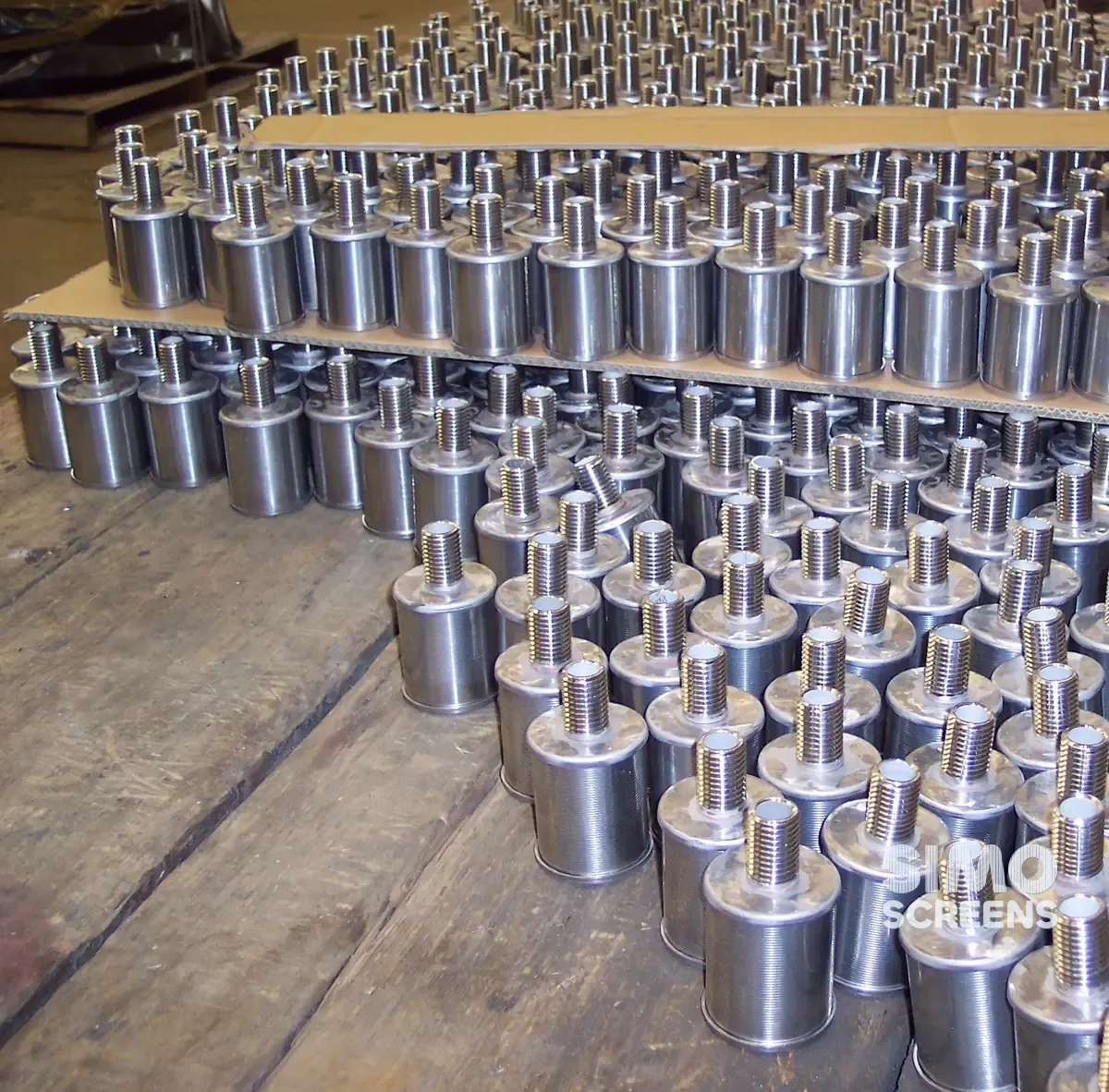
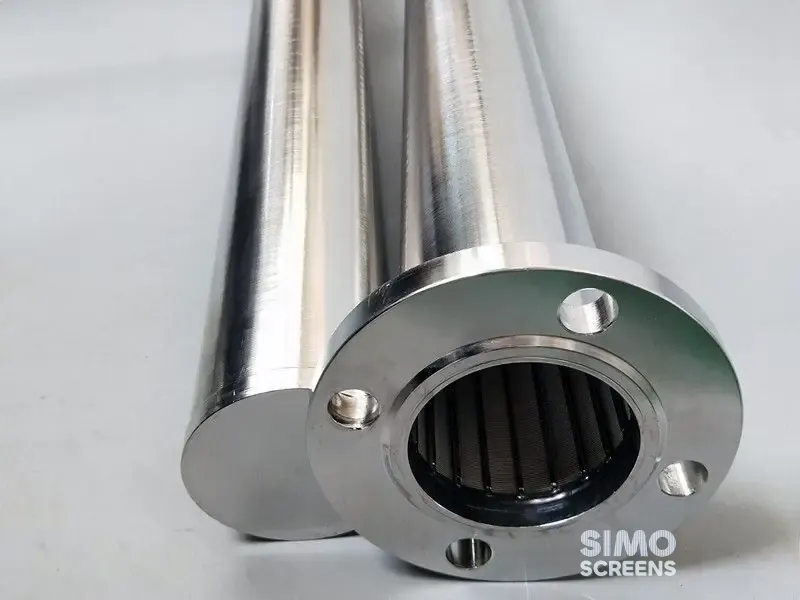
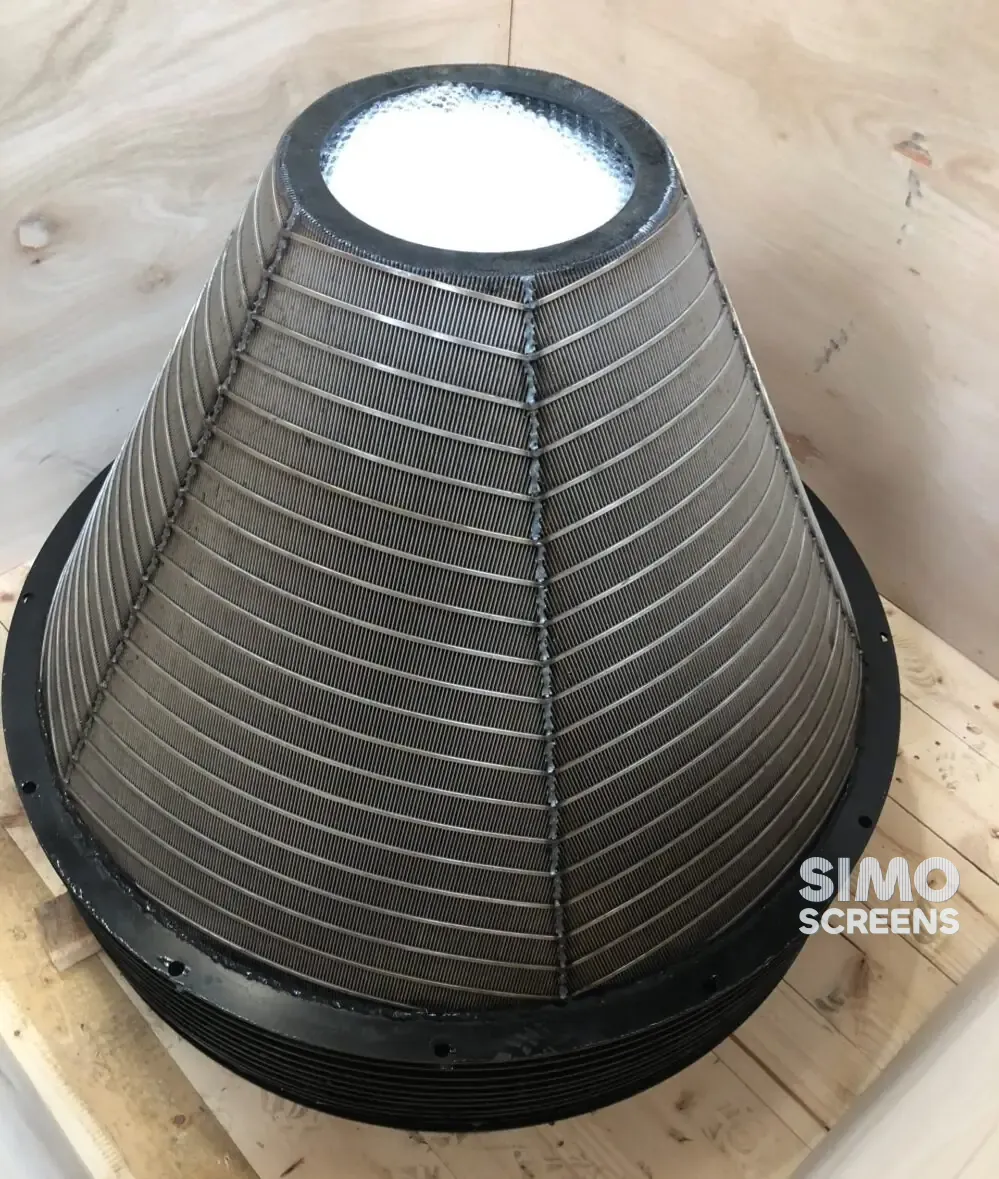
Process water and product purification run through ion exchange and resin columns, where hub and lateral assemblies distribute and collect flow and resin traps protect the downstream lines. Reactors and absorbers use support grids under catalyst and packed beds. Crystallisers feed centrifuges in which a wedge wire basket holds the crystal cake while the mother liquor drains. Fertiliser plants add large DM plants for boiler feed water, with the same laterals, resin traps and support grids.
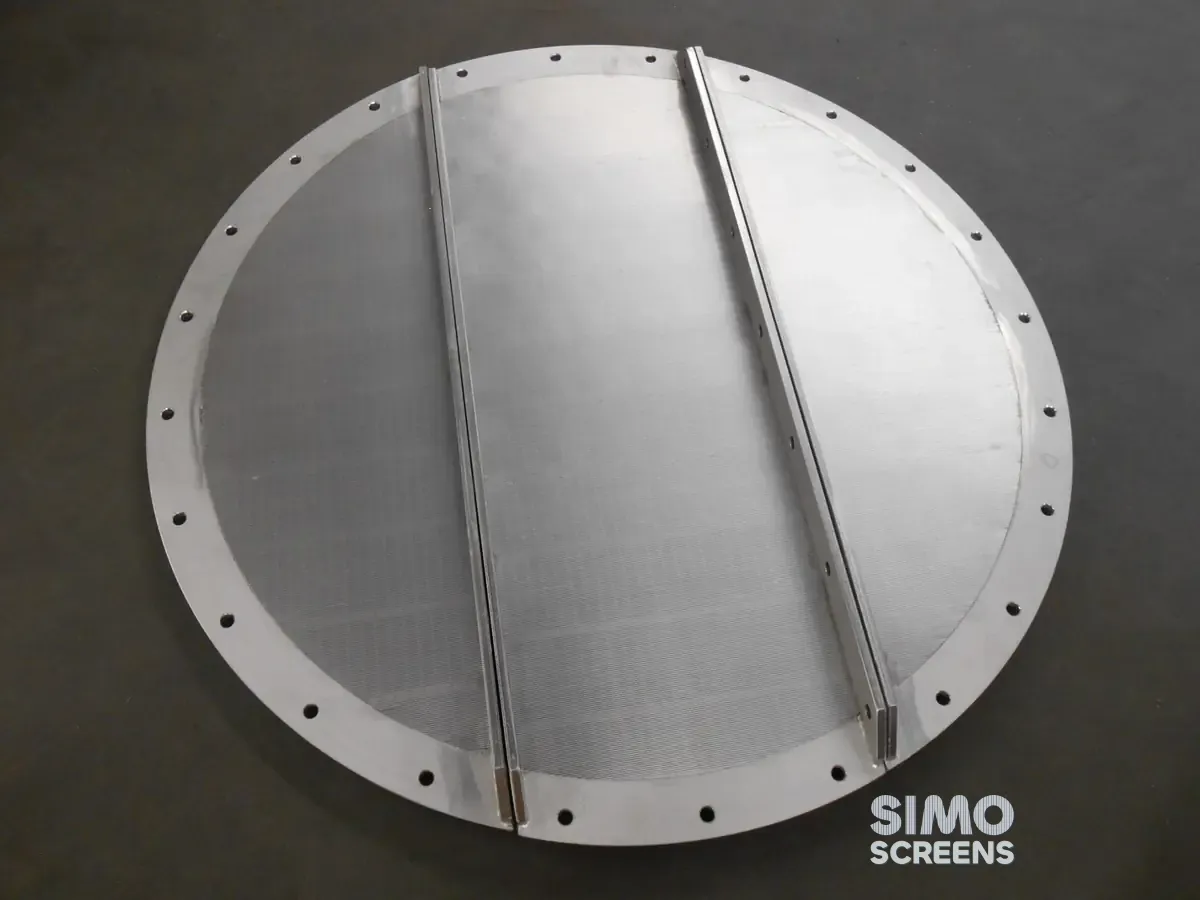
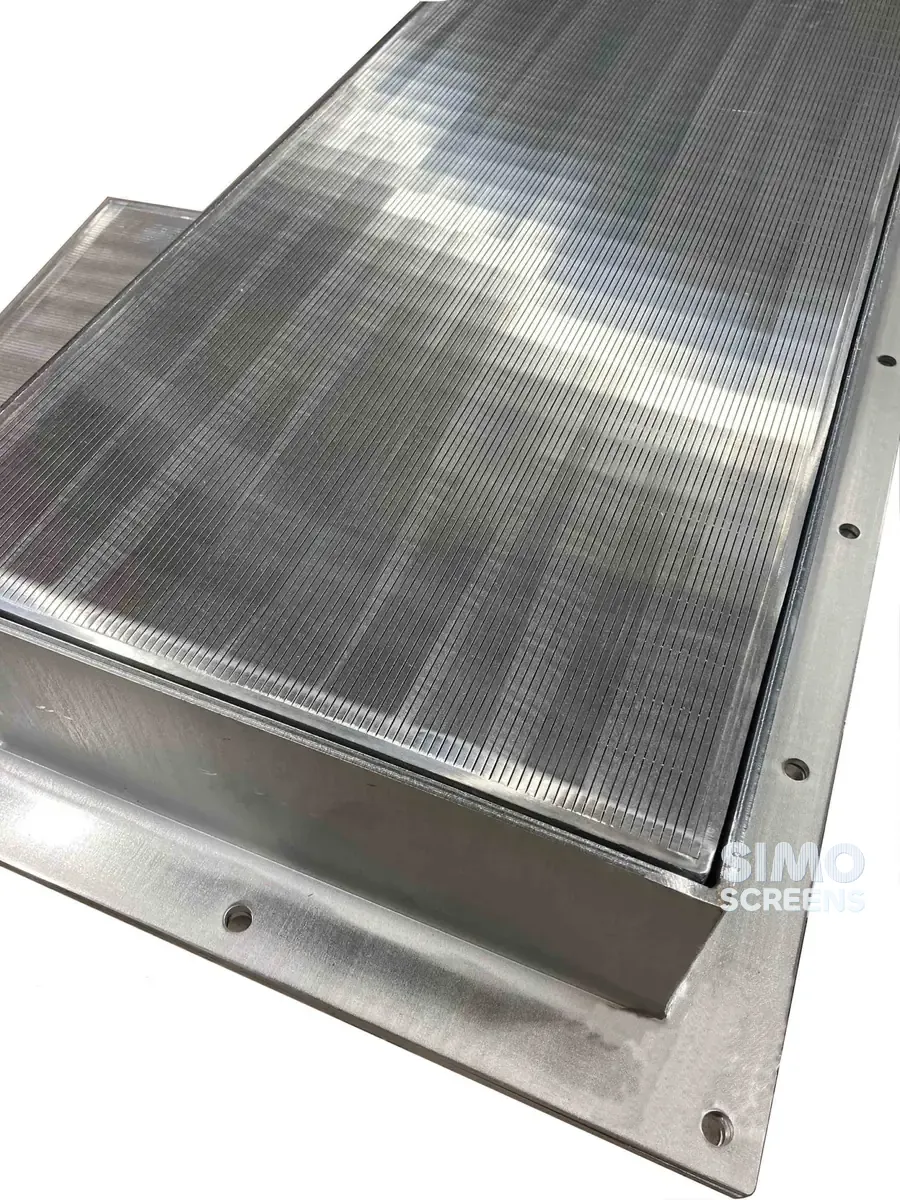
In pharmaceutical and fine chemical plants, Nutsche filter dryers separate and dry solids in one vessel, and a flat wedge wire panel forms the filter plate. Pharmaceutical screens of this kind must drain fully and clean out between batches.
Swipe to see the full drawing.
Swipe to see the full drawing.
Equipment and process screen selection
| Equipment | Screen function | SIMO product |
|---|---|---|
| Ion exchange and resin columns | Distributes and collects flow evenly while retaining resin | Header and hub lateral assemblies, filter nozzles |
| Resin column and process outlet lines | Captures escaped resin before it reaches pumps and product tanks | Resin traps |
| Catalyst and packed beds in reactors and absorbers | Carries the bed weight and passes flow with low pressure drop | Support grids |
| Crystal slurry centrifuges | Holds the crystal cake in the basket while mother liquor drains | Centrifuge baskets and screens |
| Nutsche filter dryers | Forms a rigid filter plate that retains solids and drains filtrate | Flat wedge wire panels |
Swipe sideways to see the whole table.
Materials and design considerations
The points below reflect general engineering practice. The material and design for each process are confirmed during engineering review.
Alloy selection
Selection starts from the process chemistry: the chemical, its concentration and temperature, and any chlorides or fluorides. The material selection guide covers each grade in detail.
- SS 304 suits mild, chloride-free service.
- SS 316L adds molybdenum and suits a wide range of chemical and pharmaceutical service.
- Duplex 2205 and Super Duplex 2507 offer higher strength and better resistance to chloride pitting and stress corrosion cracking.
- Hastelloy C-276, the standard Hastelloy grade, is used for reducing acids, hot chloride solutions and other service beyond stainless steel. Other grades are supplied on request, subject to availability in India.
- Monel is used in some hydrofluoric acid and caustic service.
For stainless grades, PREN = %Cr + 3.3 x %Mo + 16 x %N gives a quick comparison of pitting resistance.
Slot and structure
The slot is set below the smallest resin bead, catalyst particle or crystal that must be retained. Large filter plates and support grids carry bed weight and differential pressure, so they are checked with FEA.
Cleanability and surface condition
Pharmaceutical and fine chemical plants clean equipment between batches. Welded wedge wire avoids crevices at joints, and the smooth slot face rinses clean. Pickling, passivation to ASTM A380 or A967 and electropolishing are arranged through approved agencies on request.
SIMO Screens capability for chemical and pharmaceutical plants
Each internal is engineered to the vessel and the process chemistry, and the custom engineering process runs from engineering review of the process data to a drawing approved before production. CFD predicts pressure drop and flow distribution for custom distributors, and FEA validates support grids, filter plates and baskets under load.
Profile wire is formed in house to SIMO profile codes and resistance welded to the support rods at every intersection. Fabrication welds are visually inspected, with dye penetrant testing carried out wherever specified. Each screen carries a QR-coded tag with job number, item and slot, is laser marked where the client requires it, and heat numbers are traceable from the Mill Test Certificate to the finished screen.
The Mill Test Certificate is standard. The dimensional inspection report, quality assurance plan, PMI and third-party inspection are provided on request. Production is at the SIMO works in MIDC Butibori, Nagpur, under an ISO 9001:2015 quality system.
What to send for a quotation
- Equipment: resin column, ion exchange vessel, reactor or absorber bed, centrifuge or Nutsche filter dryer.
- Vessel or machine drawing with dimensions and nozzle positions.
- Process fluid, concentration, temperature and pressure, including any chlorides or fluorides.
- Resin, catalyst or crystal size range.
- Flow rate and allowable pressure drop, or bed weight.
- Material specification, or ask for a recommendation.
- Documents and inspection your quality system needs beyond the standard MTC.
- Quantity.

 Upload a drawing