 +91 93730 08466
 Screen tubes and pipes
 Screen cylinders
 Flat panels and false bottoms
 Candle filter elements
 Water well screens
 Header and hub laterals
 Filter nozzles
 Resin traps
 Support grids
 Sieve bend (DSM) screens
 Centrifuge baskets
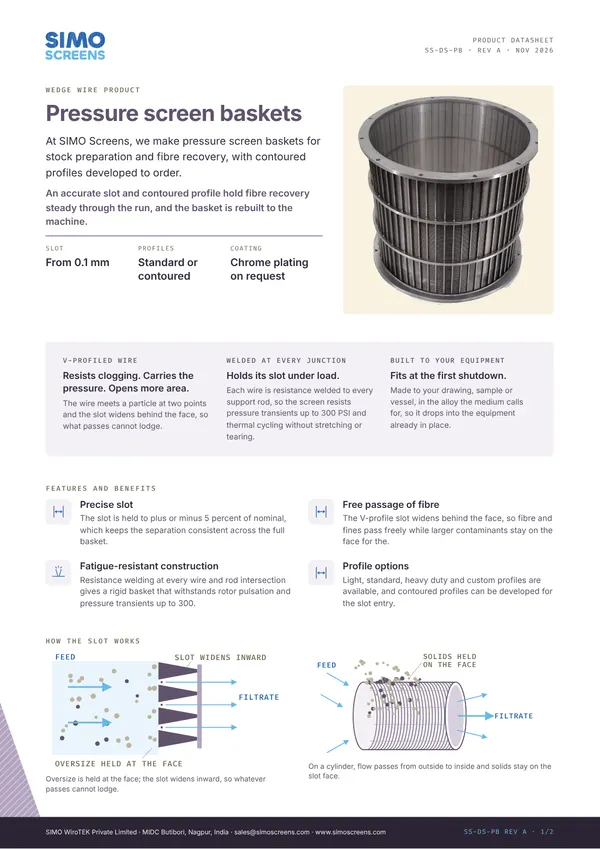
 Pressure screen baskets
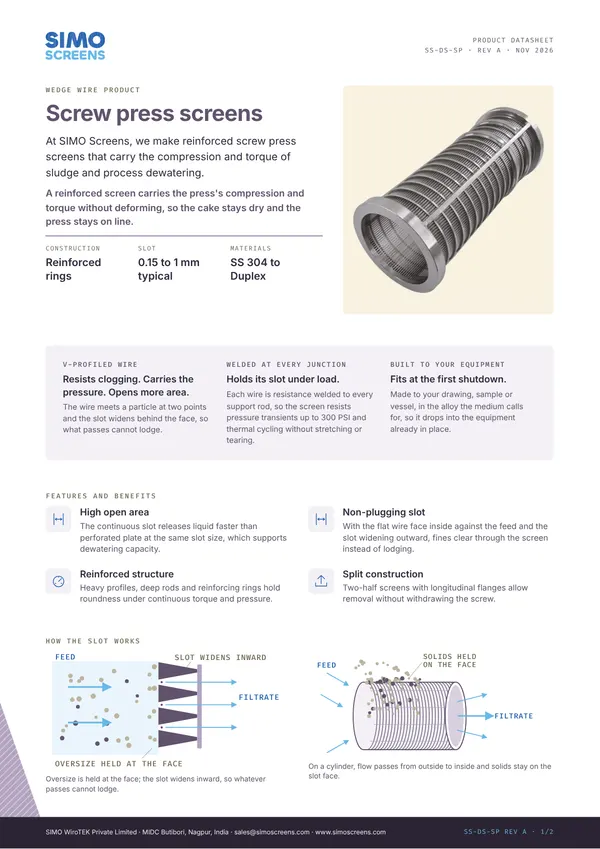
 Screw press screens
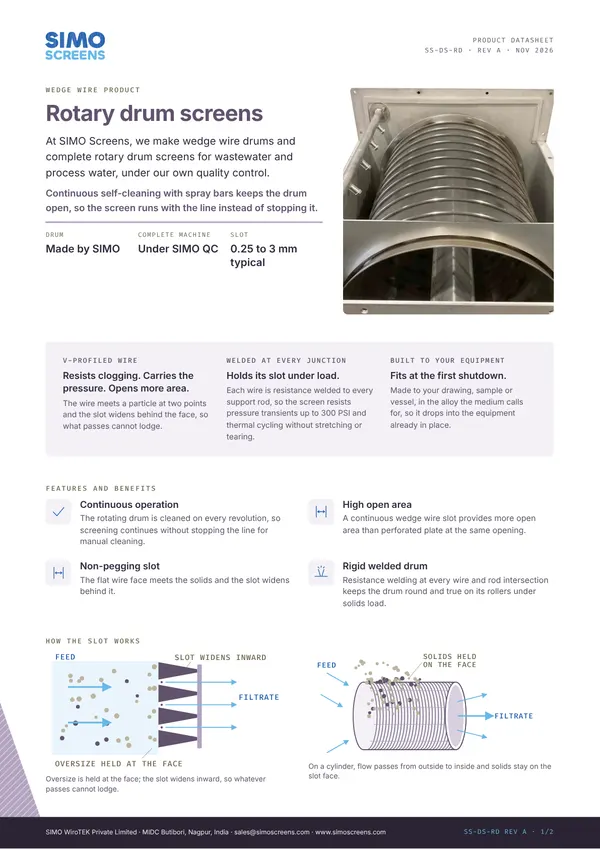
 Rotary drum screens
 Passive intake screens
 Coanda intake screens
 Water and wastewater treatment
 Water wells and groundwater
 Sugar and distillery
 Brewing, malting and beverages
 Food processing
 Mining and minerals
 Oil, gas and petrochemicals
 Chemicals, fertilisers and pharma
 Power generation
 Pulp and paper
 Buildings and drainage

Pulp and paper screening applications
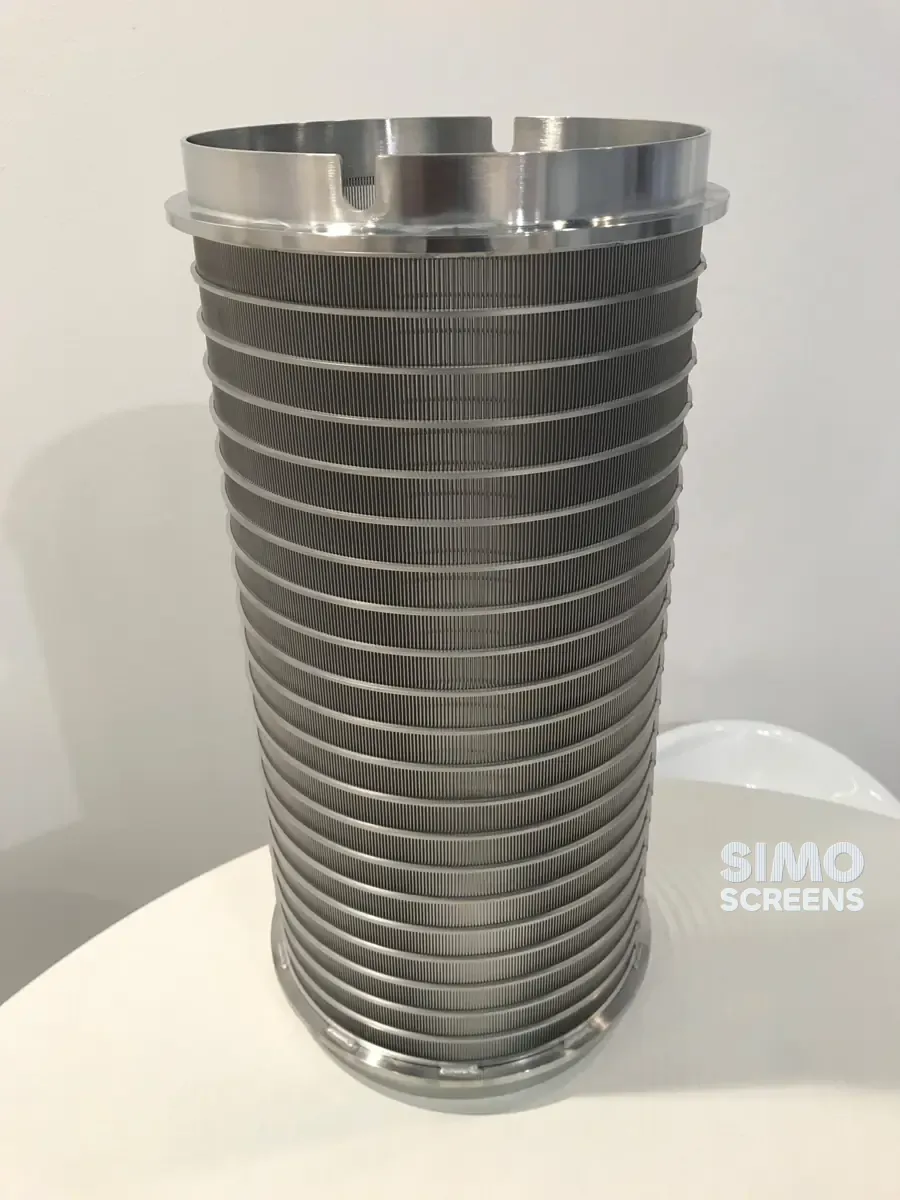
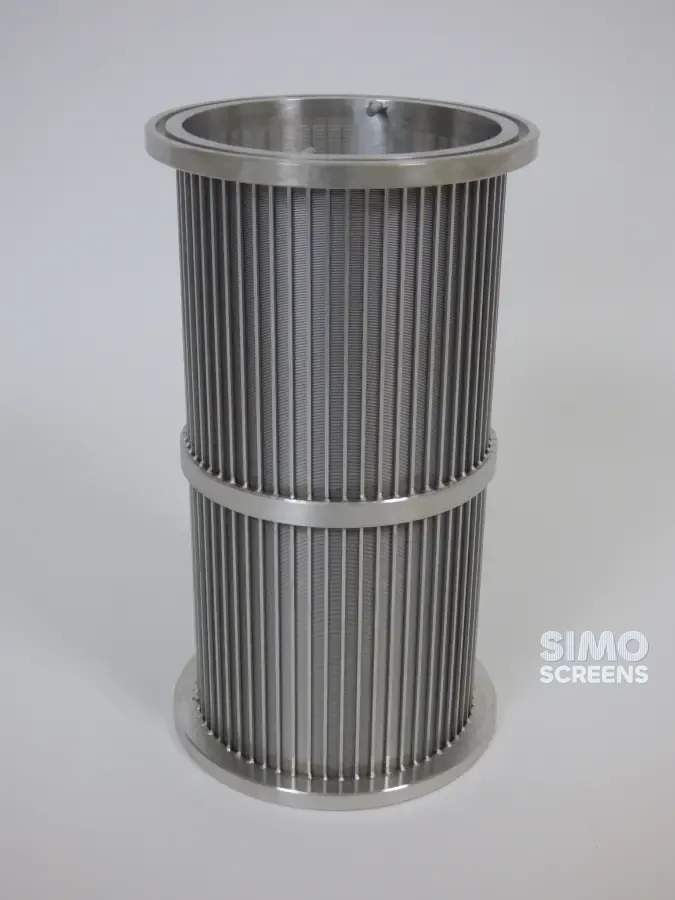
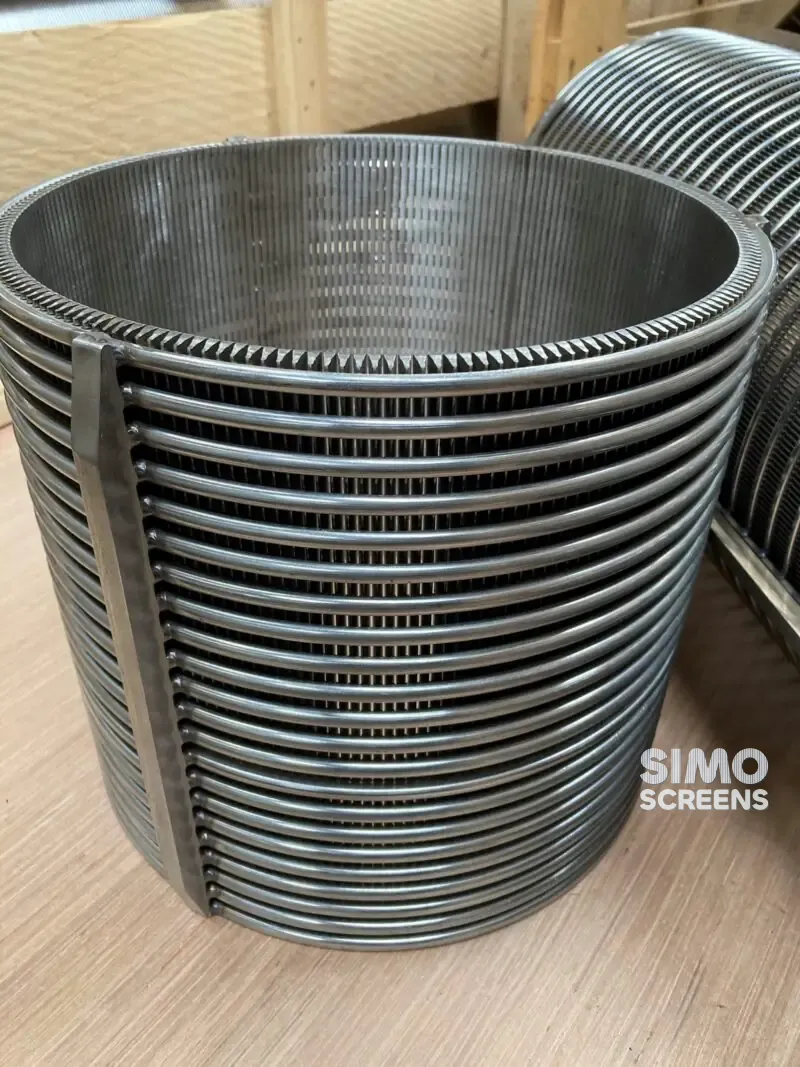
SIMO Screens supplies wedge wire screens for stock preparation, thickening, dewatering and fibre recovery in pulp and paper mills. Stock preparation screens have a direct effect on paper quality, because the pressure screen basket must pass good fibre and reject shives, plastics, sand and stickies at full production rate over long runs.
A slot that is too wide lets contaminants through to the sheet, while a slot that is too narrow rejects good fibre and limits throughput. Slots wear wider with abrasive recycled furnish, and weak baskets crack under rotor pulsations, which can release rejects into the accepted stock. Thickeners and screw presses need screens that drain freely without losing fibre, since blinded drum screens lower the consistency and load the white water system.
Wedge wire meets these requirements through its construction. The profile wire forms an accurate, continuous slot, and resistance welding at every wire and rod intersection gives a rigid basket that holds its slot under pulsation.
Paper mill screens in the process
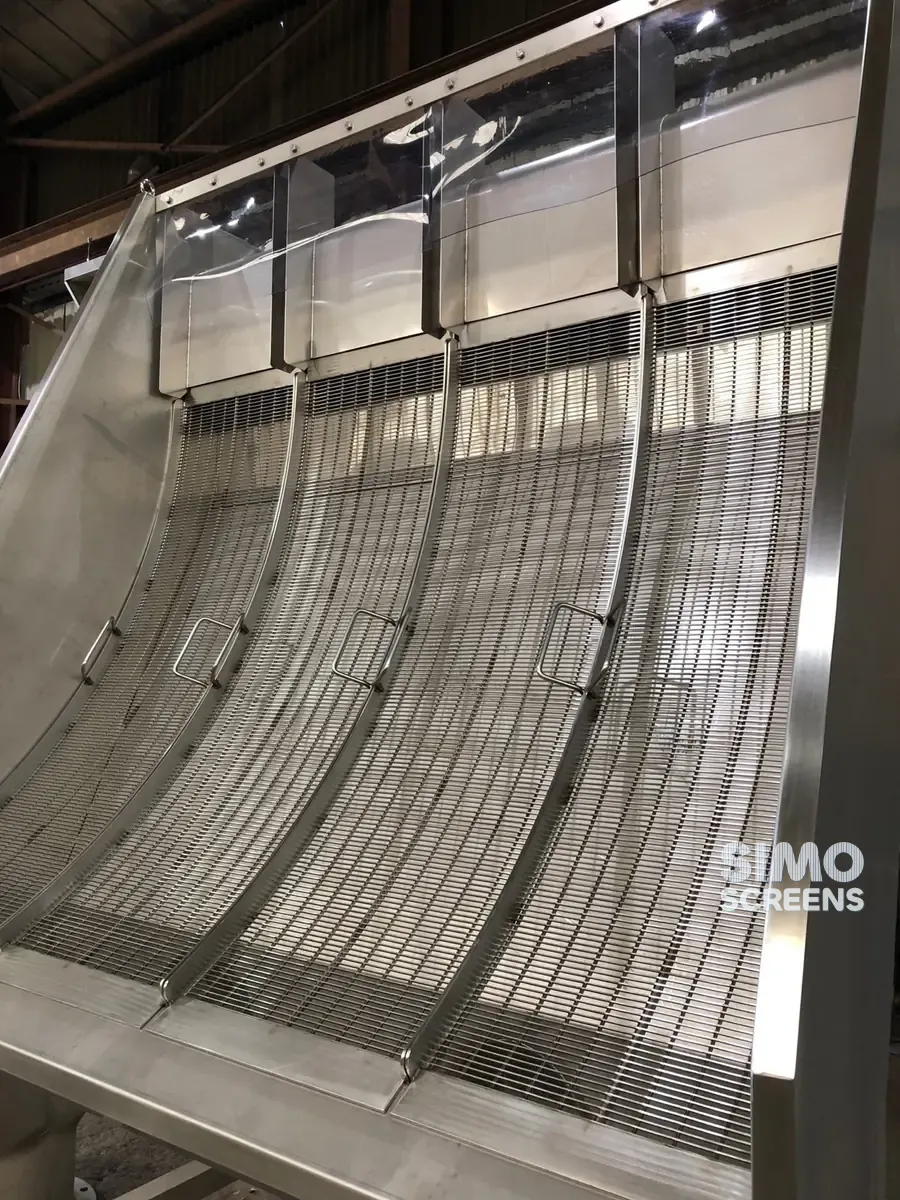
Pulp from the pulper passes through coarse and fine pressure screens in stock preparation, each holding a slotted wedge wire basket, and the accepted stock goes on to cleaning and thickening. Drum thickeners and screw presses raise the consistency for storage or for recycled fibre lines, draining water while retaining fibre. White water from the machine carries fibre that sieve bends recover and return to the process, so that the clarified water can be reused.
Swipe to see the full drawing.
Equipment and stock preparation screens selection
| Equipment | Screen function | SIMO product |
|---|---|---|
| Stock preparation pressure screens | Passes accepted fibre through a precise slot and rejects shives, plastics and stickies | Pressure screen baskets |
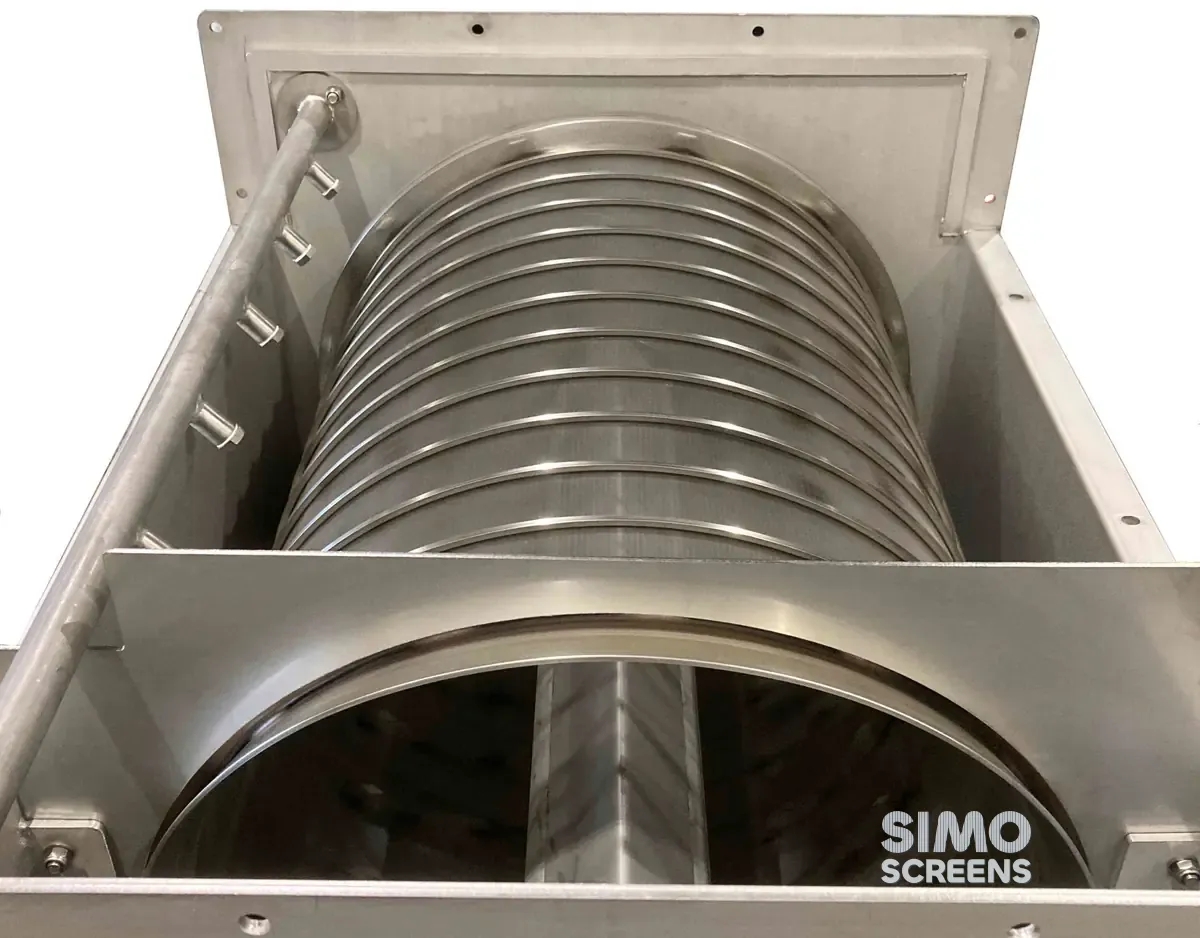
| Drum thickeners and drum washers | Drains water from stock to raise consistency while retaining fibre | Rotary drum screens |
| Screw presses for pulp, rejects and sludge | Drains filtrate under compression while holding the cake | Screw press screens |
| White water fibre recovery and save-alls | Recovers fibre from white water by gravity, with no drive | Sieve bend screens |
| Mill effluent and primary sludge dewatering | Removes fibre and solids ahead of the ETP and dewaters sludge | Rotary drum screens, screw press screens |
Swipe sideways to see the whole table.
Materials and design considerations
The points below reflect general engineering practice. The design for each machine is confirmed during engineering review.
Slot width and profile
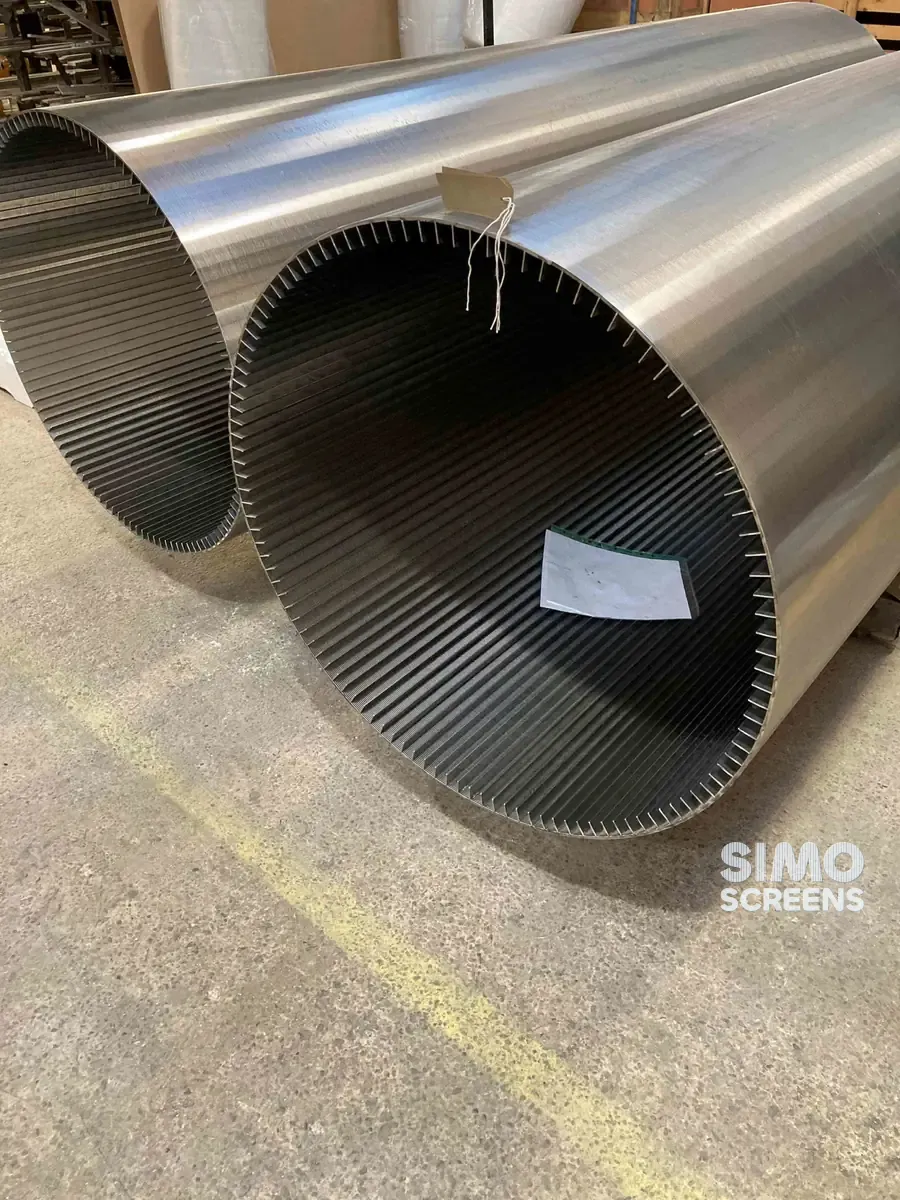
Slot width is set by the furnish, the consistency and the contaminants to be removed, with narrow slots for fine screening and wider slots for coarse screening. Slot accuracy around the basket matters as much as the nominal width, so the slot is held to a standard tolerance of plus or minus 5 percent of nominal. The wire profile on the feed side affects capacity and the way fibre approaches the slot, and contoured profiles can be developed to suit the rotor and stock.
Open area and capacity
Open area rises with slot width and falls with wire width, Open area (%) = Slot x 100 / (Slot + Wire width). Narrower wires add open area but reduce wear life. Options can be compared in the open area calculator.
Fatigue and wear
Rotor pulsations cycle the basket load many times every second, so support rod size and spacing and the weld at every intersection govern fatigue life. Abrasive recycled furnish wears the wire tops, which makes wear allowance important on OCC and mixed waste lines. Chrome plating of pressure screen baskets is arranged through approved agencies on request.
Material
SS 316L is common for baskets and drum screens, since white water carries chlorides, and Duplex 2205 adds strength and corrosion resistance for harder service. Screw press screens carry heavy compression and are reinforced accordingly.
SIMO Screens capability for pulp and paper
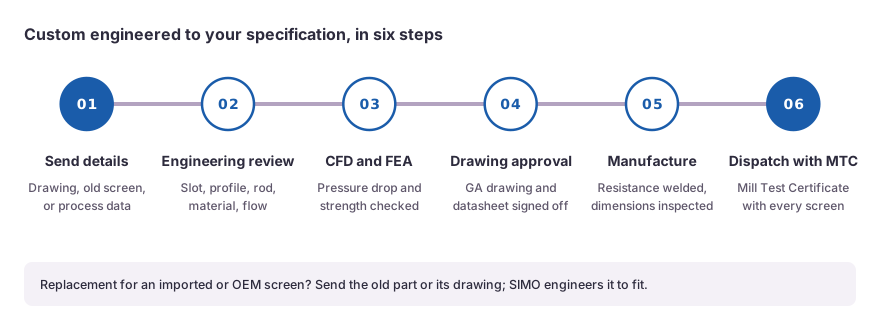
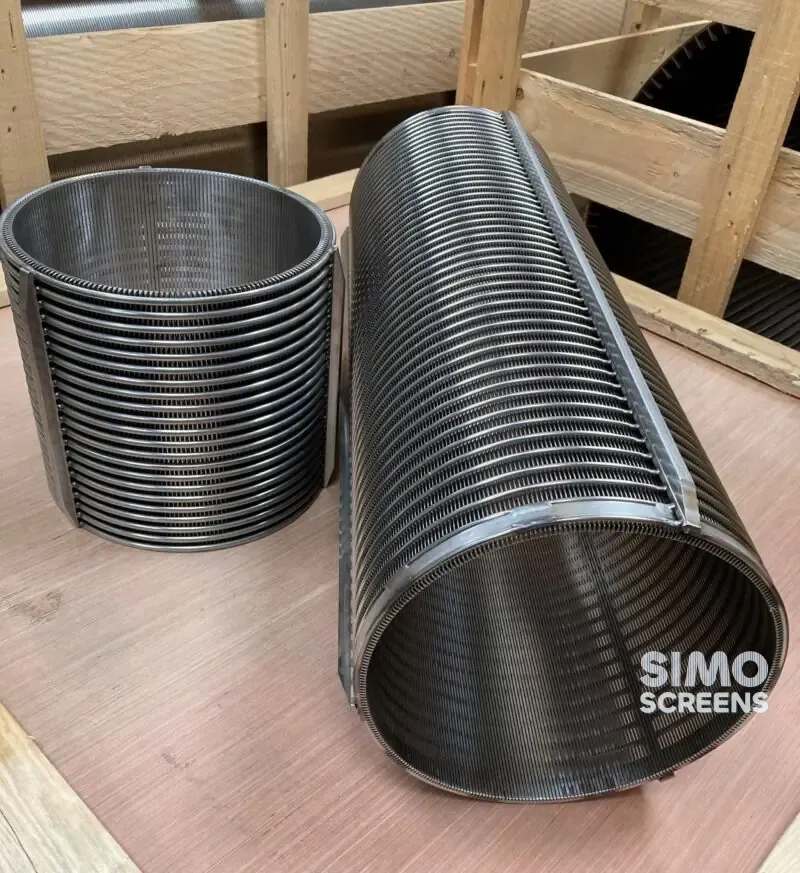
Every basket and screen is engineered to the customer's machine and furnish, and replacement baskets for imported or OEM pressure screens are made from a sample or drawing. The custom engineering process runs from the drawing or a site measurement to a drawing approved before production. Complete rotary drum screen machines are supplied on request, with the drum made by SIMO and the drive, frame, tank and spray bar sourced under SIMO quality control.
Profile wire is formed in house to SIMO profile codes and resistance welded to the support rods at every intersection. Slot width is checked with feeler gauges at set-up, during the run and at the end of each basket, and the final inspection report records the minimum, maximum and mean slot. FEA is used to validate baskets under pulsation and screw press screens under compression.
Every screen ships with a Mill Test Certificate, and the dimensional inspection report is supplied on request. Production is at the SIMO works in MIDC Butibori, Nagpur, under an ISO 9001:2015 quality system.
What to send for a quotation
- Equipment: pressure screen, drum thickener, drum washer, screw press or sieve bend.
- Machine make and model, and the basket or screen drawing with dimensions.
- Your current slot width, wire profile and rotor type.
- Furnish (virgin, recycled or OCC) and the operating consistency.
- Throughput and the contaminants you need to remove.
- Problems you see today: cracking, slot wear, fibre loss or low capacity.
- Material preference, any plating requirement and the white water chemistry, if known.
- Quantity, including spare baskets.
 Upload a drawing