 +91 93730 08466
 Screen tubes and pipes
 Screen cylinders
 Flat panels and false bottoms
 Candle filter elements
 Water well screens
 Header and hub laterals
 Filter nozzles
 Resin traps
 Support grids
 Sieve bend (DSM) screens
 Centrifuge baskets
 Pressure screen baskets
 Screw press screens
 Rotary drum screens
 Passive intake screens
 Coanda intake screens
 Water and wastewater treatment
 Water wells and groundwater
 Sugar and distillery
 Brewing, malting and beverages
 Food processing
 Mining and minerals
 Oil, gas and petrochemicals
 Chemicals, fertilisers and pharma
 Power generation
 Pulp and paper
 Buildings and drainage

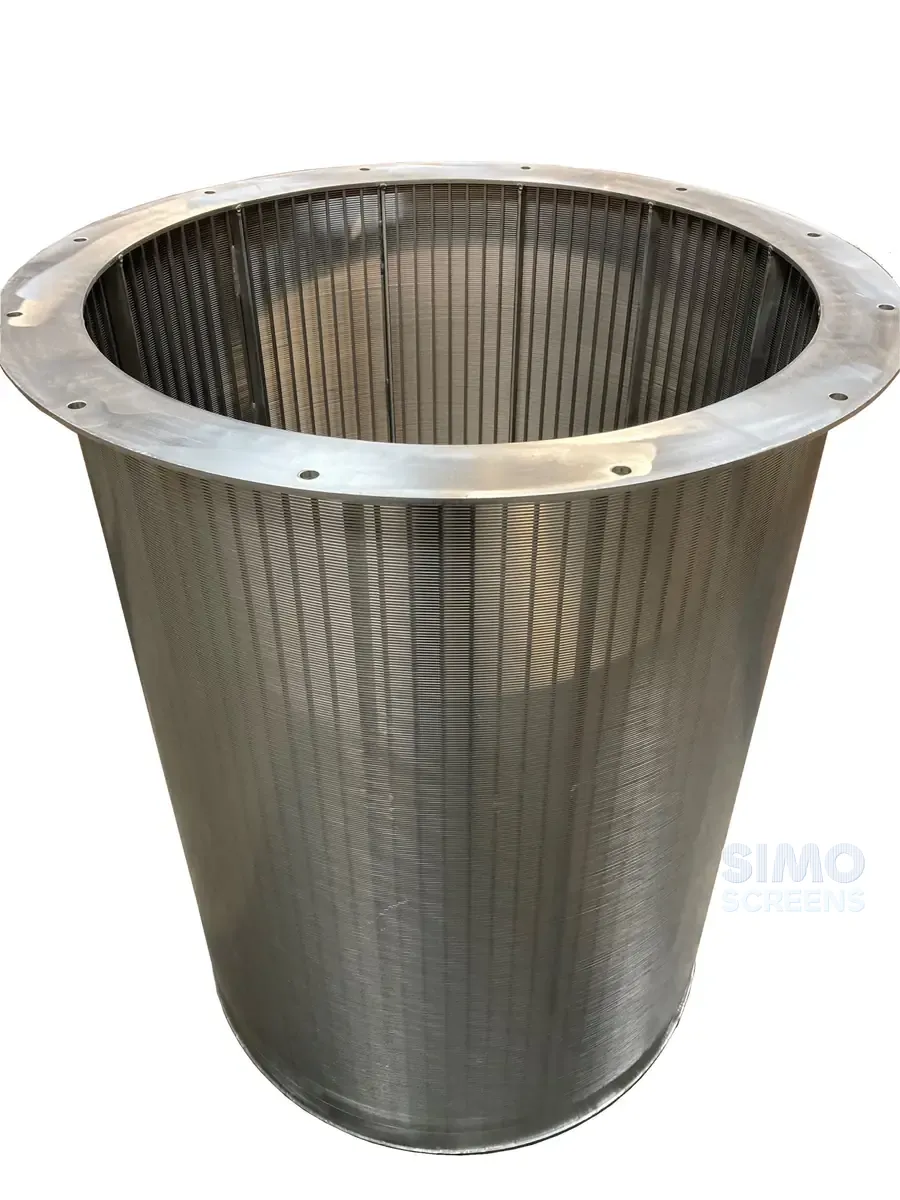
Mineral processing screening applications
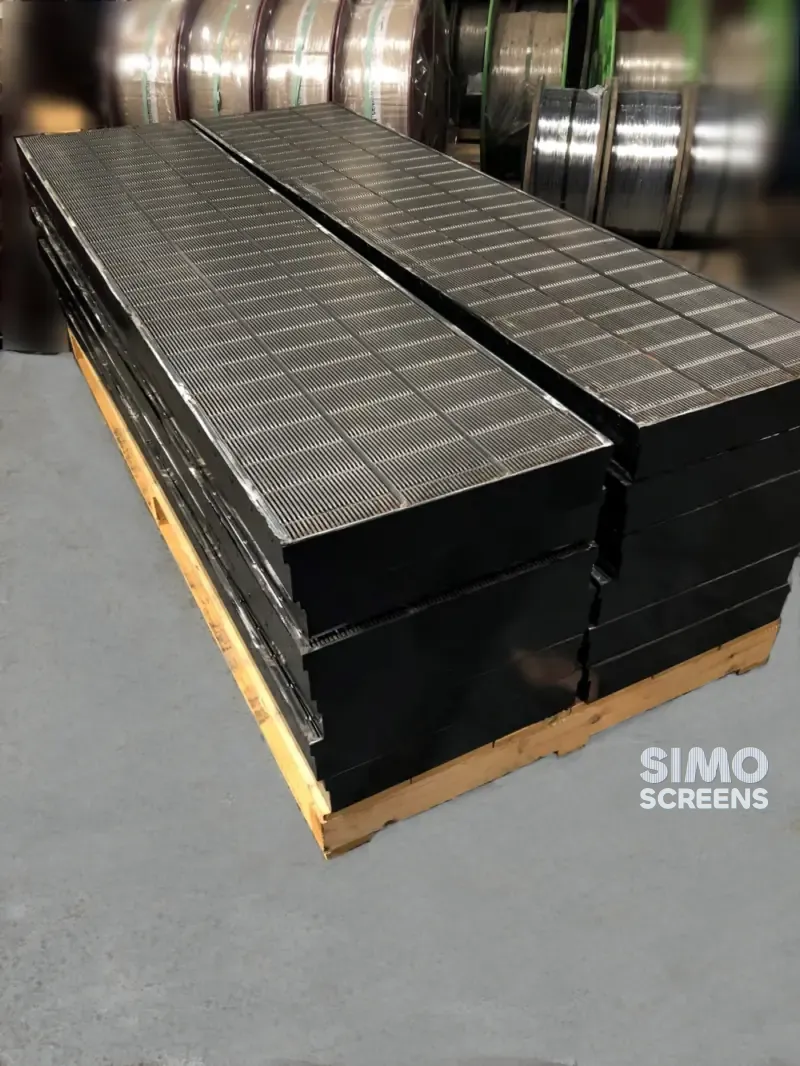
SIMO Screens supplies wedge wire screens for coal washeries, iron ore and sand plants and gold processing circuits. Mineral slurry is among the most demanding services a screen sees: sharp, abrasive particles wear the wires, vibration fatigues every joint, and the screen must still hold a precise cut.
Woven mesh pegs with near-size particles, tears under load and needs frequent change-outs, while perforated plate has a low open area that leaves dewatered product wet. In a dense medium circuit, a worn drain and rinse panel lets magnetite pass with the product and raises medium consumption. Wedge wire addresses these problems through its construction: the V-profile wire forms a slot that widens below the surface, so near-size particles drop through instead of pegging, and resistance welding at every wire and rod intersection keeps the deck rigid under vibration.
Coal preparation screens in a washery
Raw coal is sized and slurried, and desliming sieve bends and screens remove fine slimes ahead of dense medium cyclones or baths. Cyclone product and reject pass to drain and rinse screens, where the drain section recovers the medium and the rinse section washes the remaining magnetite off the coal. Clean coal then goes to dewatering screens and centrifuges to reduce surface moisture.
Iron ore, sand and gold circuits
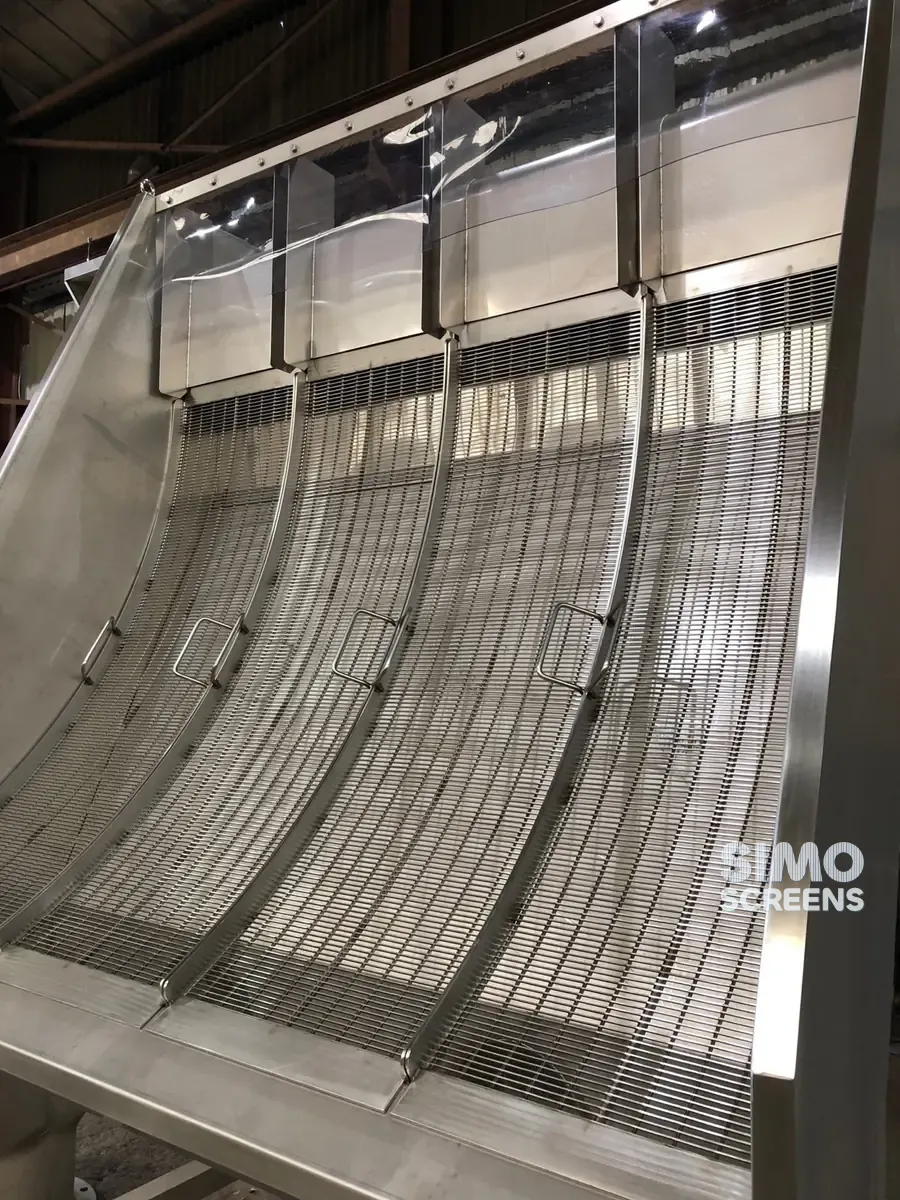
Iron ore and sand plants use sieve bends and flat panels to classify and dewater the product at each stage. Gold plants with CIL or CIP circuits use wedge wire cylinders as interstage screens, which retain activated carbon in each tank while the pulp flows on.
Swipe to see the full drawing.
Equipment and mining screen selection
| Equipment | Screen function | SIMO product |
|---|---|---|
| Coal washery desliming screens and sieve bends | Removes fine slimes from raw coal slurry at a set cut ahead of dense medium separation | Sieve bend screens |
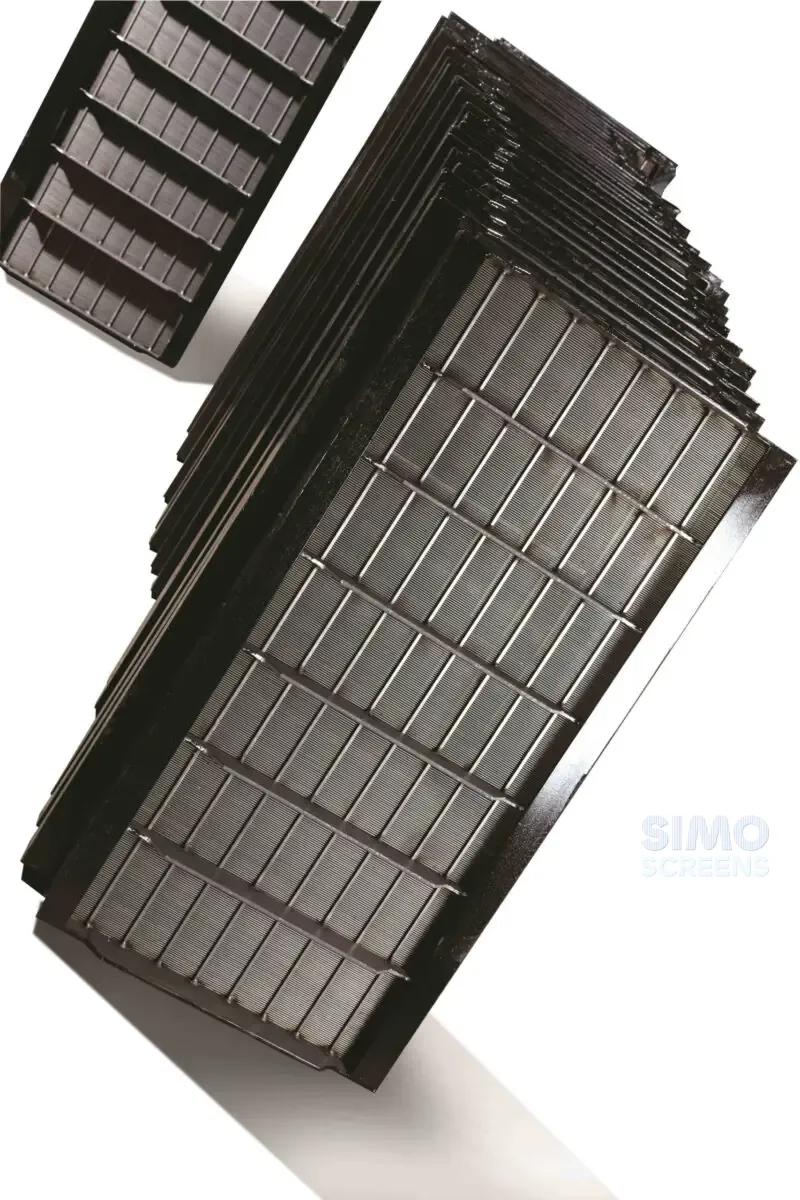
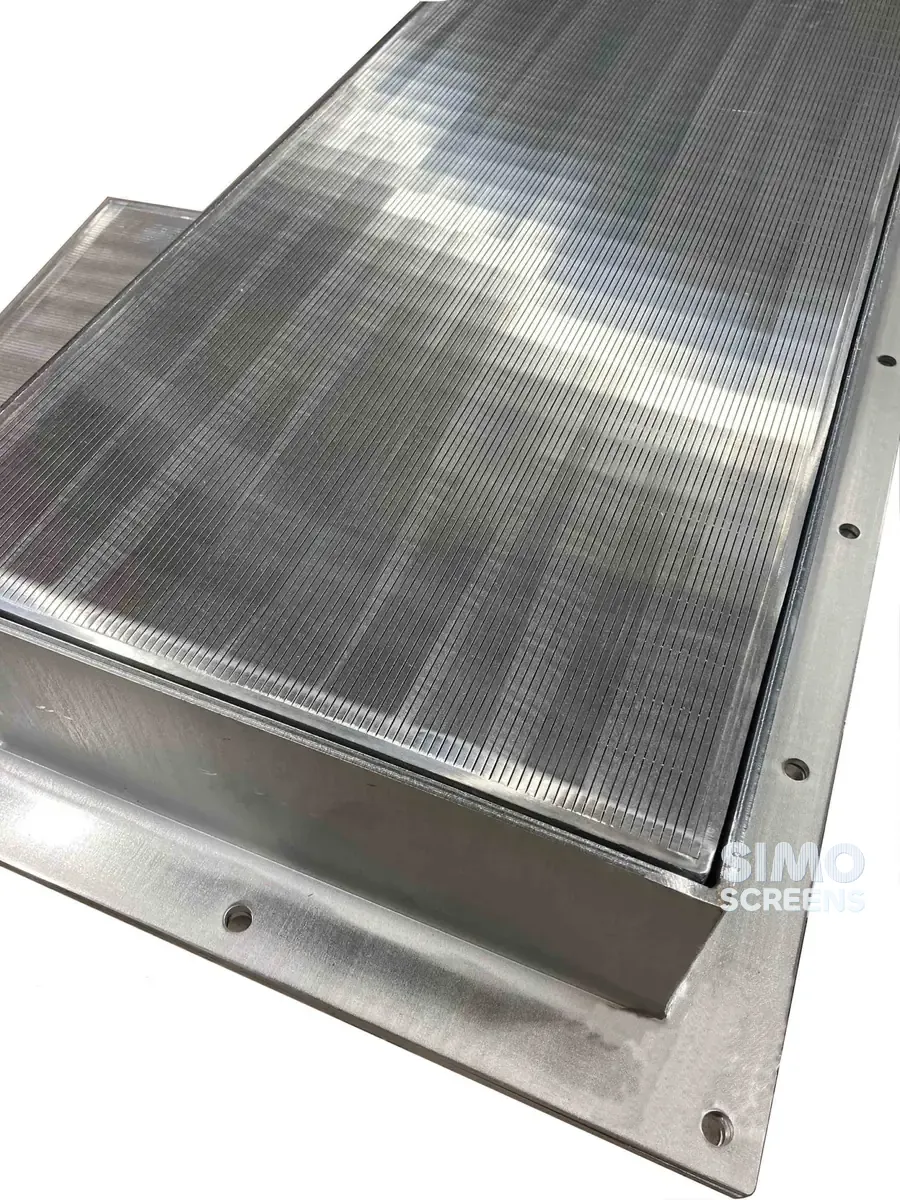
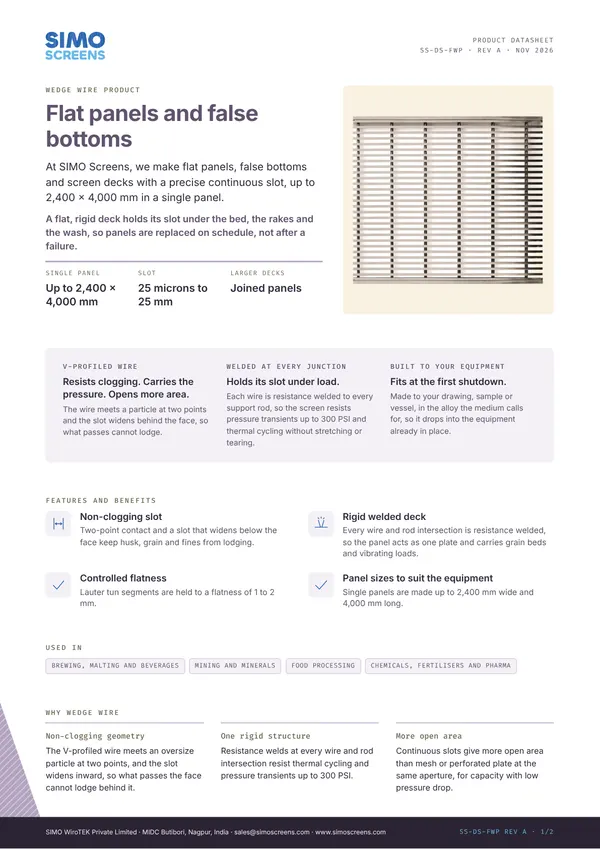
| Drain and rinse screens | Drains and recovers dense medium, then rinses magnetite off product and reject | Flat wedge wire panels |
| Dewatering and sizing screens | Drains water from product and separates it by size on a vibrating deck | Flat wedge wire panels |
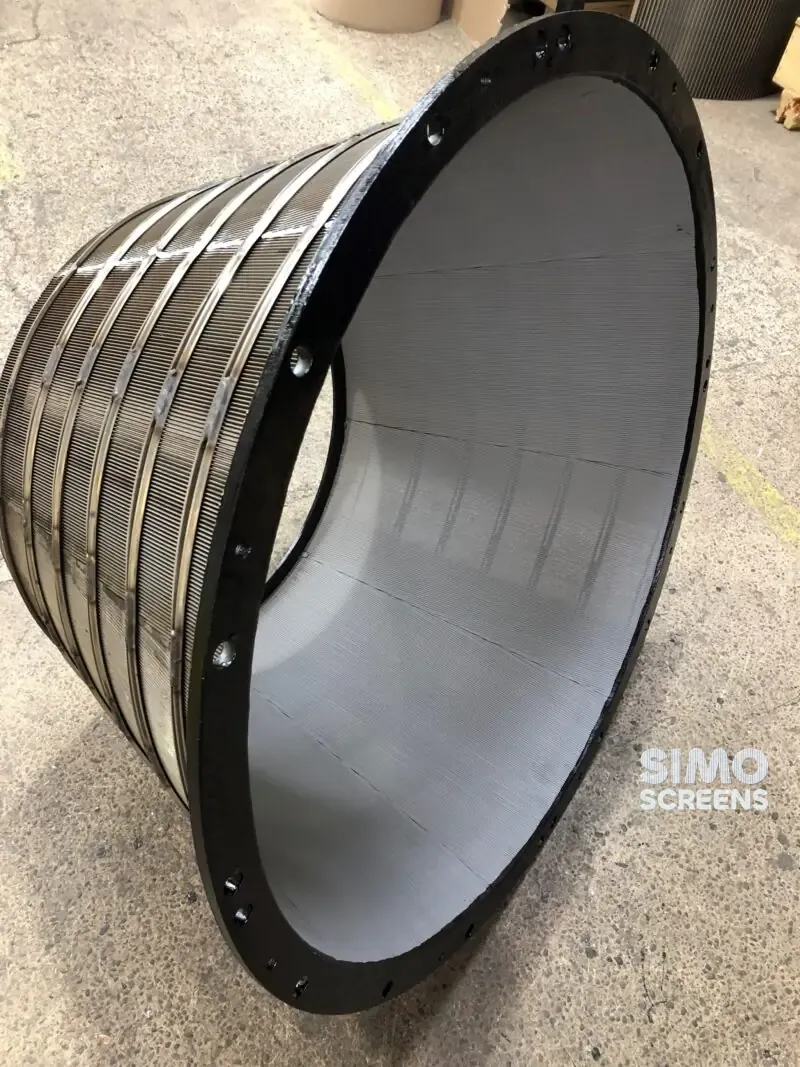
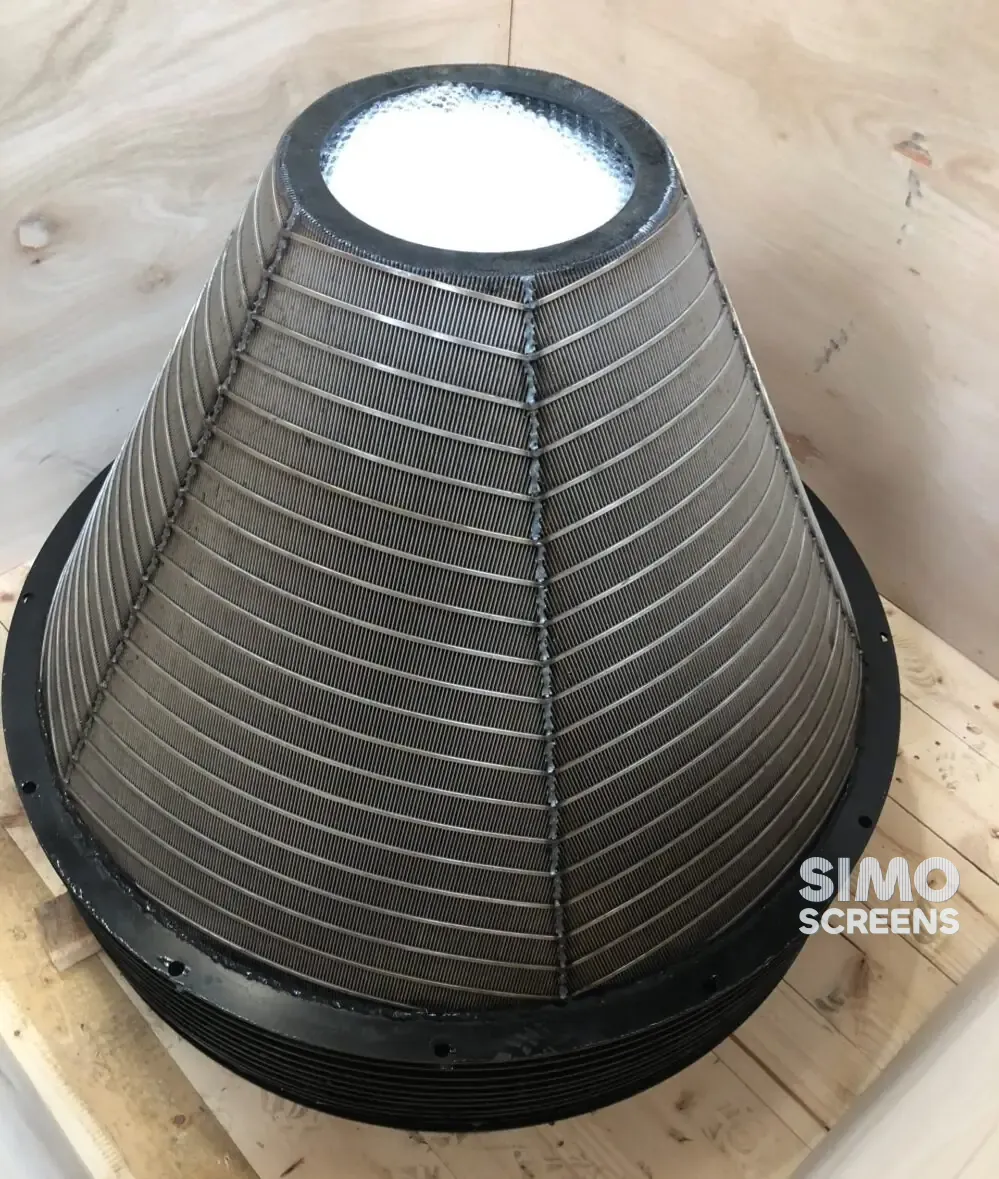
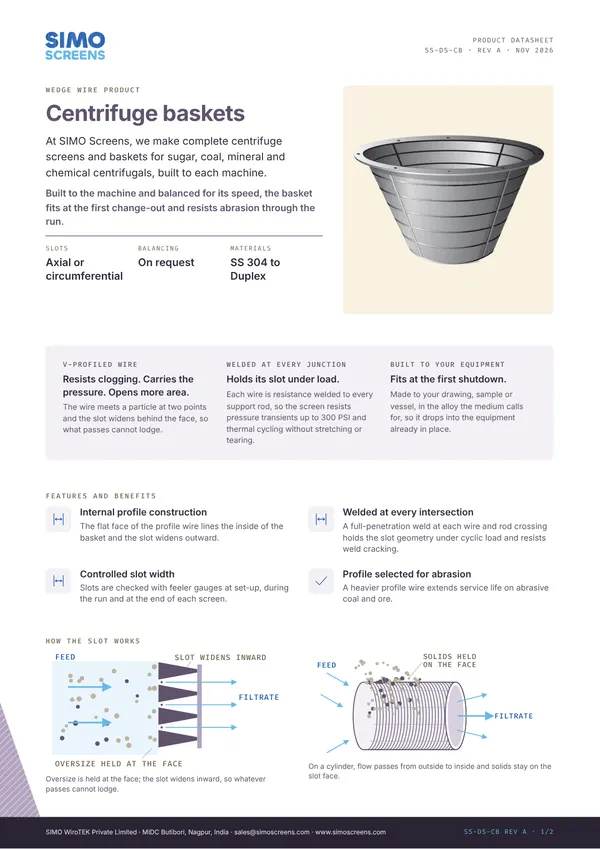
| Coal and mineral centrifuges | Removes surface moisture from fine coal and mineral concentrate | Centrifuge baskets and screens |
| Iron ore and sand classification | Separates fines from coarse product and dewaters it | Sieve bend screens, flat wedge wire panels |
| Gold CIL and CIP tanks | Retains activated carbon in each tank while pulp flows to the next | Interstage screens |
Swipe sideways to see the whole table.
Materials and design considerations
The points below reflect general engineering practice. The design for each circuit is confirmed during engineering review.
Slot and cut
A sieve bend separates at a size smaller than its slot width, often about half the slot. Desliming sieve bends in coal washeries commonly use a slot of about 0.5 mm, and drain and rinse panels use 0.5 to 1 mm, with 1.5 mm specified at times. On vibrating decks, slots across the flow give a sharper cut, while slots along the flow drain faster and resist pegging with elongated particles. Coal centrifuge baskets typically use axial slots.
Wear
Wear rounds the wire tops and widens the slot over time. Heavier profile wire gives longer wear life, and a sieve bend can be reversed to present fresh edges to the flow. Profiles are selected from the light, standard, heavy duty and custom ranges to suit the feed.
Structure and fixing
Vibrating decks load the screen in fatigue, so support rod size and spacing, panel edge frames and the fixing method are designed together. Panels are supplied for side clamps, bolted fixing and hook strips, and with support members and lock pins for polyurethane modular decks. Single flat panels are made up to 2,400 mm wide and 4,000 mm long. For centrifuge baskets, roundness at full speed is critical and the structure is checked with FEA.
Material
SS 304 suits most coal and mineral applications. SS 316L is used where the process water is acidic or high in chlorides, for example with pyritic coal, and Duplex 2205 adds strength and corrosion resistance for harsher water.
SIMO Screens capability for mining and minerals
Panels, sieve bends and baskets are engineered to the customer's deck or machine, and replacements for imported or OEM screens are made from a sample or drawing. The custom engineering process moves from the drawings or site measurements to a drawing approved before production.
Profile wire is formed in house to SIMO profile codes and resistance welded to the support rods at every intersection. Slot width is checked with feeler gauges at set-up, during the run and at the end of each screen, against a standard tolerance of plus or minus 5 percent of nominal, and the final inspection report records the minimum, maximum and mean slot. Coal centrifuge baskets are usually balanced by the user, and dynamic balancing through an approved agency is available on request.
Every screen ships with a Mill Test Certificate, and the dimensional inspection report is supplied on request. Production is at the SIMO works in MIDC Butibori, Nagpur, under an ISO 9001:2015 quality system.
What to send for a quotation
- Equipment: sieve bend, drain and rinse screen, dewatering screen, sizing screen, centrifuge or interstage screen.
- Screen deck drawing, panel dimensions and fixing method, or the centrifuge basket drawing.
- Feed material, size range and slurry flow or tonnage.
- Target cut size and your current slot size.
- Problems you see today: magnetite loss, pegging, wear, cracking or high product moisture.
- Process water quality, especially chlorides and pH.
- Quantity, including spares.
 Upload a drawing