 +91 93730 08466
 Screen tubes and pipes
 Screen cylinders
 Flat panels and false bottoms
 Candle filter elements
 Water well screens
 Header and hub laterals
 Filter nozzles
 Resin traps
 Support grids
 Sieve bend (DSM) screens
 Centrifuge baskets
 Pressure screen baskets
 Screw press screens
 Rotary drum screens
 Passive intake screens
 Coanda intake screens
 Water and wastewater treatment
 Water wells and groundwater
 Sugar and distillery
 Brewing, malting and beverages
 Food processing
 Mining and minerals
 Oil, gas and petrochemicals
 Chemicals, fertilisers and pharma
 Power generation
 Pulp and paper
 Buildings and drainage

Rainwater harvesting and stormwater screening applications
SIMO Screens supplies wedge wire screens for rooftop rainwater harvesting, groundwater recharge and stormwater drainage. The performance of a harvesting system depends on what reaches the tank or the aquifer: roof runoff carries leaves, bird droppings, dust and silt, and without screening, tanks fill with sludge and recharge wells clog within a few seasons.
Mesh filters often blind in the first heavy shower, after which water overflows the filter and is lost, or bypasses it and carries debris into the tank. Plastic and mild steel screens crack or corrode in sun and rain. Stormwater inlets face heavier loads, and a grate that clogs floods the road or courtyard, while one that corrodes or breaks becomes a hazard to people and vehicles.
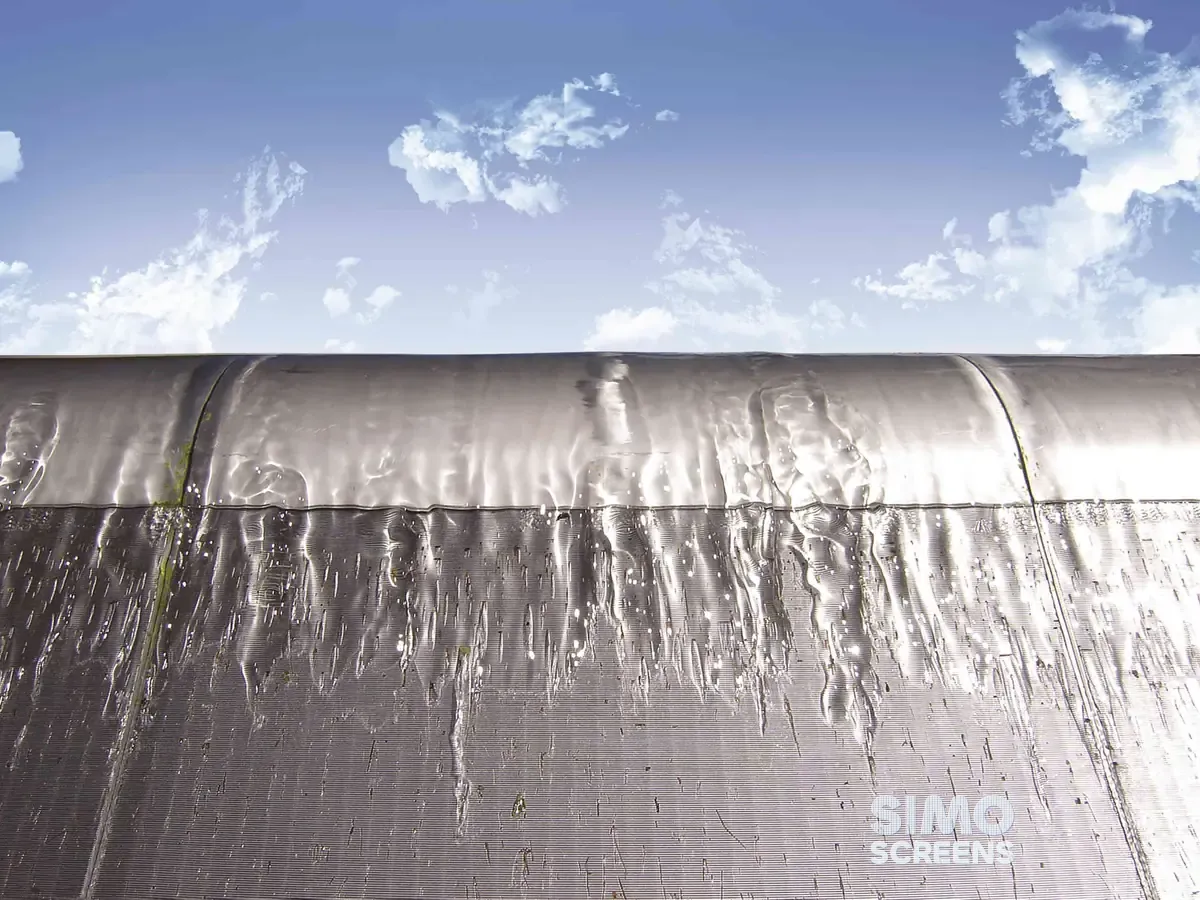
Wedge wire suits these applications because its slot resists blinding. The flat wire face lets leaves slide off, and the slot widens inward so that silt passes instead of jamming. In stainless steel it withstands sun, monsoon and chlorinated washdown.
Rainwater filtration system layout
Rain runs from the roof to the gutters and downpipes, where a rooftop rainwater filter on each downpipe or at a collection point separates leaves and debris. The clean water passes to a storage tank, a recharge pit or a recharge well. Inside the recharge well, rainwater recharge screens built as wedge wire well screens admit the water to the permeable layer. At ground level, drainage grates cover stormwater inlets and channels, and larger channels carrying debris can use a Coanda screen, which keeps itself clear as water flows over the inclined wires.
Swipe to see the full drawing.
Equipment and stormwater screens selection
| Equipment | Screen function | SIMO product |
|---|---|---|
| Rooftop rainwater filters on downpipes | Separates leaves and debris and sends clean water to the tank or recharge | Rooftop rainwater harvesting filters |
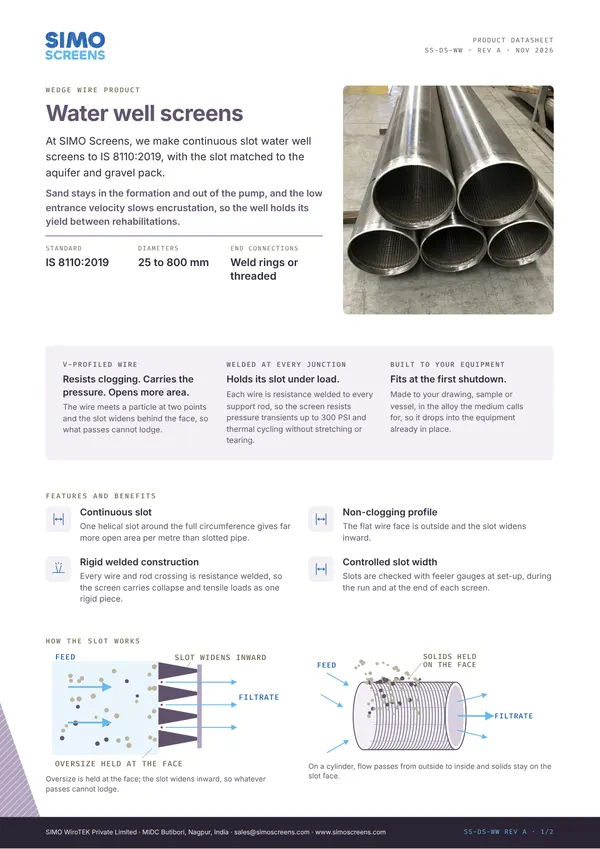
| Recharge pits and recharge wells | Admits filtered water to the aquifer while holding back soil and gravel pack | Water well screens |
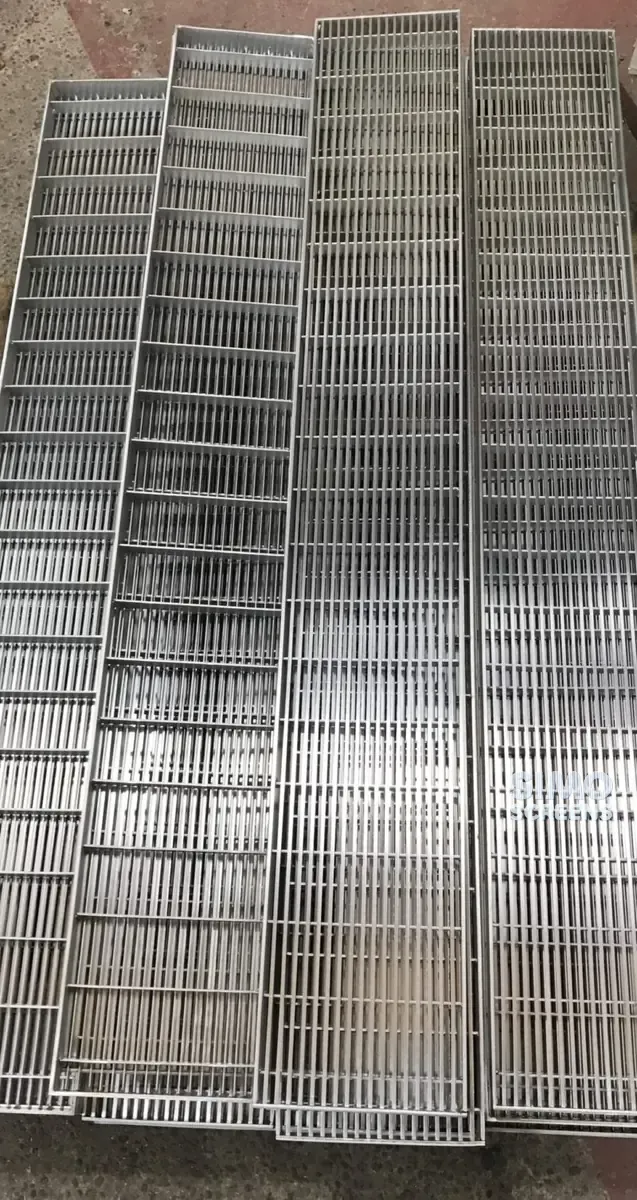
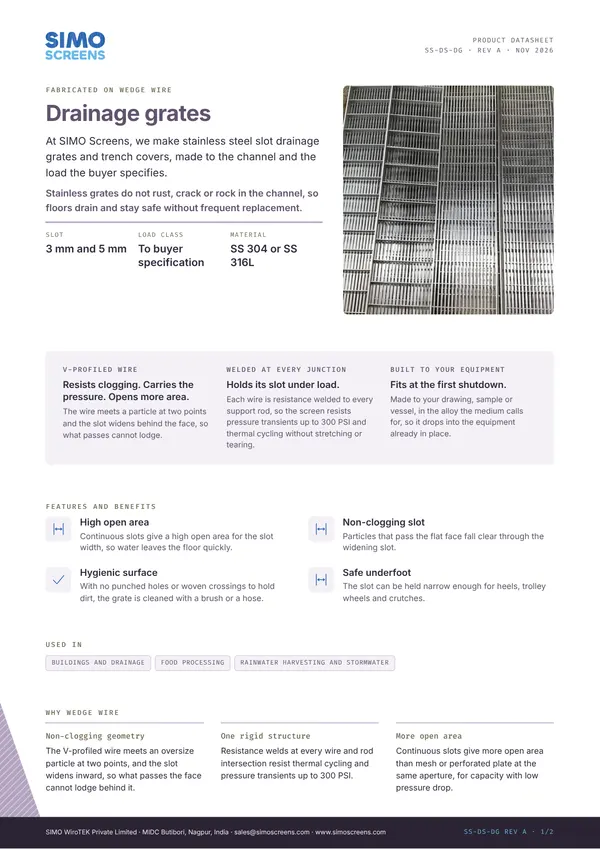
| Stormwater inlets, channels and courtyard drains | Covers the inlet, carries foot and wheel loads and stops large debris | Drainage grates |
| Stormwater channels and culvert intakes with heavy debris | Diverts water through a self-cleaning inclined screen while debris passes over | Coanda screens |
Swipe sideways to see the whole table.
Materials and design considerations
The points below reflect general practice. The selection for each site is confirmed during engineering review.
Rooftop filters
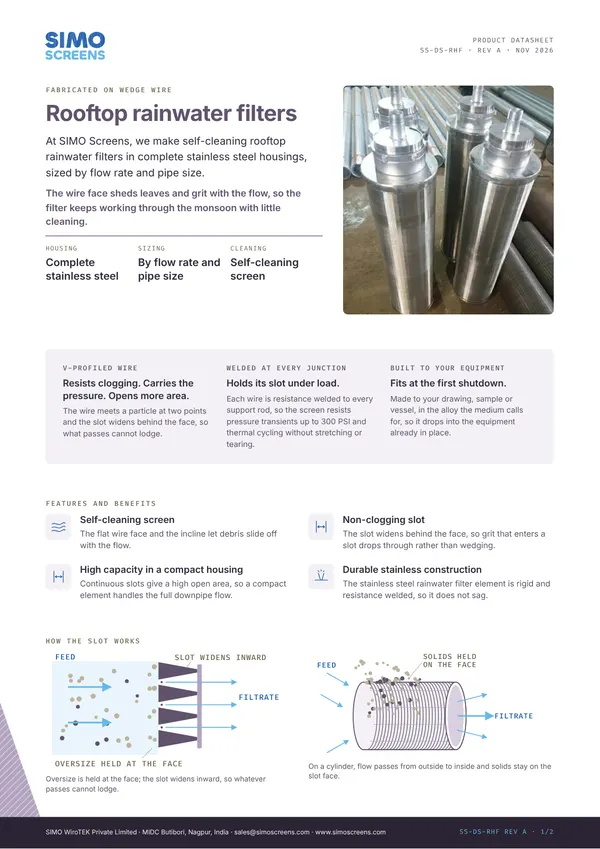
A rooftop filter is sized by the flow rate it must pass and the pipe size it connects to, and the peak flow follows from the roof area and the design rainfall intensity. An undersized filter overflows in heavy rain and the water is lost. The rainwater filter calculator gives a starting size, and the rainwater harvesting filter guide explains the method.
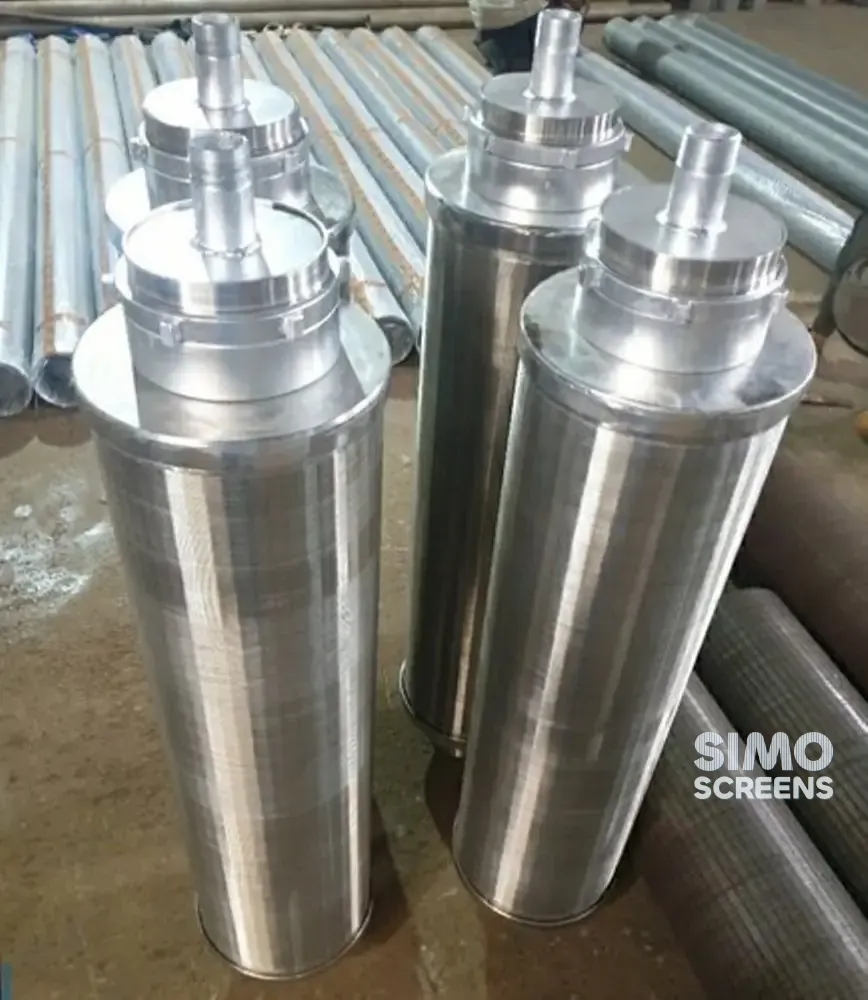
SIMO supplies complete filter housings in SS 304 or SS 316L, with MS or SS 410 to the client's requirement. Each filter is engineered to the flow and pipe sizes of the project. The screen element is set at a slope so that debris leaves with the overflow, and the slot is fine enough to stop leaves and coarse grit while passing most of the flow.
Recharge wells
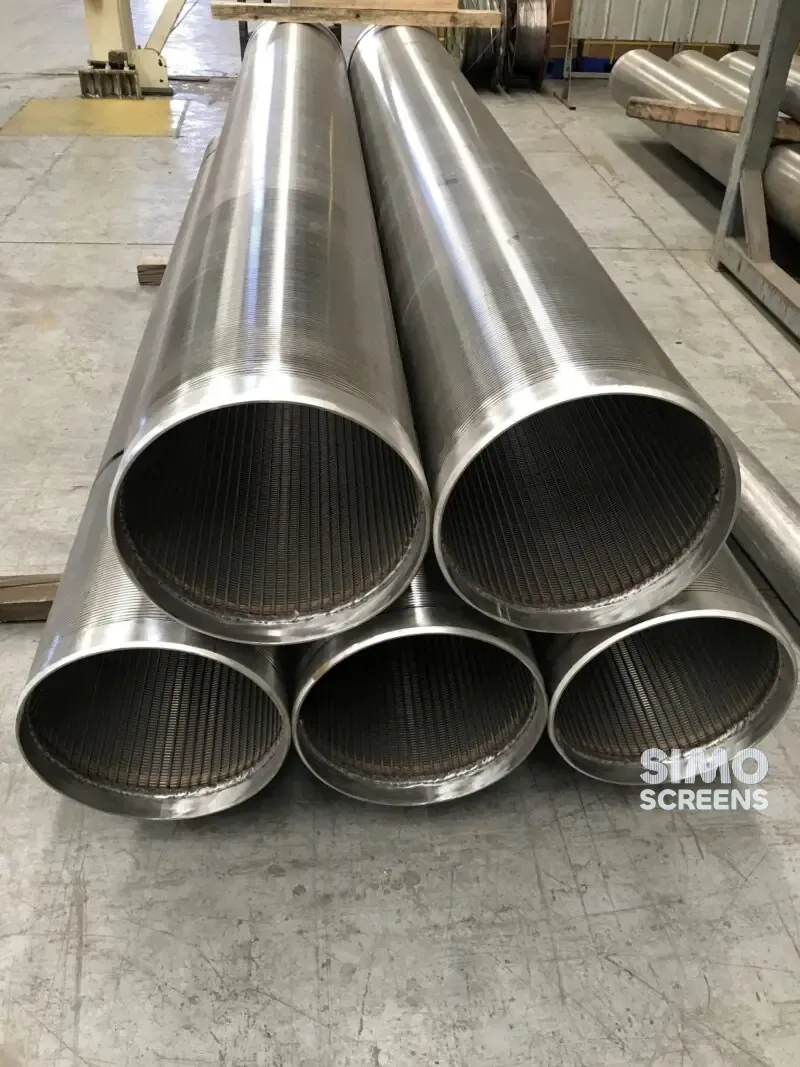
Recharge depends on clean water reaching the aquifer, so a filter or settling stage ahead of the recharge well protects the screen and the formation from silt. The recharge well screen follows the same slot and open area method as a supply well, with the effective open area generally taken as about 50 percent of the calculated open area.
Grates and materials
SS 304 suits most rooftop and inland installations, and SS 316L is the usual choice near the coast, where salt air attacks lower grades. Load class requirements for traffic areas are specific to the buyer and the country and are agreed per order against the buyer's specification.
SIMO Screens capability for rainwater harvesting
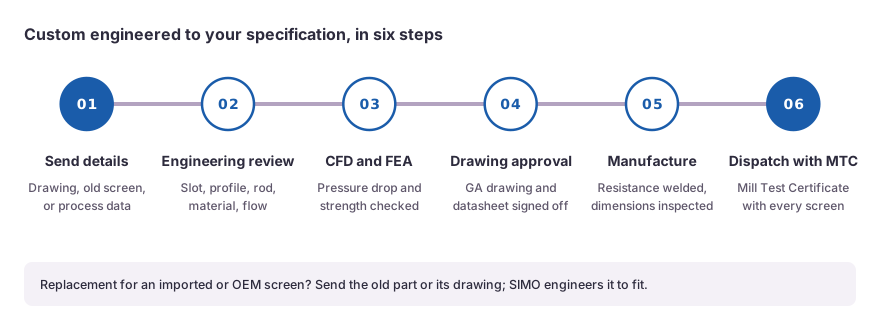
Each filter, screen and grate is engineered to the site, starting from the roof plan, drain layout or bore details. The custom engineering process provides a drawing for approval before production, and CFD and FEA are used for larger stormwater screens and Coanda intakes where flow and structural load need checking.
The profile wire, screen elements, housings and frames are all made at the SIMO works in MIDC Butibori, Nagpur, under an ISO 9001:2015 quality system. Profile wire is formed in house to SIMO profile codes and resistance welded to the support rods at every intersection, and slot width is checked with feeler gauges during production.
Every product ships with a Mill Test Certificate, and the dimensional inspection report is supplied on request.
What to send for a quotation
- Roof area served by each filter, and the number and size of downpipes.
- Where the filtered water goes: storage tank, recharge pit or recharge well.
- For recharge wells: bore diameter, depth and the permeable zone to be screened.
- For grates: channel width, length, opening size and the load class you need.
- Site location, coastal or inland, and any housing material you require.
- Any space limits for the filter housing, and the inlet and outlet pipe sizes.
- Quantity of each item.
 Upload a drawing