 +91 93730 08466
 Screen tubes and pipes
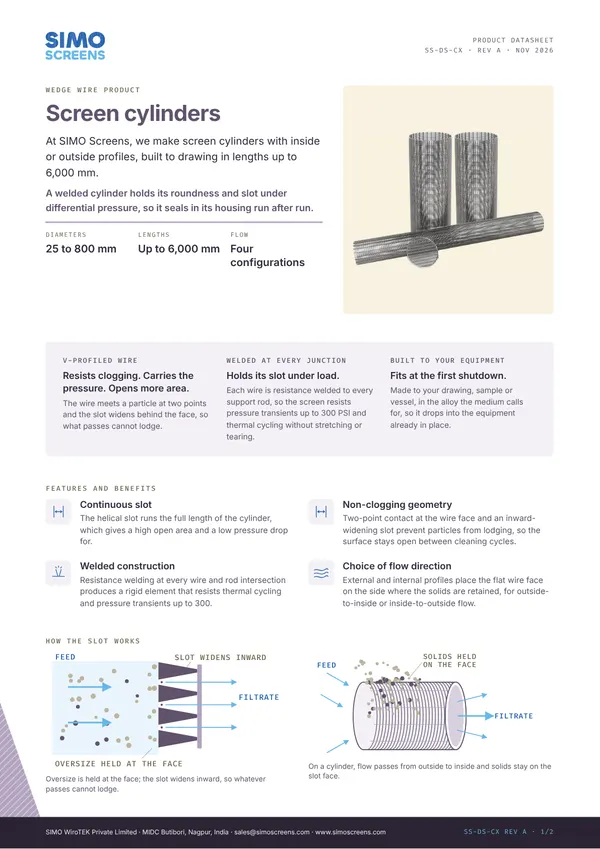
 Screen cylinders
 Flat panels and false bottoms
 Candle filter elements
 Water well screens
 Header and hub laterals
 Filter nozzles
 Resin traps
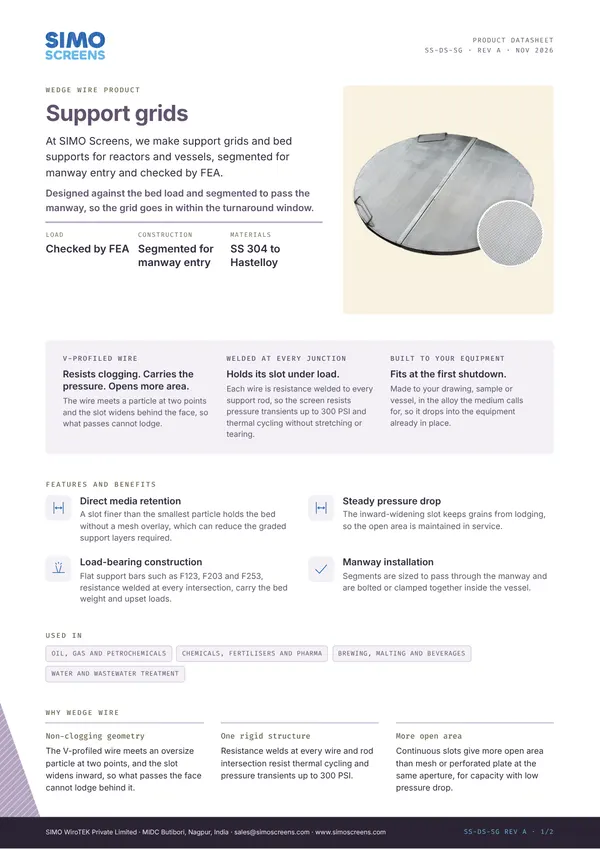
 Support grids
 Sieve bend (DSM) screens
 Centrifuge baskets
 Pressure screen baskets
 Screw press screens
 Rotary drum screens
 Passive intake screens
 Coanda intake screens
 Water and wastewater treatment
 Water wells and groundwater
 Sugar and distillery
 Brewing, malting and beverages
 Food processing
 Mining and minerals
 Oil, gas and petrochemicals
 Chemicals, fertilisers and pharma
 Power generation
 Pulp and paper
 Buildings and drainage
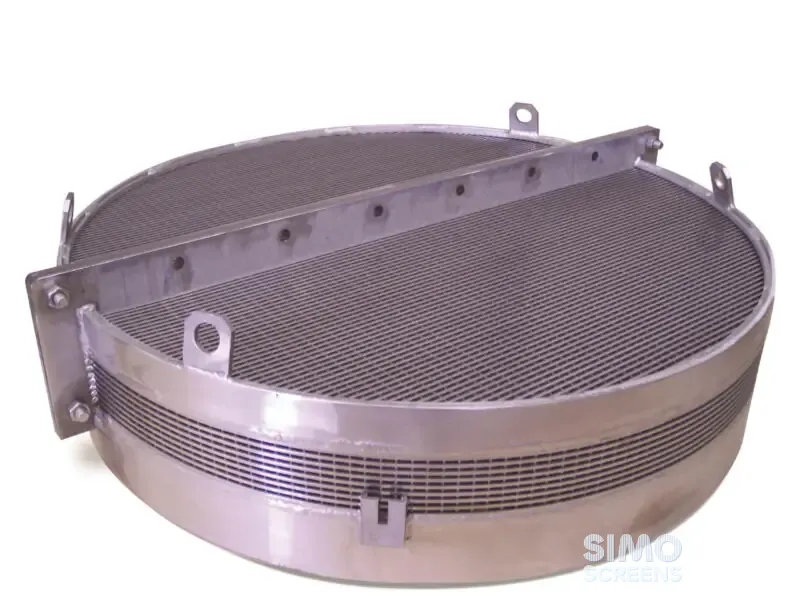
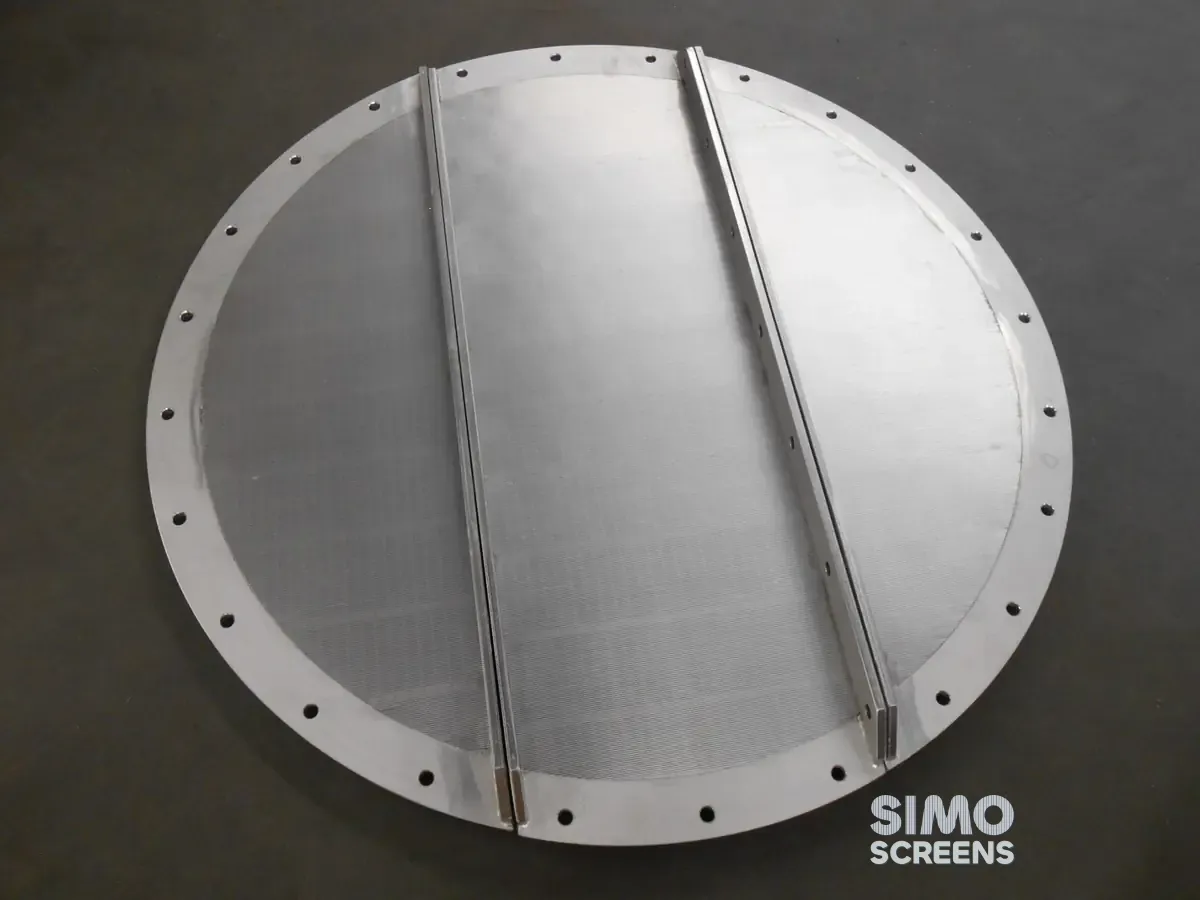

Refinery and petrochemical screening applications
SIMO Screens supplies wedge wire reactor and adsorber internals for refineries, petrochemical plants and gas processing units. These internals operate in hot, high-pressure and often corrosive service and can only be reached at a turnaround, so each one must retain the catalyst or adsorbent and spread flow evenly for the whole run.
A damaged support grid allows catalyst to migrate into the outlet and raises the pressure drop, while a blocked or crushed outlet collector restricts flow and can force an early shutdown. Poor distribution causes channelling, hot spots and uneven catalyst use. Woven mesh internals can tear or distort under thermal cycling, and perforated plate gives a low open area that adds pressure drop.
Wedge wire is well suited to these oil and gas screens. The V-profile wire forms a continuous slot with high open area and low pressure drop, and the welded construction resists thermal cycling and pressure transients up to 300 PSI.
Wedge wire in a hydroprocessing reactor
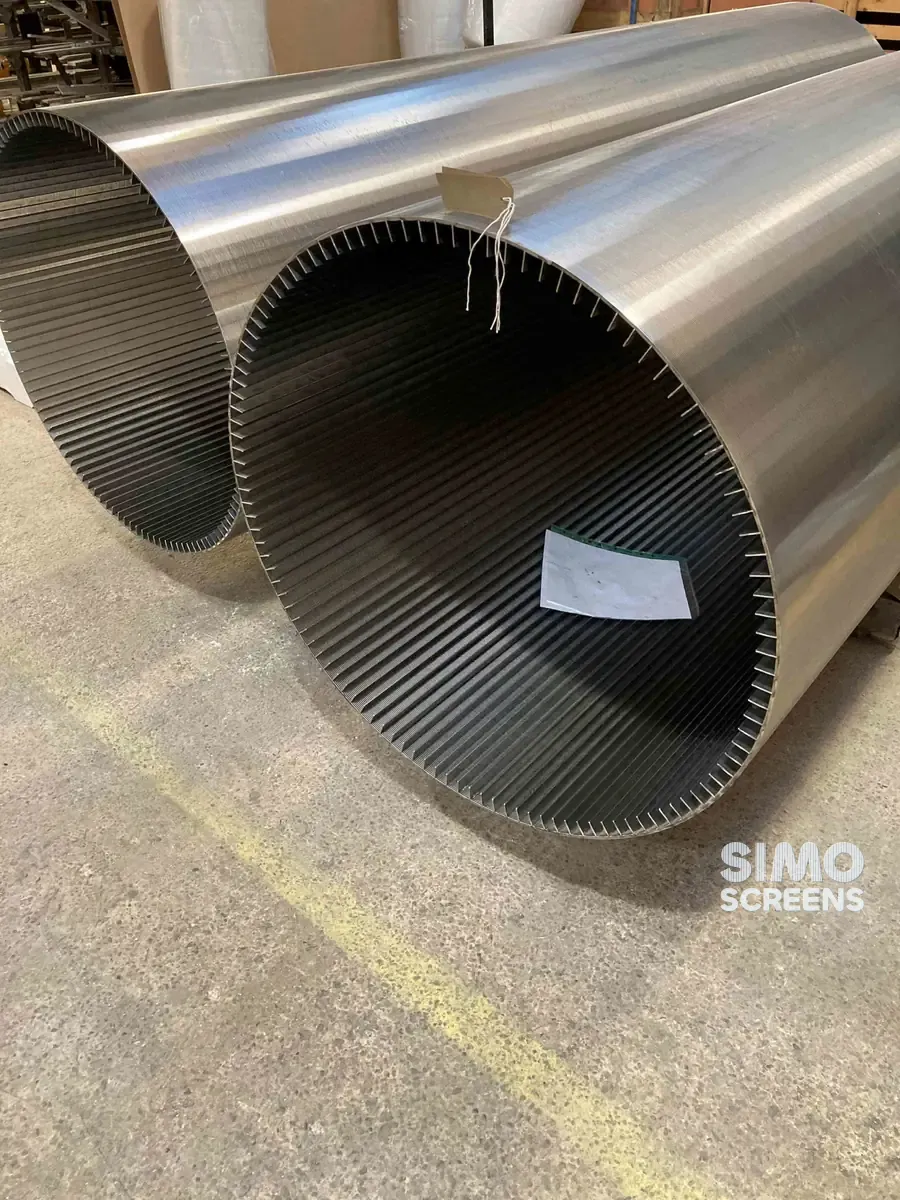
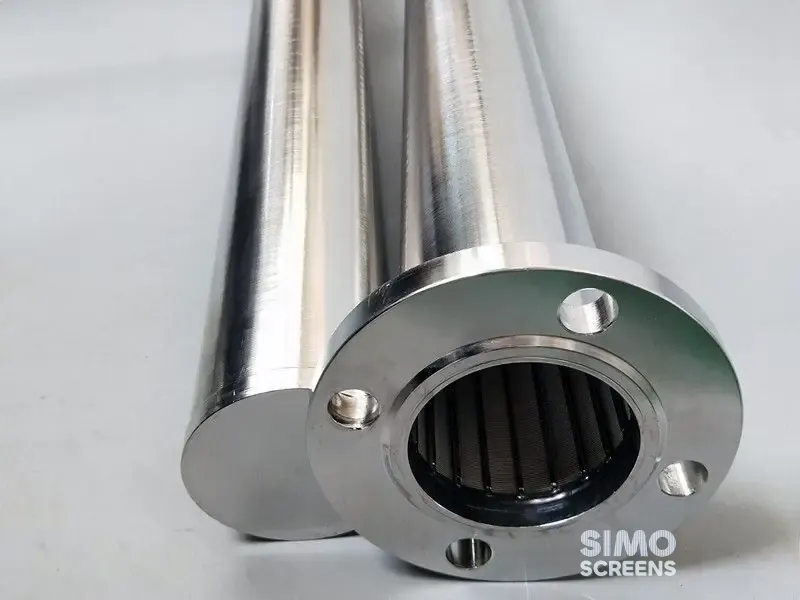
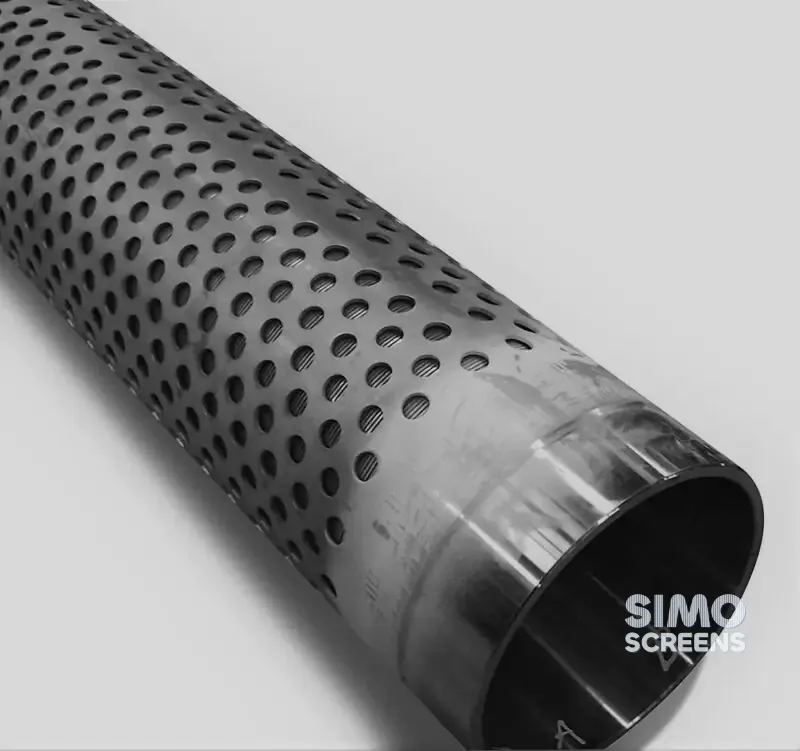
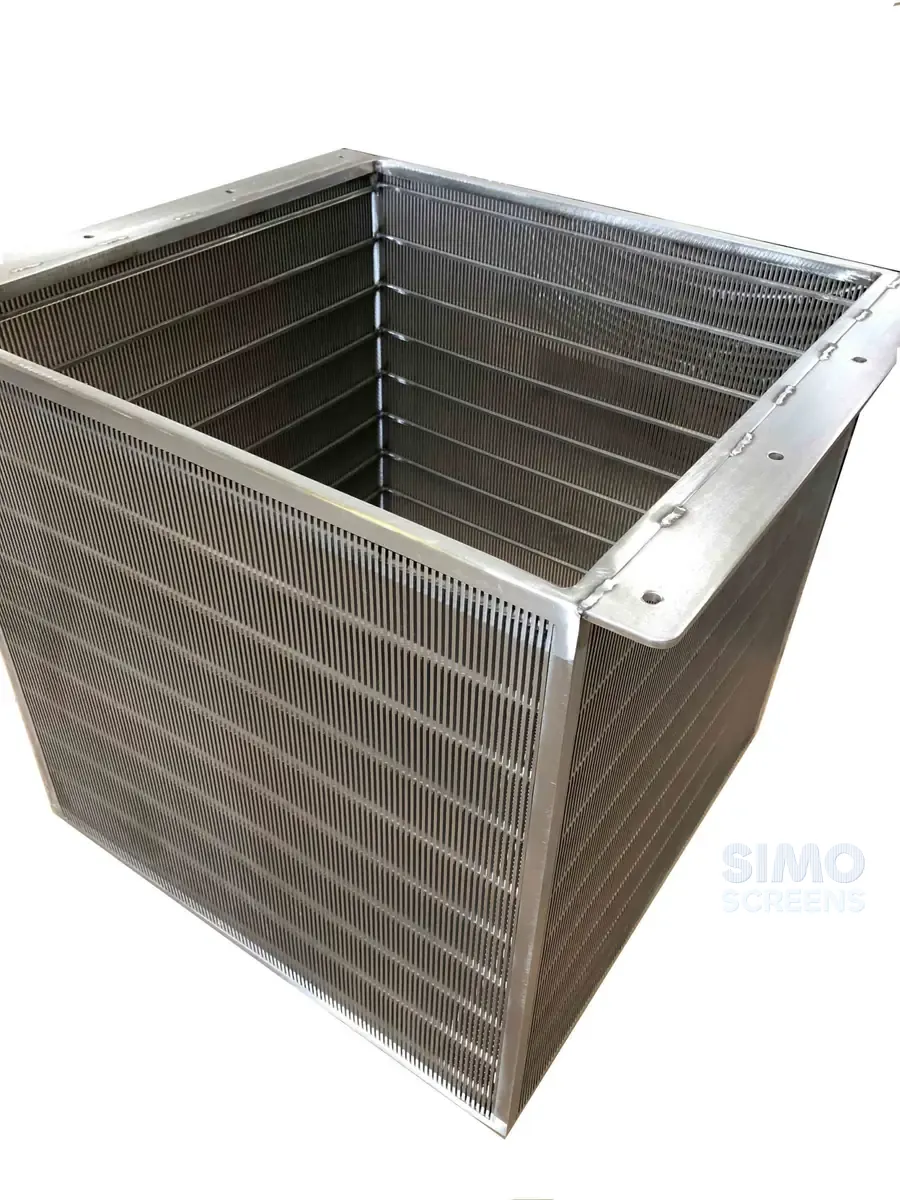
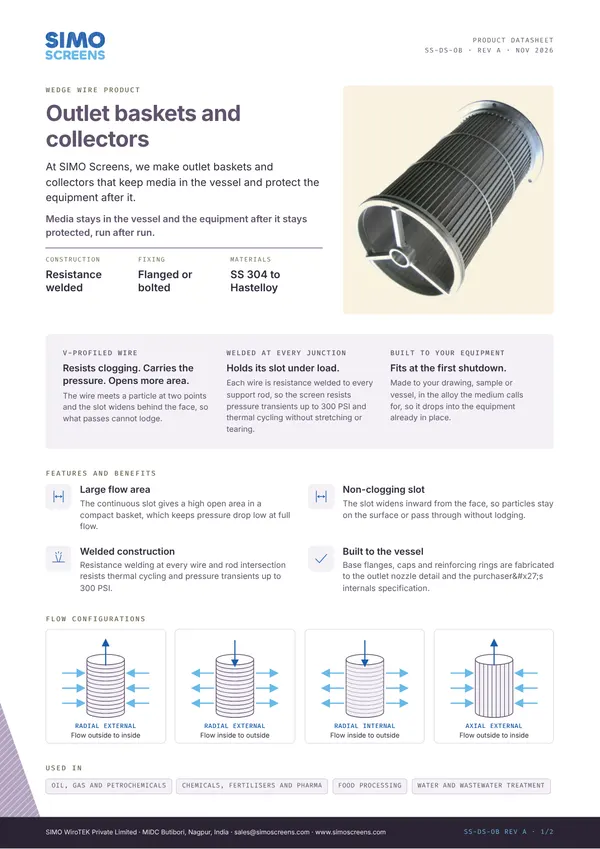
In a downflow hydroprocessing reactor, feed enters at the top through an inlet distributor, and inlet distributor baskets can sit in the top of the catalyst bed. The catalyst rests on support grids between beds and at the bottom of the vessel. At the outlet, a wedge wire outlet collector retains the catalyst and support media while product leaves. Radial flow reactors and adsorbers use wedge wire cylinders, up to 800 mm in diameter, as centre pipes and outer screens.
Molecular sieve driers and adsorbers use the same components: a support grid under the bed and an outlet basket at the bottom nozzle. Inline strainers protect pumps and control valves along the process lines. Upstream, producing wells use sand control screens in wire-wrapped and pre-packed designs to hold back formation sand.
Swipe to see the full drawing.
Equipment and refinery screen selection
| Equipment | Screen function | SIMO product |
|---|---|---|
| Hydroprocessing reactor catalyst beds | Carries the catalyst bed weight and passes flow evenly with low pressure drop | Support grids and vessel bed supports |
| Reactor outlet nozzles | Retains catalyst and support media while product leaves the reactor | Outlet baskets and collectors |
| Reactor inlet distributors and radial flow centre pipes | Spreads incoming flow into the bed, or collects it in radial flow designs | Wedge wire cylinders |
| Molecular sieve driers and adsorbers | Supports the adsorbent bed and retains it at the outlet | Outlet baskets and collectors, support grids |
| Inline strainers on process lines | Captures escaped media and debris before pumps and valves | Resin traps (inline strainers) |
Swipe sideways to see the whole table.
Materials and design considerations
The points below reflect general engineering practice. The licensor or process specification governs the final design, which is confirmed during engineering review.
Flow configuration
Wedge wire can be built with the profile outside or inside, and for flow in either direction. Outlet collectors usually take flow from outside to inside, while distributors may take it from inside to outside. The flow configuration guide explains each option.
Slot and support media
The slot is set below the smallest catalyst or support particle it must retain. Catalyst breakage over a run produces fines, so the design allows for the smallest particle size the bed will contain late in the cycle.
Structure and thermal expansion
Support grids carry the bed weight, the pressure drop across the bed and any liquid hold-up, so the support beams, grid sections and clamps are designed together. Joints must allow for thermal expansion between the internal and the shell, and every segment must pass the manway and be light enough to handle inside the vessel. Custom designs are validated with FEA.
Material
Material follows the process conditions: temperature, hydrogen partial pressure, sulphur and chlorides. SIMO supplies SS 304, SS 316L, Duplex 2205, Super Duplex 2507, Hastelloy C-276 and Monel, with other Hastelloy grades on request subject to availability in India. The material selector gives a first comparison.
SIMO Screens capability for oil, gas and refining
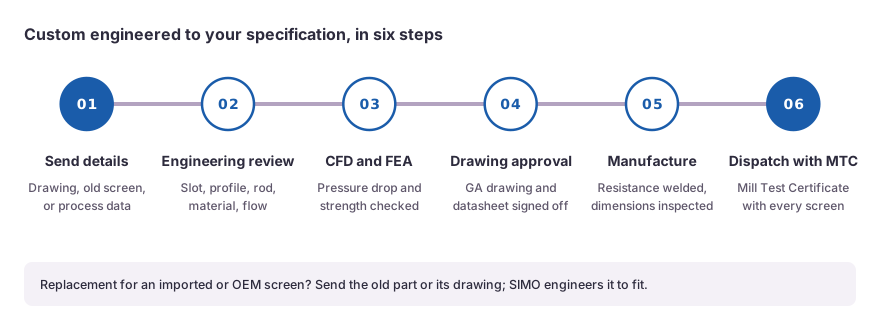
Every internal is engineered to the vessel drawing and process data. The custom engineering process runs from engineering review, through CFD and FEA where required, to a drawing approved before production.
Profile wire is formed in house to SIMO profile codes and resistance welded to the support rods at every intersection, with seam welding where the design calls for it. Slot width is checked with feeler gauges or optical measurement against a standard tolerance of plus or minus 5 percent of nominal. Fabrication welds are visually inspected, with dye penetrant testing wherever specified, and PMI is carried out through approved agencies on request.
Each component is identified with job number, item and slot on a QR-coded tag, laser marked where the client requires it, and heat numbers are traceable from the Mill Test Certificate to the finished internal. The MTC is standard, and the dimensional inspection report, quality assurance plan and third-party inspection are provided on request. Production is at the SIMO works in MIDC Butibori, Nagpur, under an ISO 9001:2015 quality system.
What to send for a quotation
- Equipment: hydroprocessing reactor, adsorber, molecular sieve drier or process line.
- Vessel drawing with inside diameter, manway size, nozzle positions and existing internals.
- Design pressure, design temperature and flow direction.
- Catalyst or adsorbent type and size, and any ceramic ball or support media.
- Bed weight or bed depth, and the allowable pressure drop.
- Material specification and any licensor or project specification.
- Inspection, testing and documents you need beyond the standard MTC.
- Your turnaround schedule and the date the internals are required.
 Upload a drawing