 +91 93730 08466
 Screen tubes and pipes
 Screen cylinders
 Flat panels and false bottoms
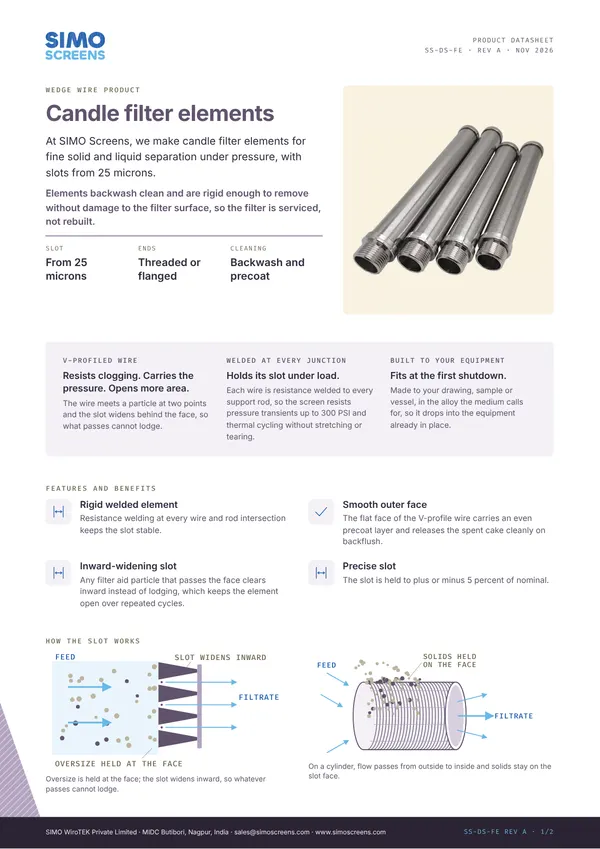
 Candle filter elements
 Water well screens
 Header and hub laterals
 Filter nozzles
 Resin traps
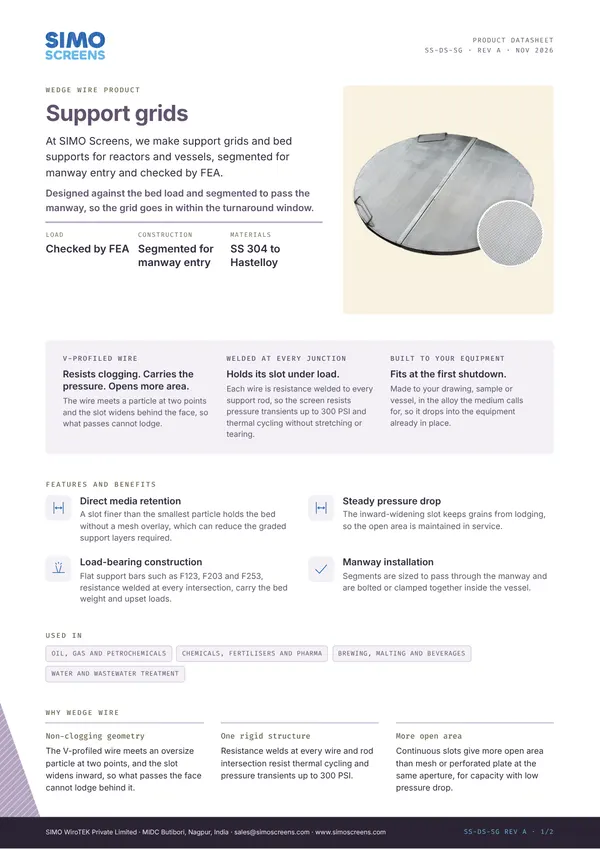
 Support grids
 Sieve bend (DSM) screens
 Centrifuge baskets
 Pressure screen baskets
 Screw press screens
 Rotary drum screens
 Passive intake screens
 Coanda intake screens
 Water and wastewater treatment
 Water wells and groundwater
 Sugar and distillery
 Brewing, malting and beverages
 Food processing
 Mining and minerals
 Oil, gas and petrochemicals
 Chemicals, fertilisers and pharma
 Power generation
 Pulp and paper
 Buildings and drainage
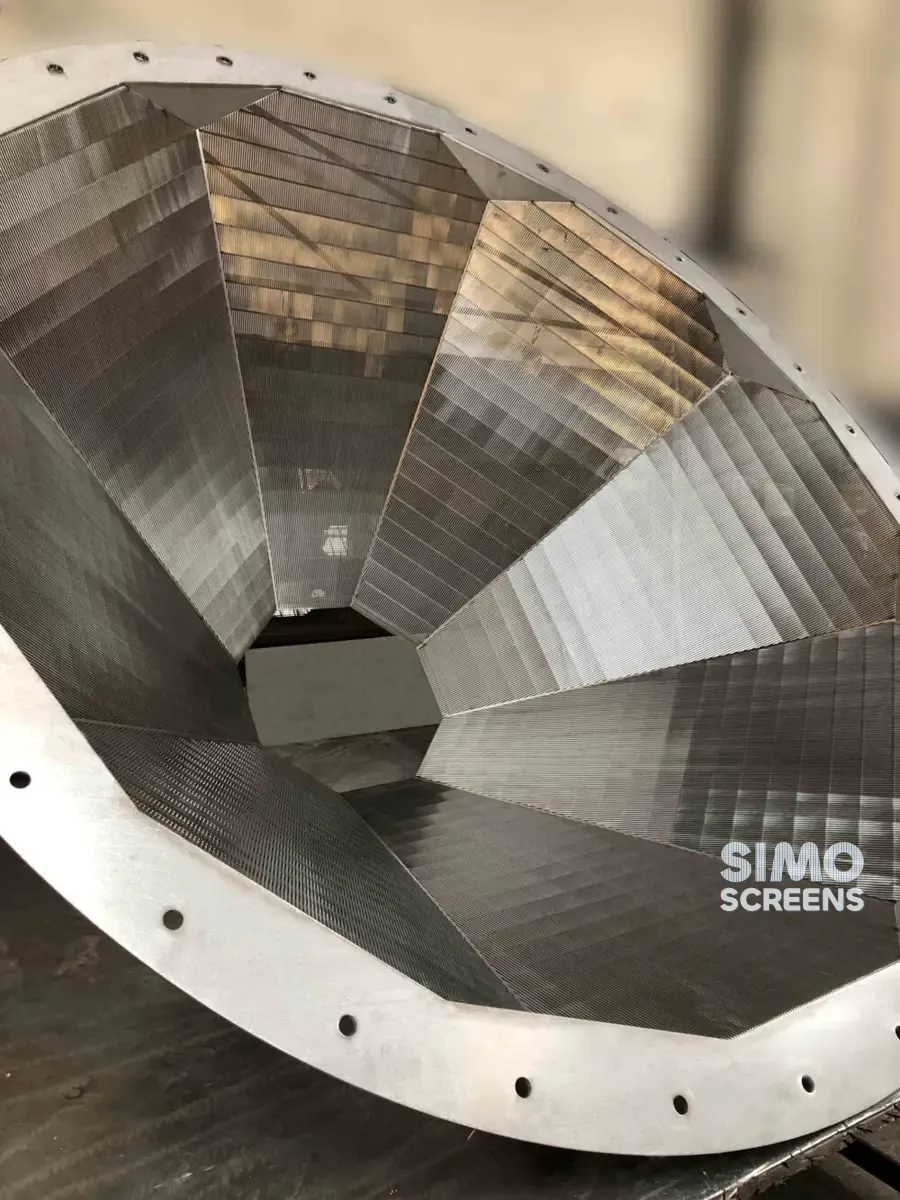
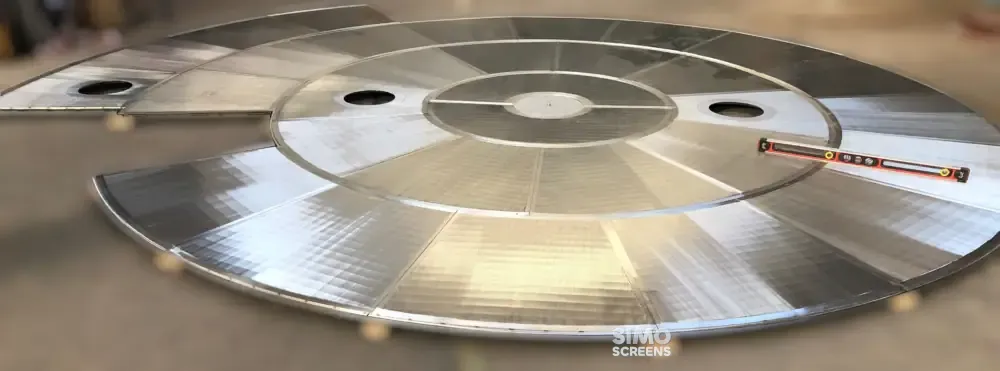

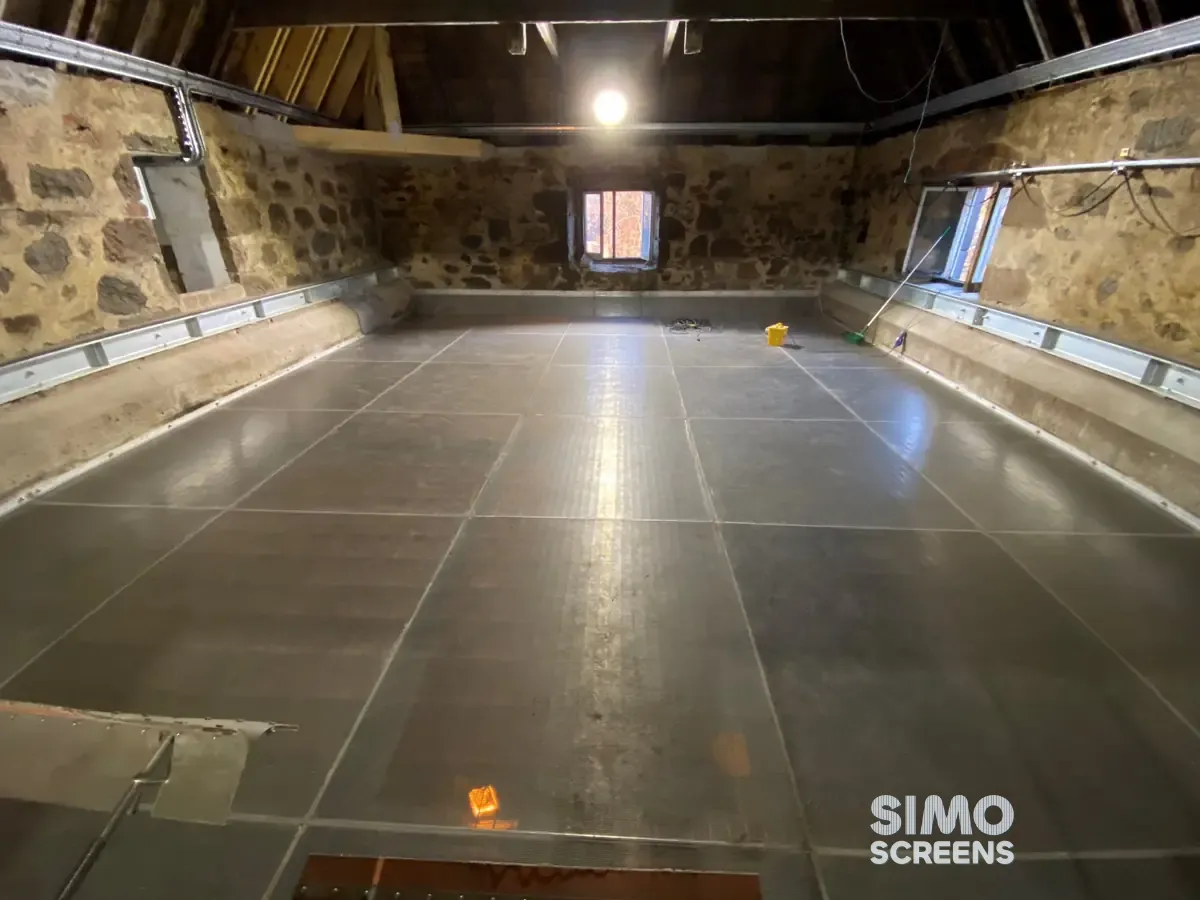
Brewing and malting screening applications
SIMO Screens supplies wedge wire screens for each stage of malting and brewing, from the steeping tank to beer filtration. At every stage the screen carries a bed of grain or filter aid while liquid or air passes through it evenly, so the slot accuracy, open area and flatness of the screen govern how the process runs.
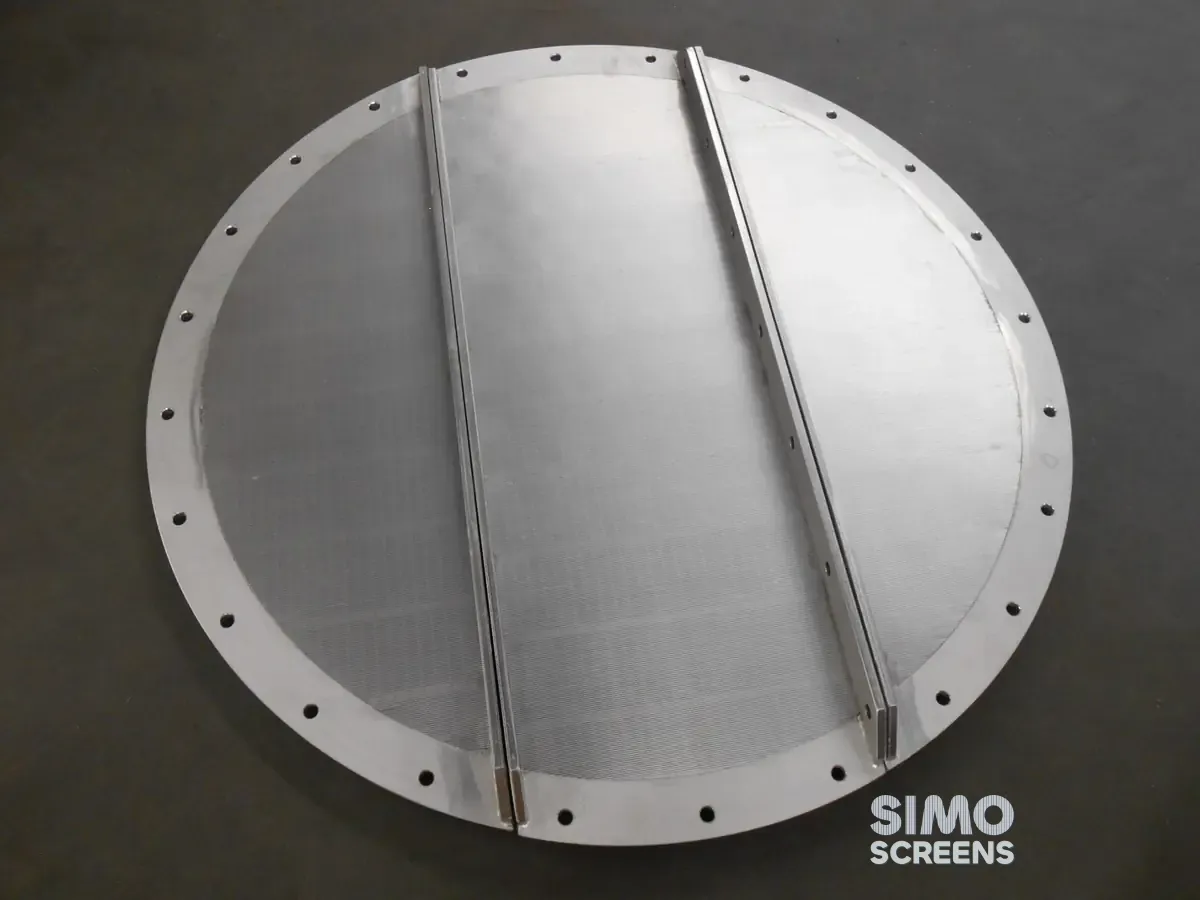
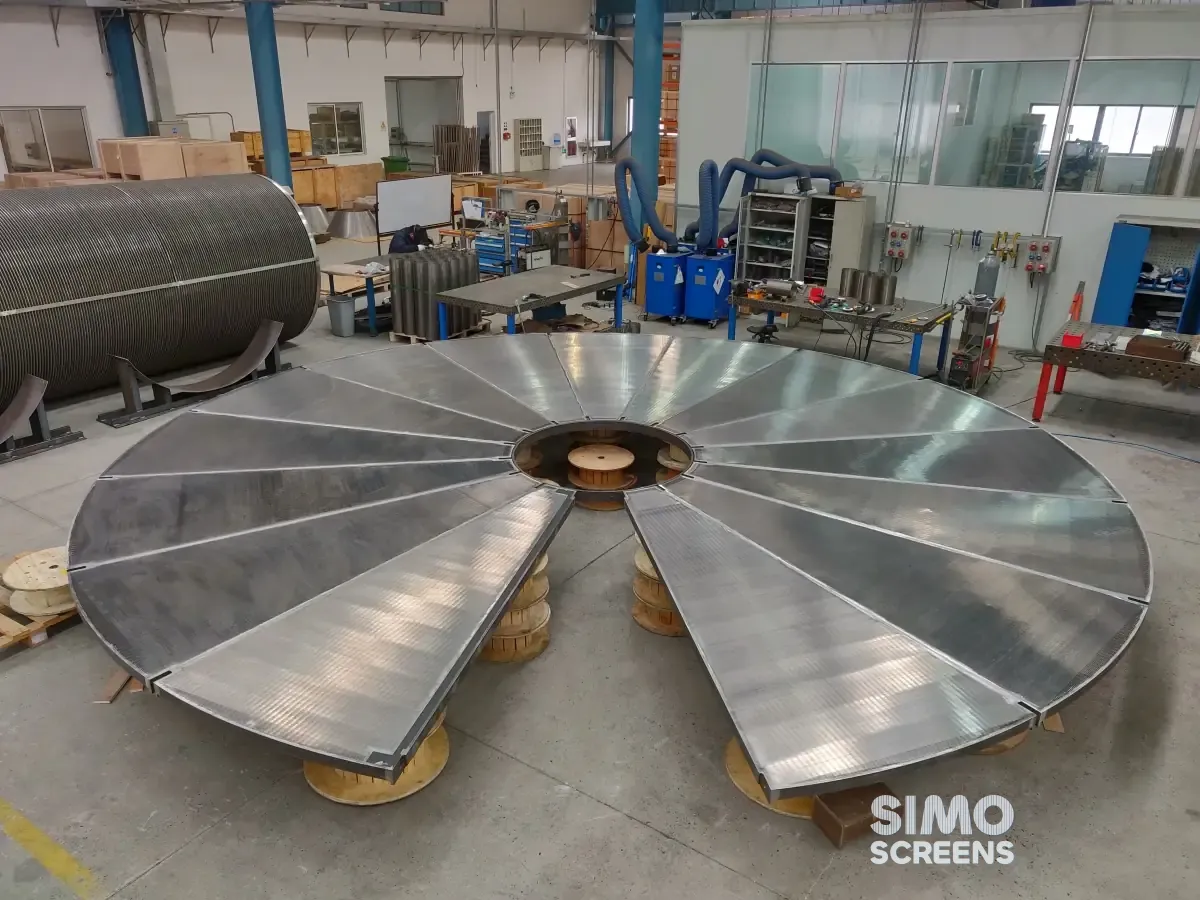
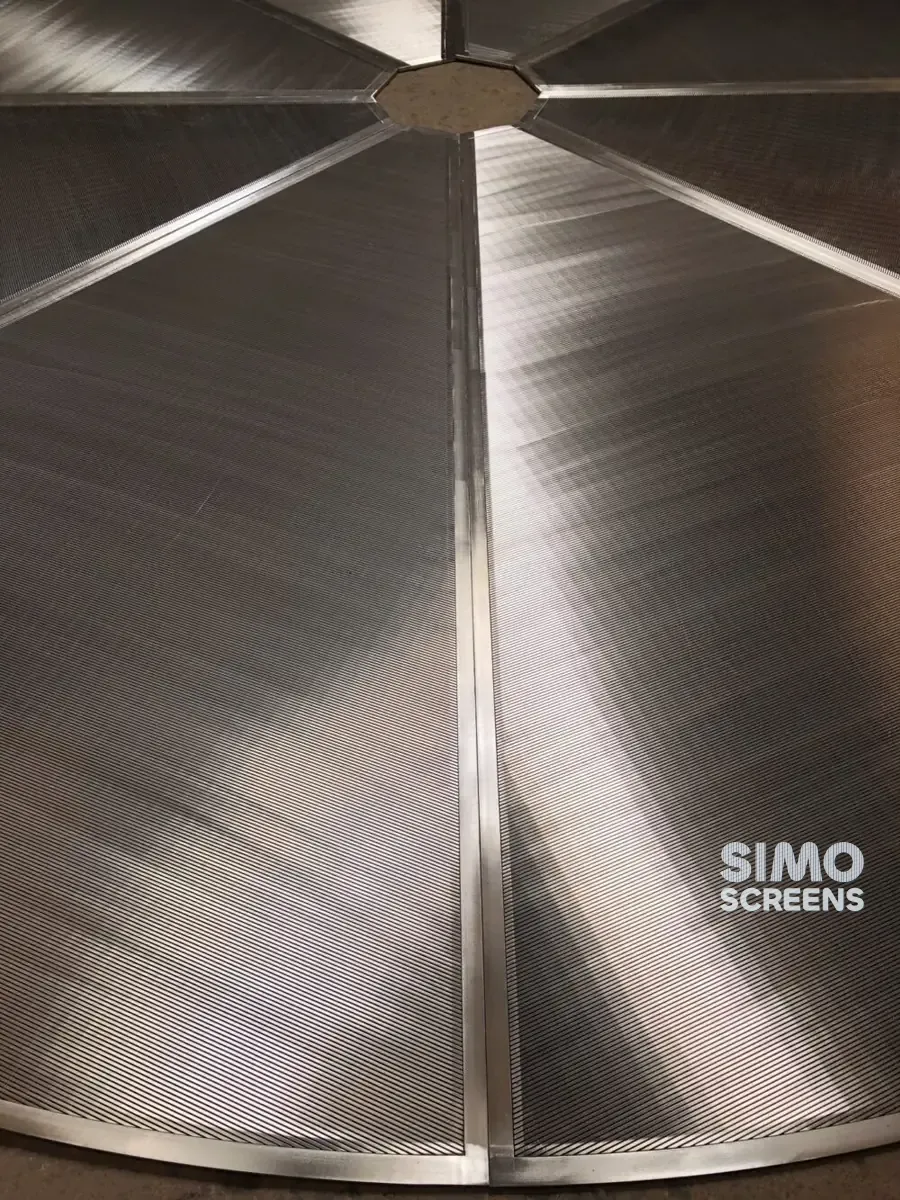
In the brewhouse, the lauter tun false bottom sets run-off time and extract. It holds back the husk bed while wort drains evenly across the full vessel floor. Slots that plug with fines compact the bed and slow run-off, while uneven drainage leaves extract behind in the spent grain.
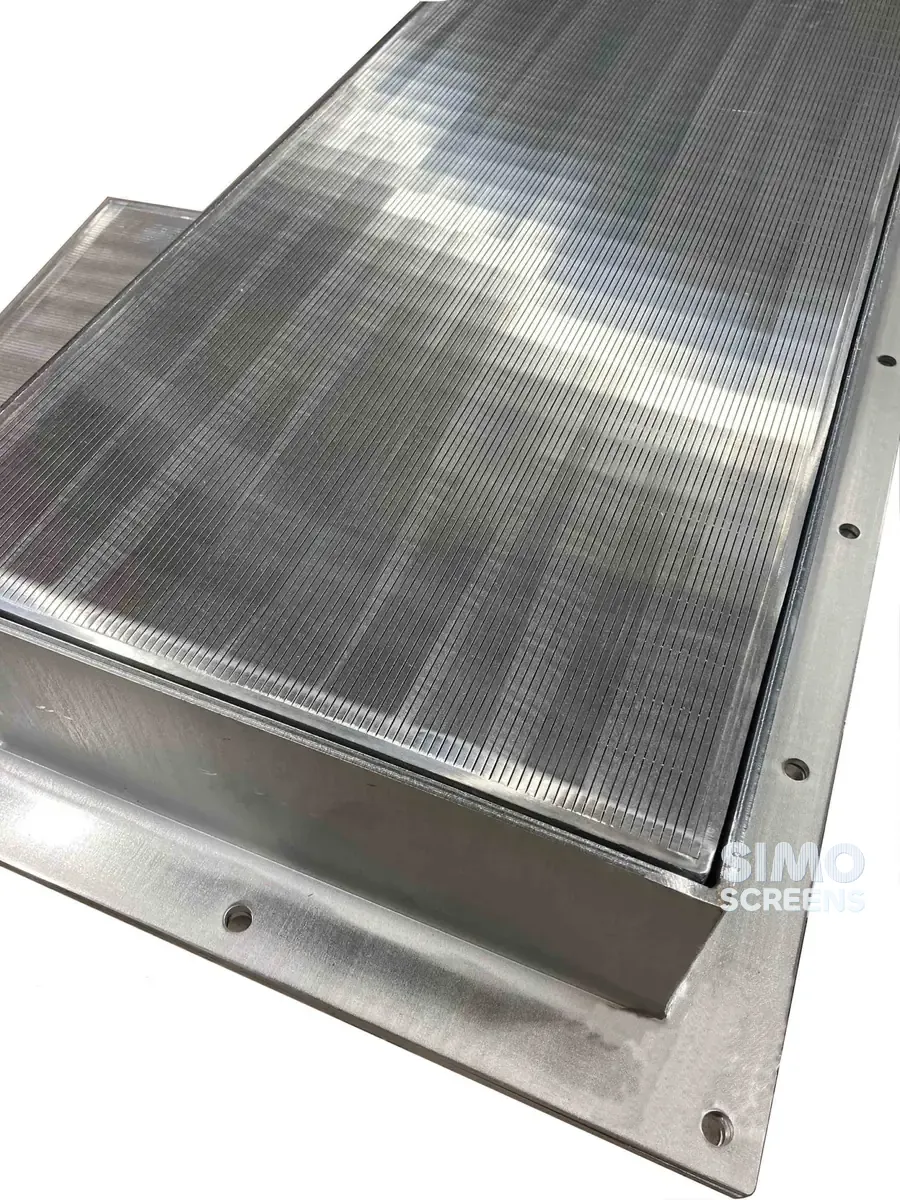
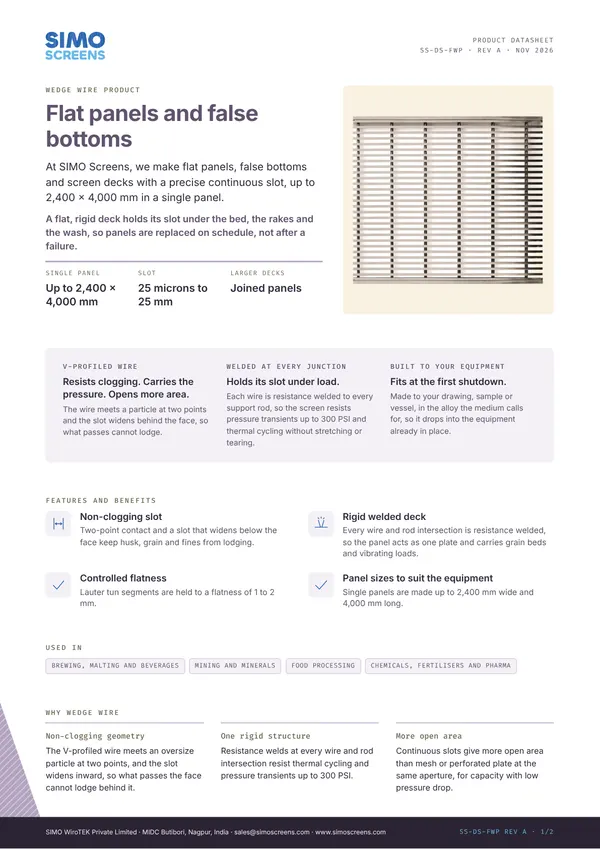
Milled slot plates are widely used, but their open area is limited and their straight-walled slots can hold husk fragments that cleaning in place does not clear. In a wedge wire false bottom the flat-topped V-wire forms a slot that widens below the surface, so particles that pass the face fall clear and CIP sprays rinse the slot from both sides.
In the malt house, malting screens carry deep beds of grain on steeping, germination and kiln floors while water or hot air passes through them. Deflection or a blocked area leads to uneven modification and uneven kilning, so each floor is designed for stiffness and a uniform open area across its full width.
After fermentation and maturation, beer is often clarified in a precoat candle filter, where the filter aid builds up on wedge wire candle elements. Brewery water is treated upstream in filters, softeners and DM vessels that use the same wedge wire internals as a water treatment plant.
Swipe to see the full drawing.
Swipe to see the full drawing.
Equipment and brewery screen selection
| Equipment | Screen function | SIMO product |
|---|---|---|
| Lauter tun and mash tun | Supports the grain bed as a false bottom and allows even wort run-off | Flat wedge wire panels and false bottoms, support grids |
| Malt steeping, germination and kiln floors | Carries the grain bed and passes water or kiln air evenly through it | Flat wedge wire panels |
| Beer filtration (precoat candle filters) | Holds the filter aid layer that clarifies the beer, then releases it on backflush | Candle filter elements |
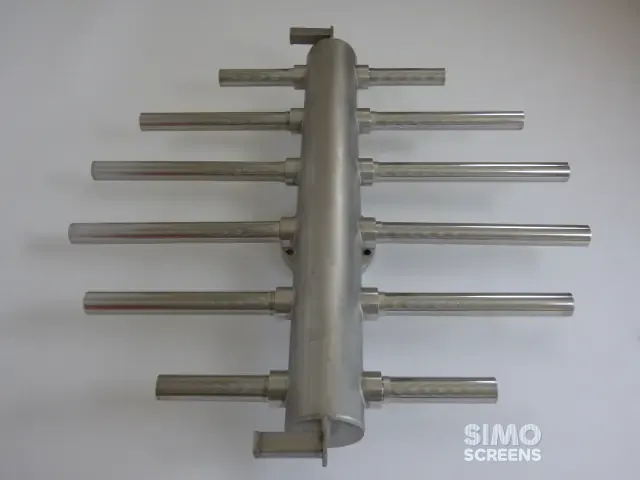
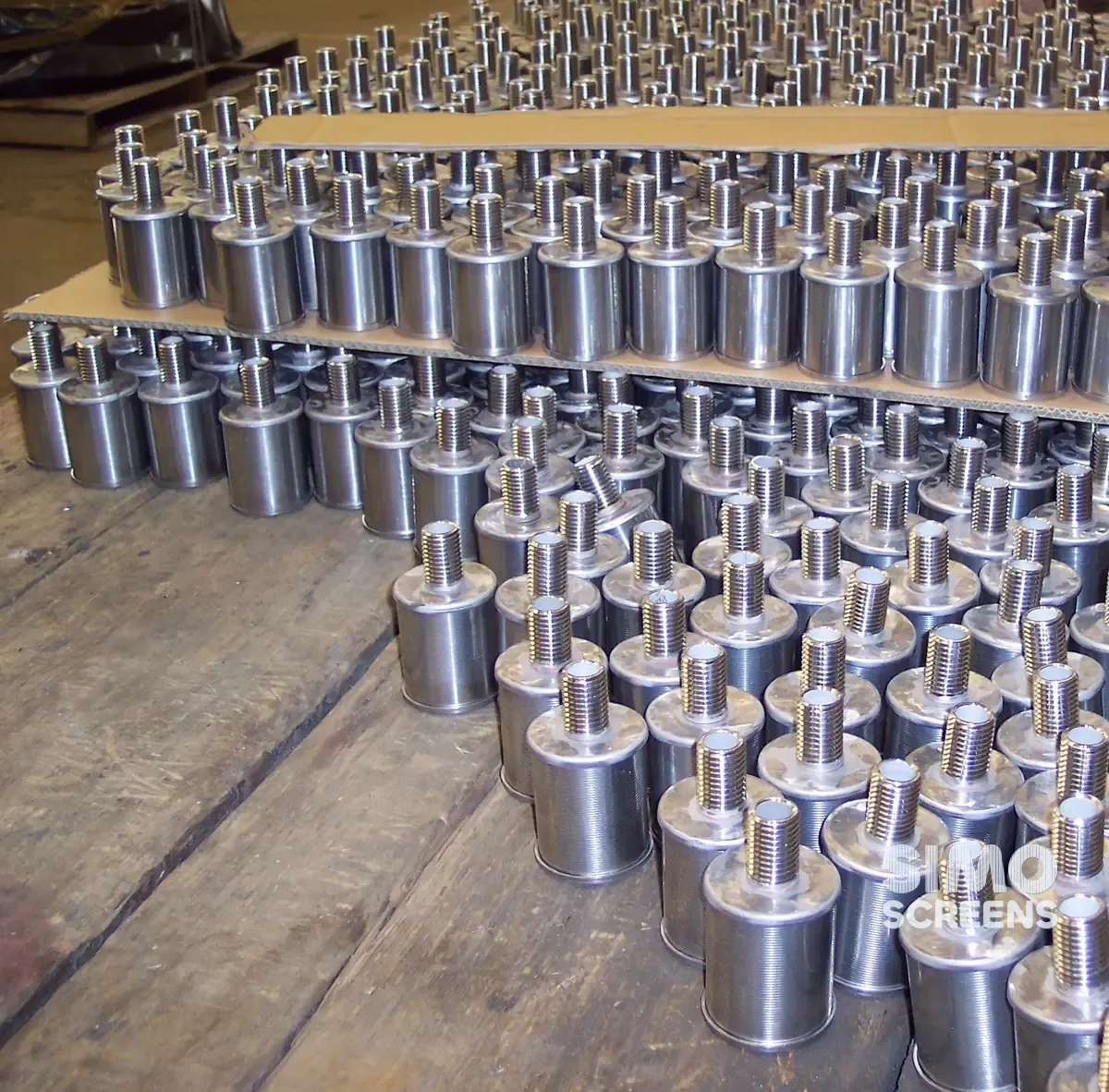
| Brewery water filters, softeners and DM vessels | Retains media and resin and distributes flow evenly | Header and hub lateral assemblies, filter nozzles |
| Brewery water outlet lines | Captures escaped resin before it reaches pumps and process lines | Resin traps |
Swipe sideways to see the whole table.
Materials and design considerations for brewing screens
The points below reflect general engineering practice. The final design for each vessel is confirmed during engineering review.
Lauter tun false bottoms
A 0.7 mm slot is the most common choice for lauter tun false bottoms, with slots from 0.5 to 1 mm selected according to the mill and the grist. The false bottom is built as segments that rest on supports above the tun floor, each sized to pass the manway and to be handled safely. Segment flatness is held to 1 to 2 mm so that the bed drains evenly and the segments seat without gaps.
The lauter tun false bottom guide compares wedge wire with milled plate, and the lauter tun calculator gives a starting estimate of false bottom area and segment count.
Malt kiln and germination floors
Kiln and germination floors typically use slots from about 0.7 mm upward. Kiln floors see hot air and repeated heating and cooling, which the welded construction is built to withstand, and the support rods are sized for the bed load and any turning machine. Germination floors need even drainage and easy washing between batches.
Candle filters
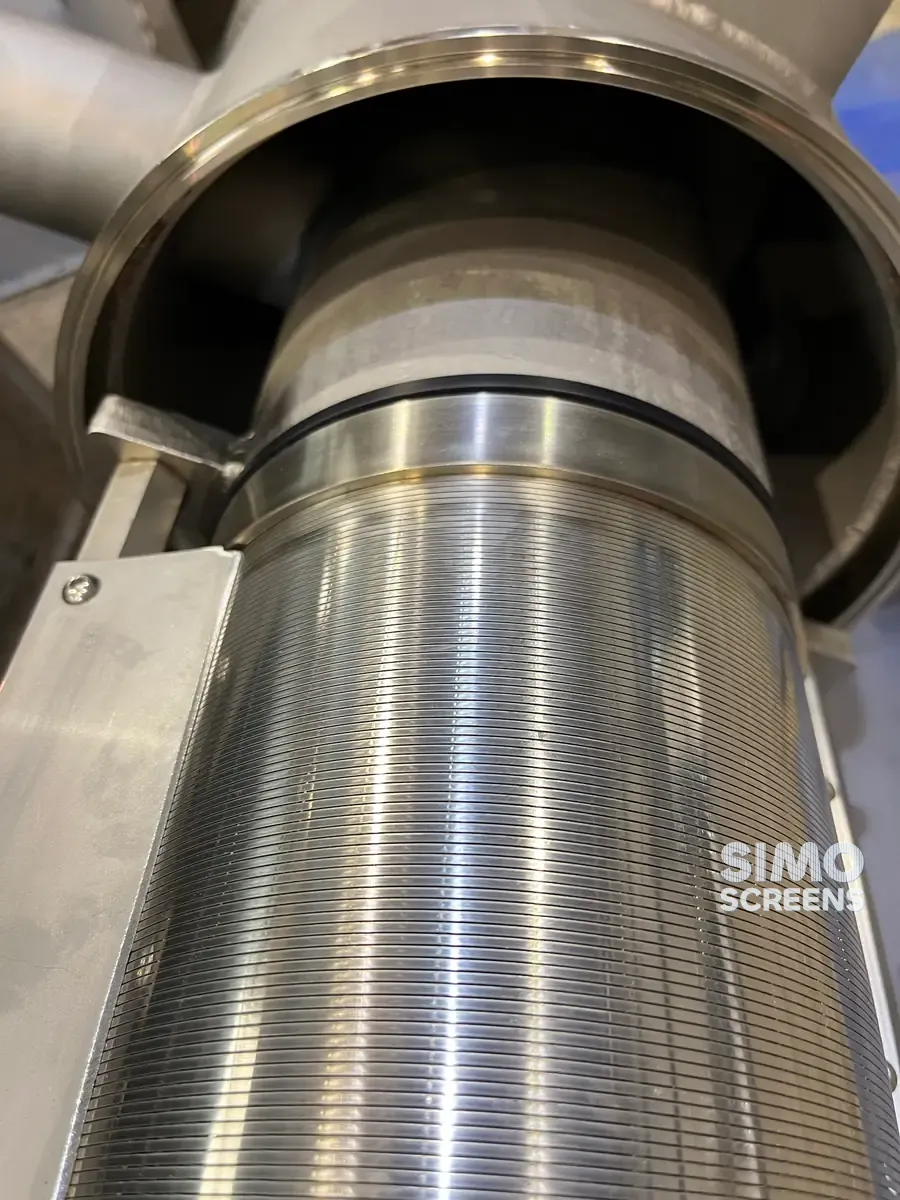
Precoat candles need a uniform slot so that the filter aid bridges it and builds an even cake. Straight, rigid elements allow the cake to release cleanly on backflush and keep the candles aligned in the tube sheet.
Material and hygiene
SS 304 is the usual material for brewery screens, and SS 316L is selected for aggressive CIP chemicals, higher chloride levels in the water or where the brewery specification requires it. Fully welded construction leaves fewer crevices for deposits, and pickling, passivation or electropolishing can be arranged through approved agencies on request.
SIMO Screens capability for brewing and malting
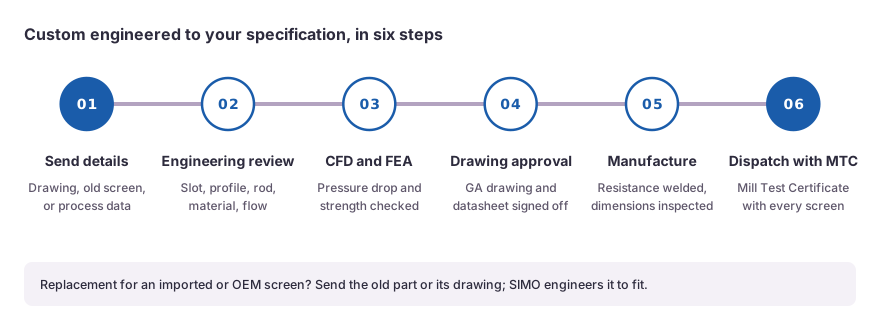
Most SIMO brewery screens are engineered to order from the brewery's vessel drawing, a sample, the general arrangement drawing (GAD) or measurements taken during a site visit. The same route is used for replacement false bottoms in existing vessels. The custom engineering process moves from engineering review to an approved drawing before production begins.
Profile wire is formed in house to SIMO profile codes and resistance welded to the support rods at every intersection. Slot width is checked with feeler gauges at set-up, during the run and at the end of each screen, against a standard tolerance of plus or minus 5 percent of nominal. FEA is used to check false bottom segments and kiln floors under bed load where the span calls for it.
Every screen ships with a Mill Test Certificate, and the dimensional inspection report and quality assurance plan are supplied on request. Production is at the SIMO works in MIDC Butibori, Nagpur, under an ISO 9001:2015 quality system.
What to send for a quotation
- Equipment: lauter tun, mash tun, steeping tank, germination floor, kiln floor, candle filter or water treatment vessel.
- Vessel drawing or GAD with inside diameter or floor dimensions, manway size and support positions.
- Batch size or bed depth, and the grain or malt load on the floor.
- Your current slot size or false bottom type, and any run-off or cleaning problem you see today.
- For candle filters: candle length, diameter, tube sheet connection and quantity.
- Material preference and the CIP chemicals you use.
- Quantity, and any documents you need beyond the standard MTC.
 Upload a drawing