 +91 93730 08466
 Screen tubes and pipes
 Screen cylinders
 Flat panels and false bottoms
 Candle filter elements
 Water well screens
 Header and hub laterals
 Filter nozzles
 Resin traps
 Support grids
 Sieve bend (DSM) screens
 Centrifuge baskets
 Pressure screen baskets
 Screw press screens
 Rotary drum screens
 Passive intake screens
 Coanda intake screens
 Water and wastewater treatment
 Water wells and groundwater
 Sugar and distillery
 Brewing, malting and beverages
 Food processing
 Mining and minerals
 Oil, gas and petrochemicals
 Chemicals, fertilisers and pharma
 Power generation
 Pulp and paper
 Buildings and drainage

Sugar and distillery screening applications
SIMO Screens supplies wedge wire screens for sugar mills and attached distilleries, from the mill house juice screens to the centrifugals and the boiler feed water plant. Sugar mills run continuously through the crushing season, and the screens in the plant handle abrasive sand, sticky fibre and high centrifugal force, so a screen failure can stop a juice line or a centrifugal.
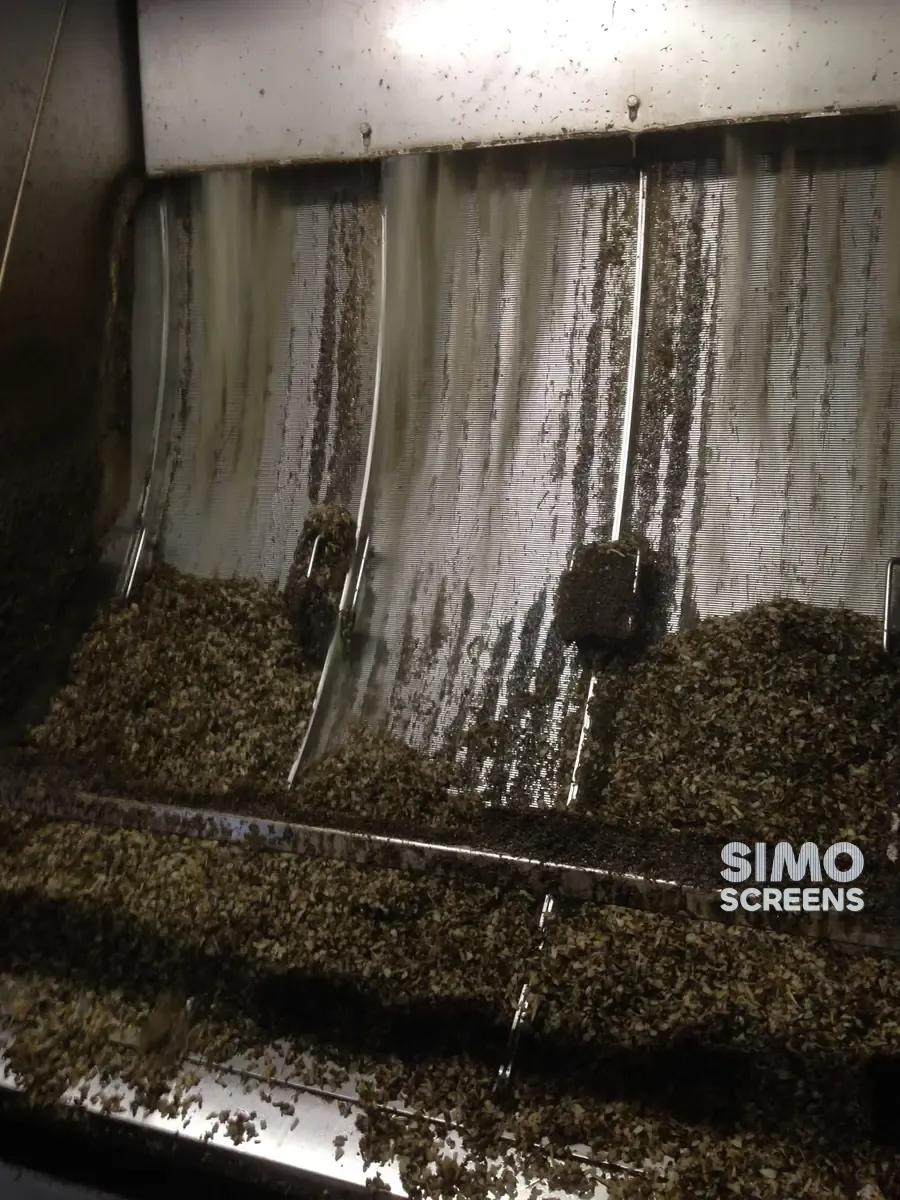
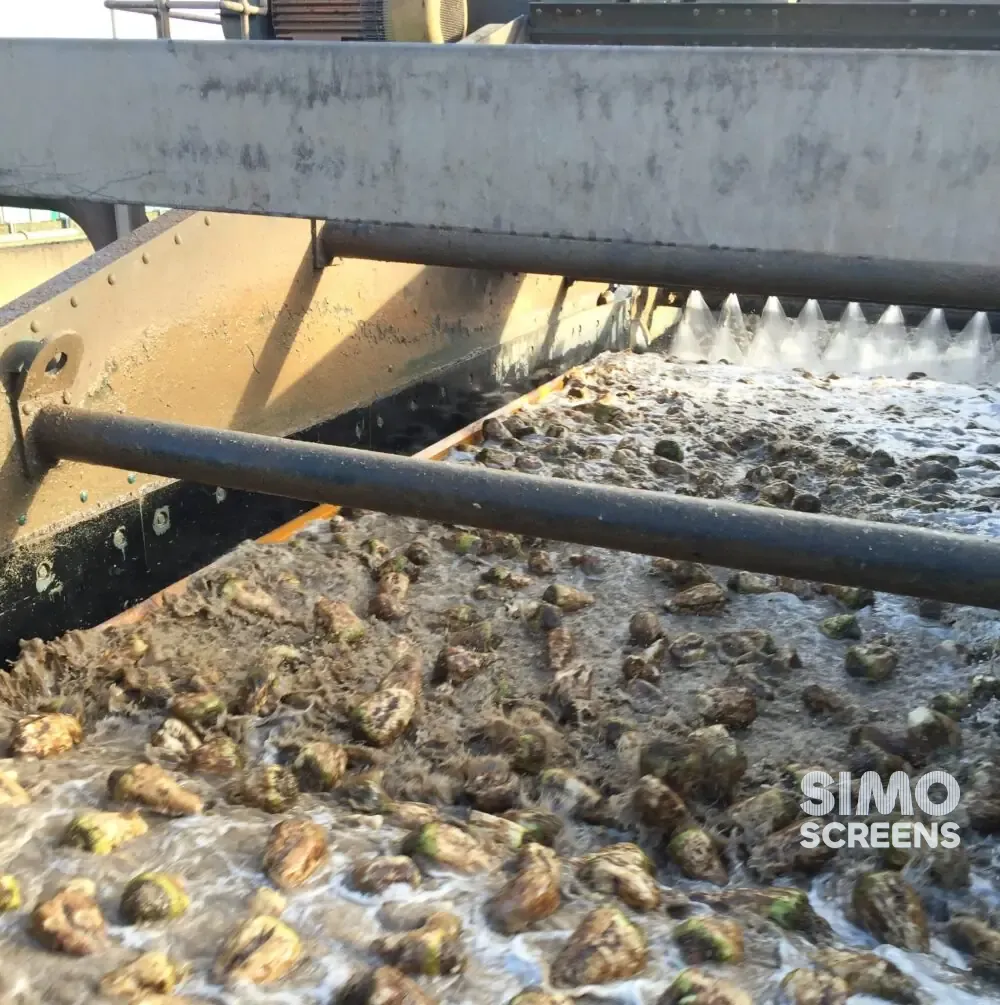
Raw juice leaving the mills carries bagacillo, sand and mud. A blinded juice screen allows juice to overflow or bypass it, and fibre then passes to the clarifier and evaporators. Perforated plate and woven mesh trap fibres in their openings and need frequent cleaning.
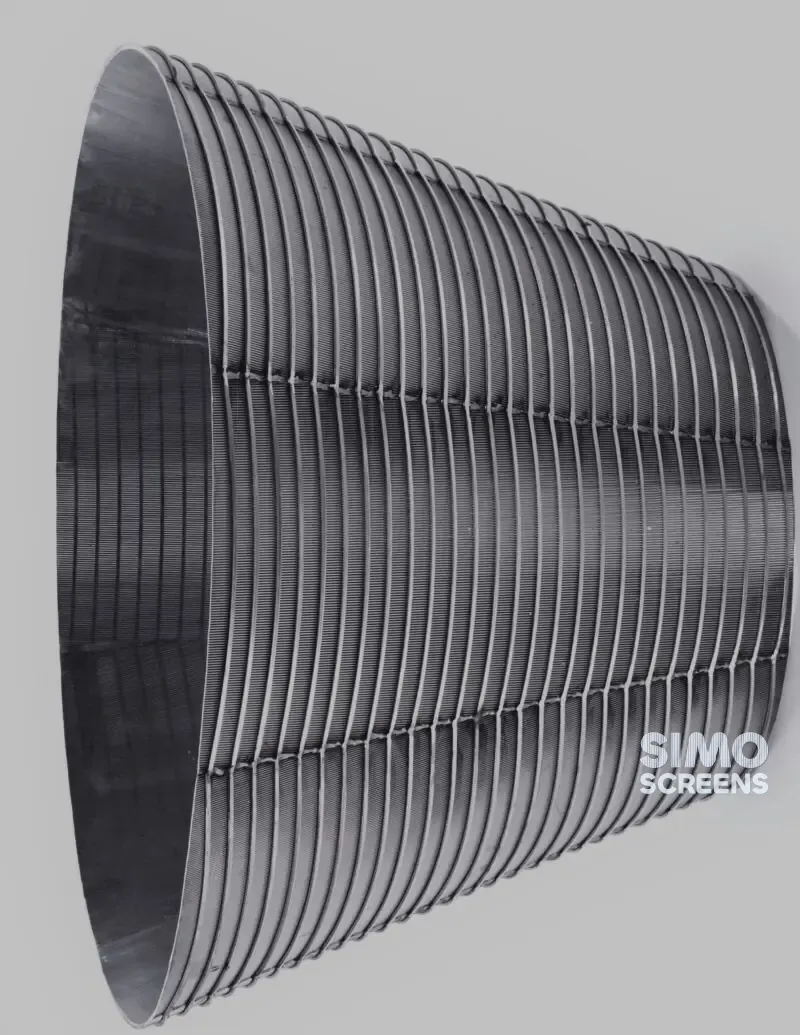
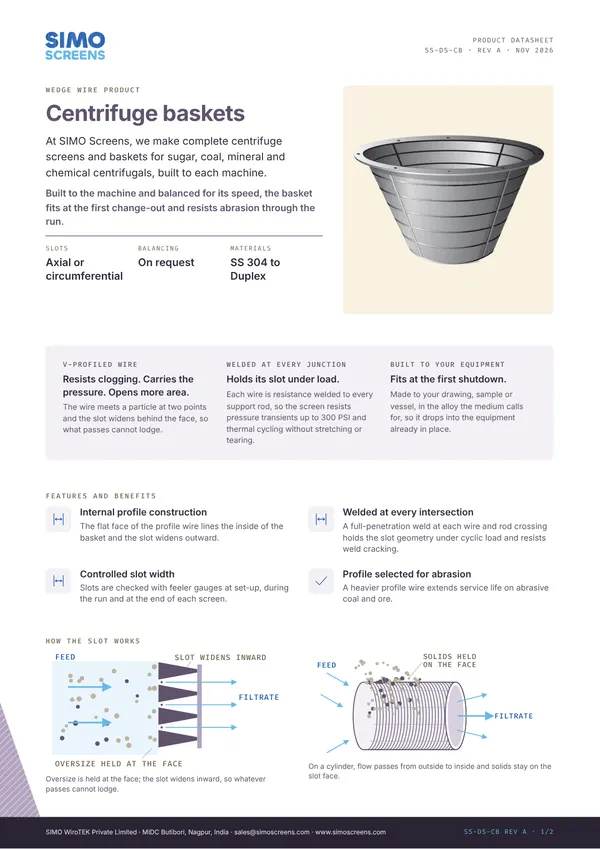
In the centrifugals, the screen holds sugar crystals while molasses drains through. A worn or damaged centrifugal screen lets crystals pass, so sugar is lost to molasses, and a weak basket puts the machine itself at risk. Wedge wire addresses both applications: the V-profile wire gives a smooth face and a slot that widens inward, so bagacillo and crystals do not wedge in place, and resistance welding at every intersection keeps the slot accurate under centrifugal load.
Sugar factory screens in the process
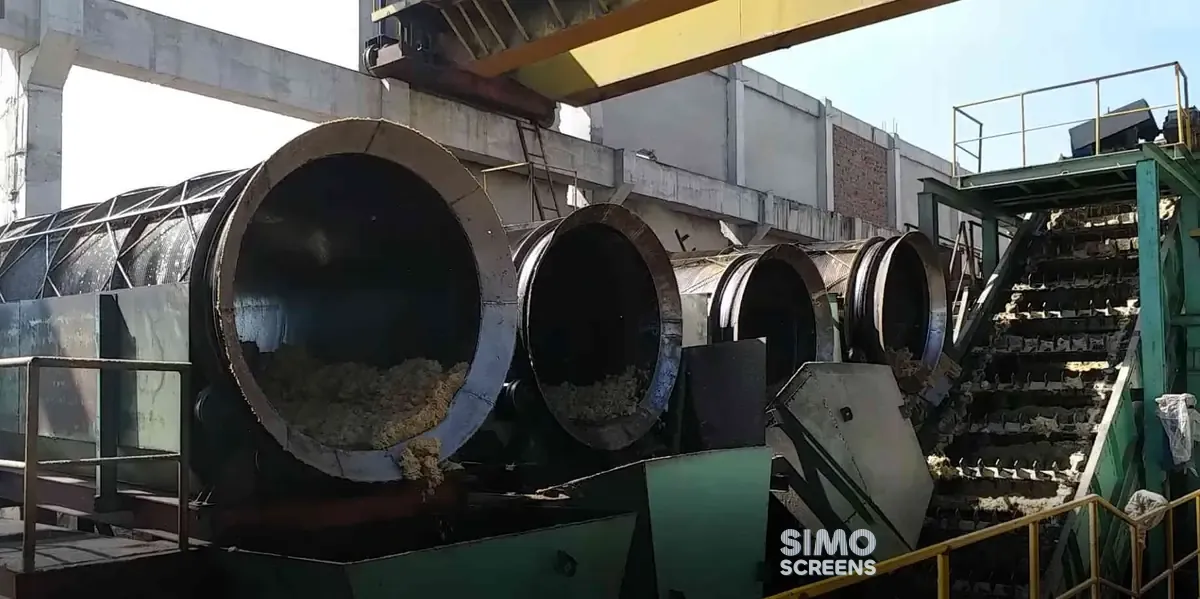
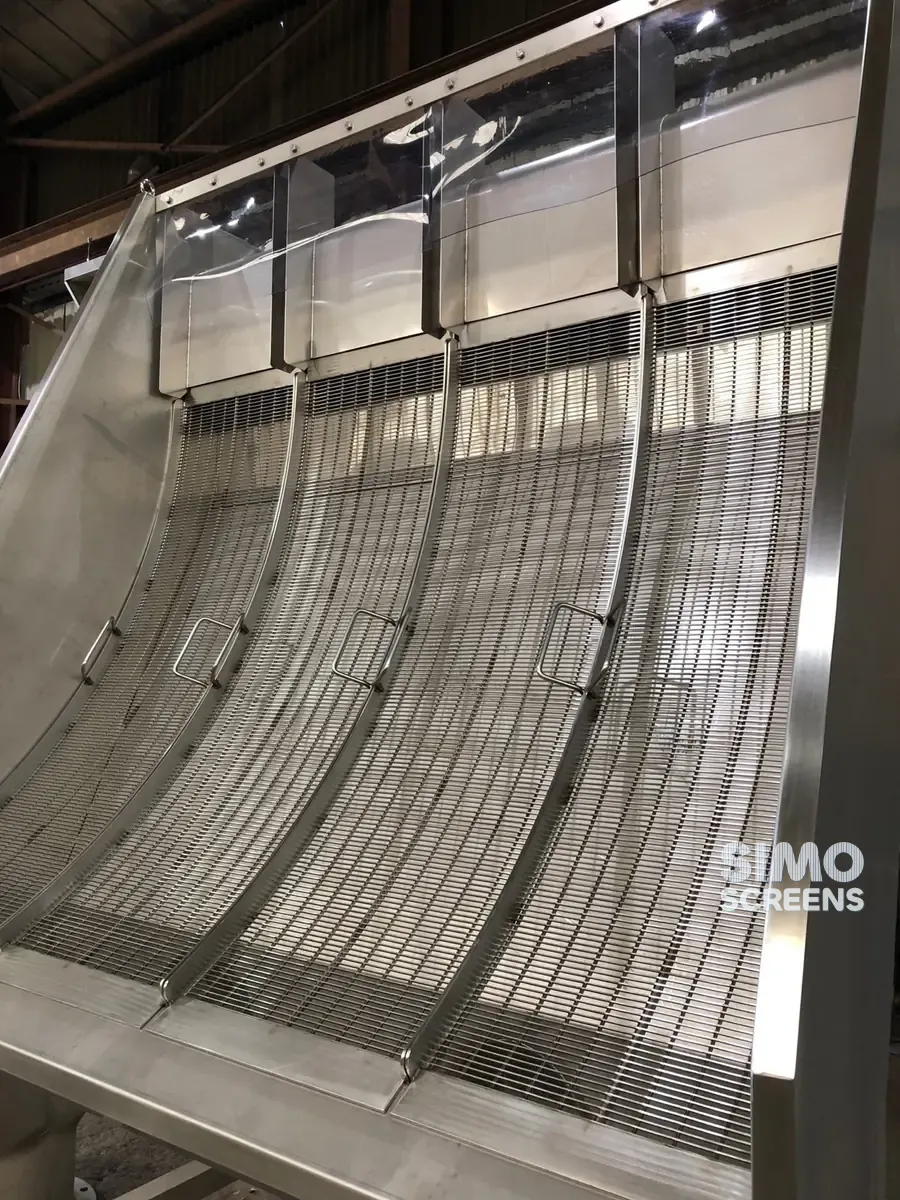
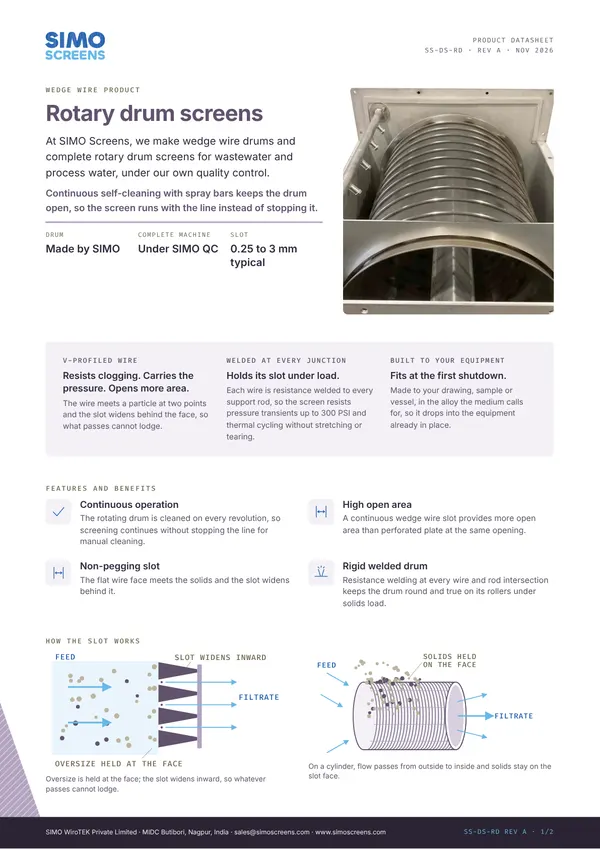
Juice from the mill tandem passes over juice screens, usually sieve bends or rotary drum screens, before heating and clarification. Clear juice goes through evaporation and pan boiling to massecuite, which passes to the centrifugals. Batch centrifugals generally handle high grade massecuite and continuous centrifugals the lower grades, and both depend on a precise slot screen.
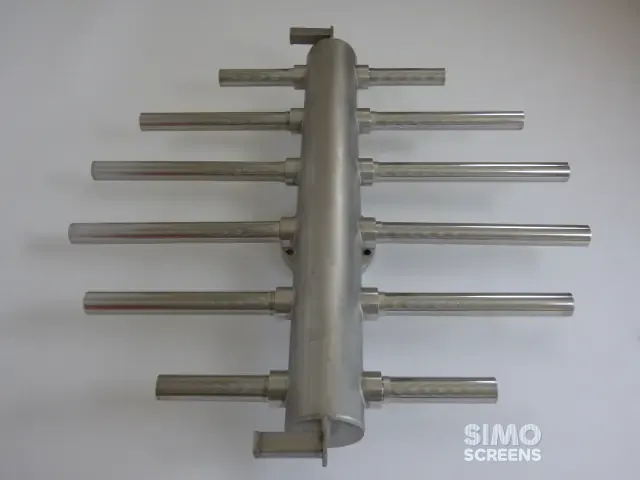
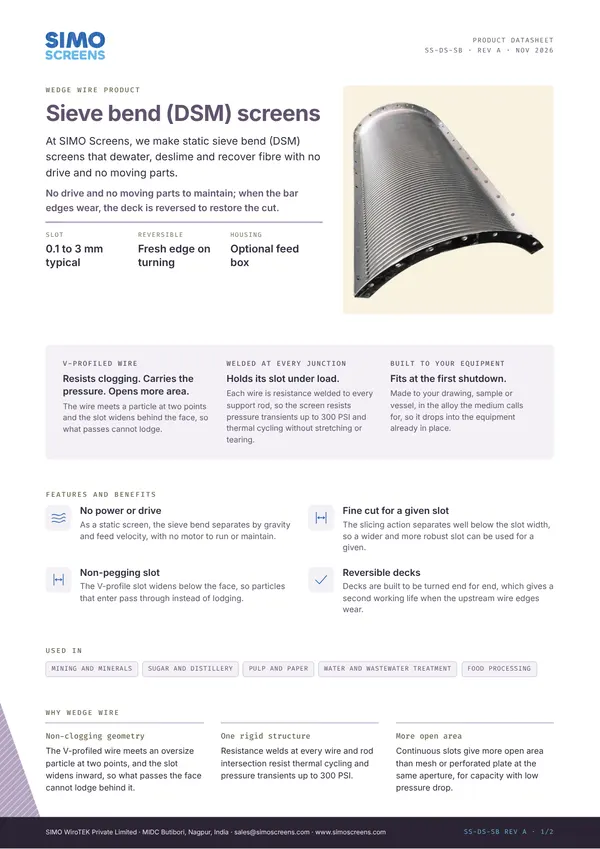
The cogeneration boiler needs demineralised feed water from a DM plant fitted with laterals, nozzles and resin traps. In an attached distillery, sieve bends screen suspended solids from spent wash ahead of treatment.
Swipe to see the full drawing.
Equipment and sugar industry screens selection
| Equipment | Screen function | SIMO product |
|---|---|---|
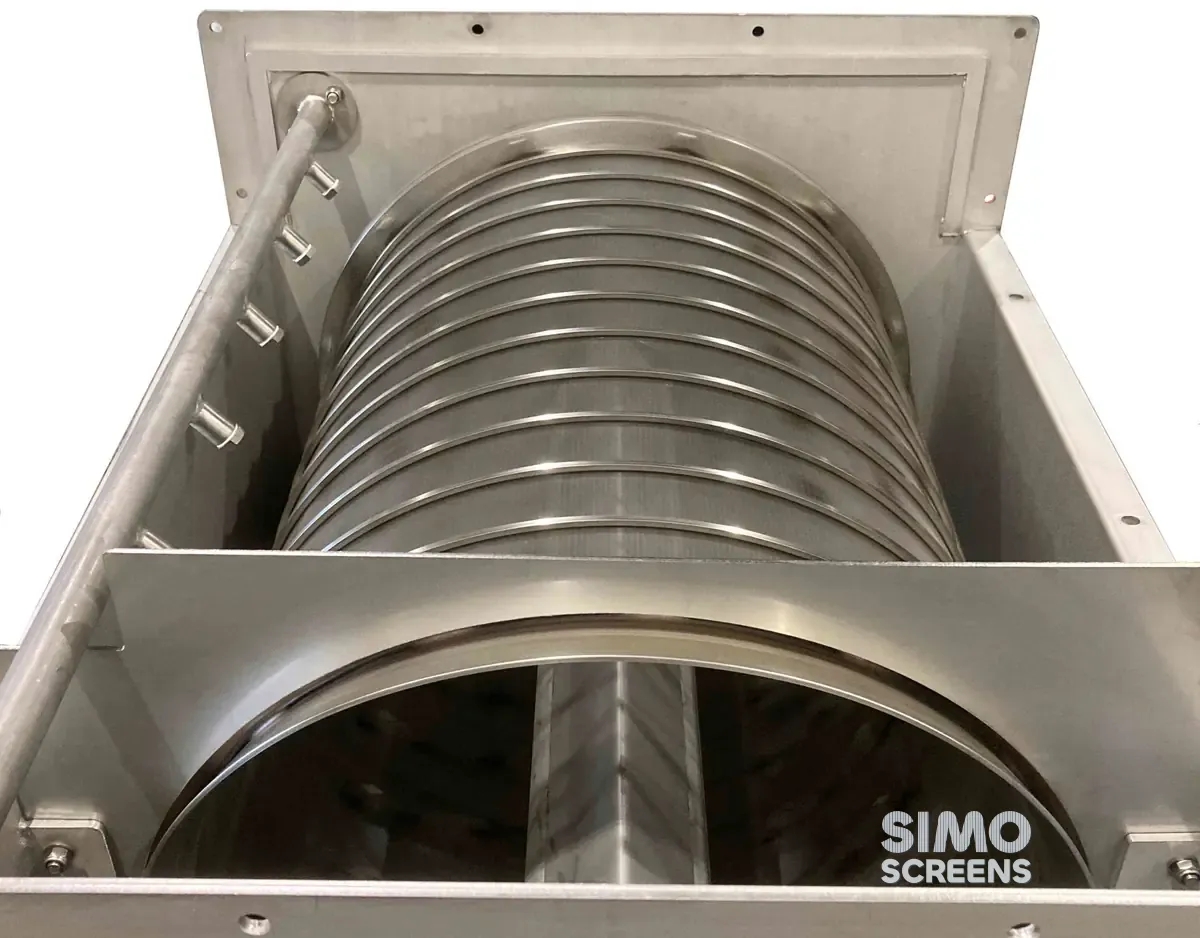
| Mill house juice screens | Separates bagacillo, sand and fibre from raw juice ahead of clarification | Sieve bend screens, rotary drum screens |
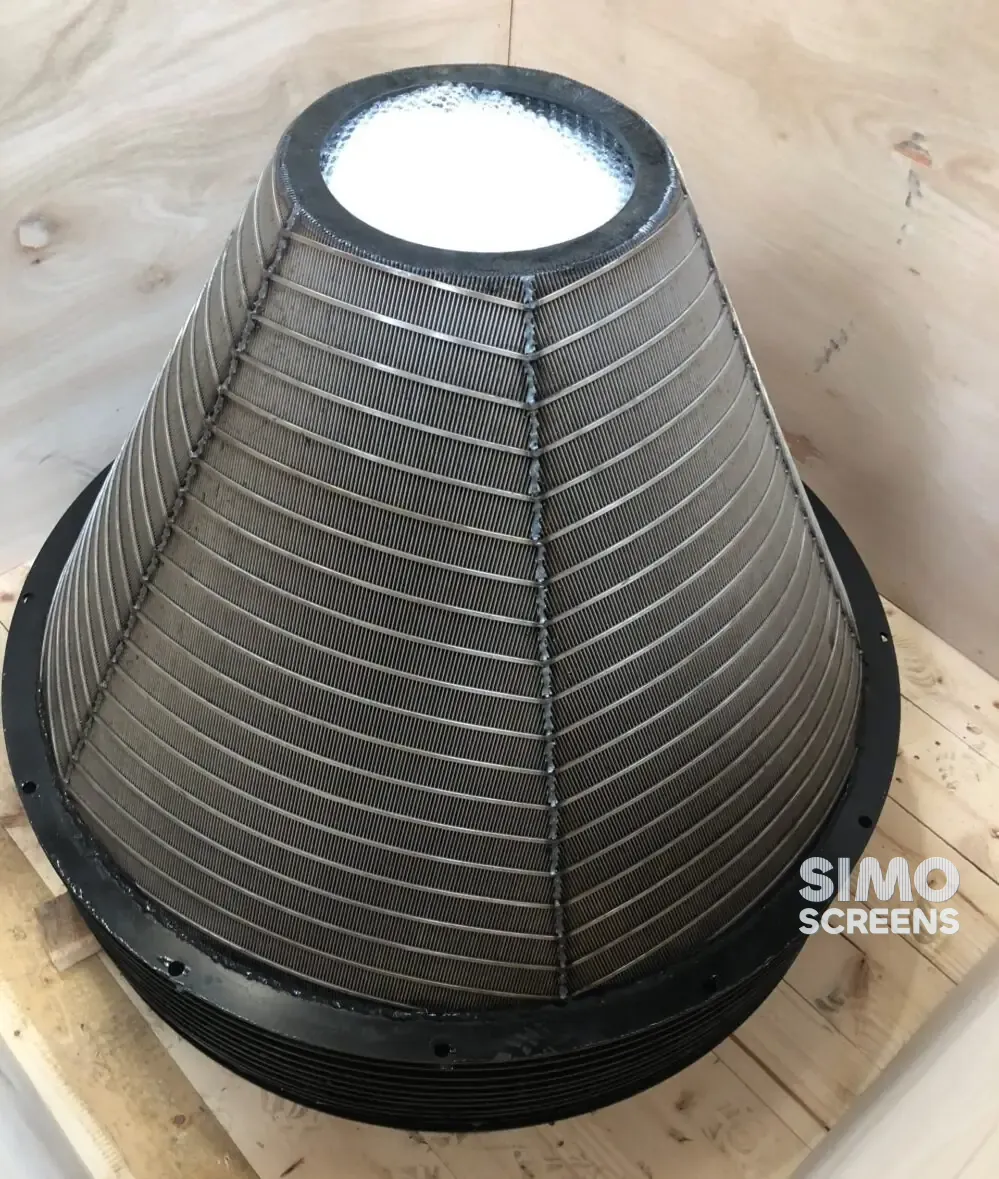
| Continuous centrifugals | Retains sugar crystals on a conical screen while molasses drains through | Centrifuge baskets and screens |
| Batch centrifugals | Holds the crystal bed in the basket during spinning and drains molasses | Centrifuge baskets and screens |
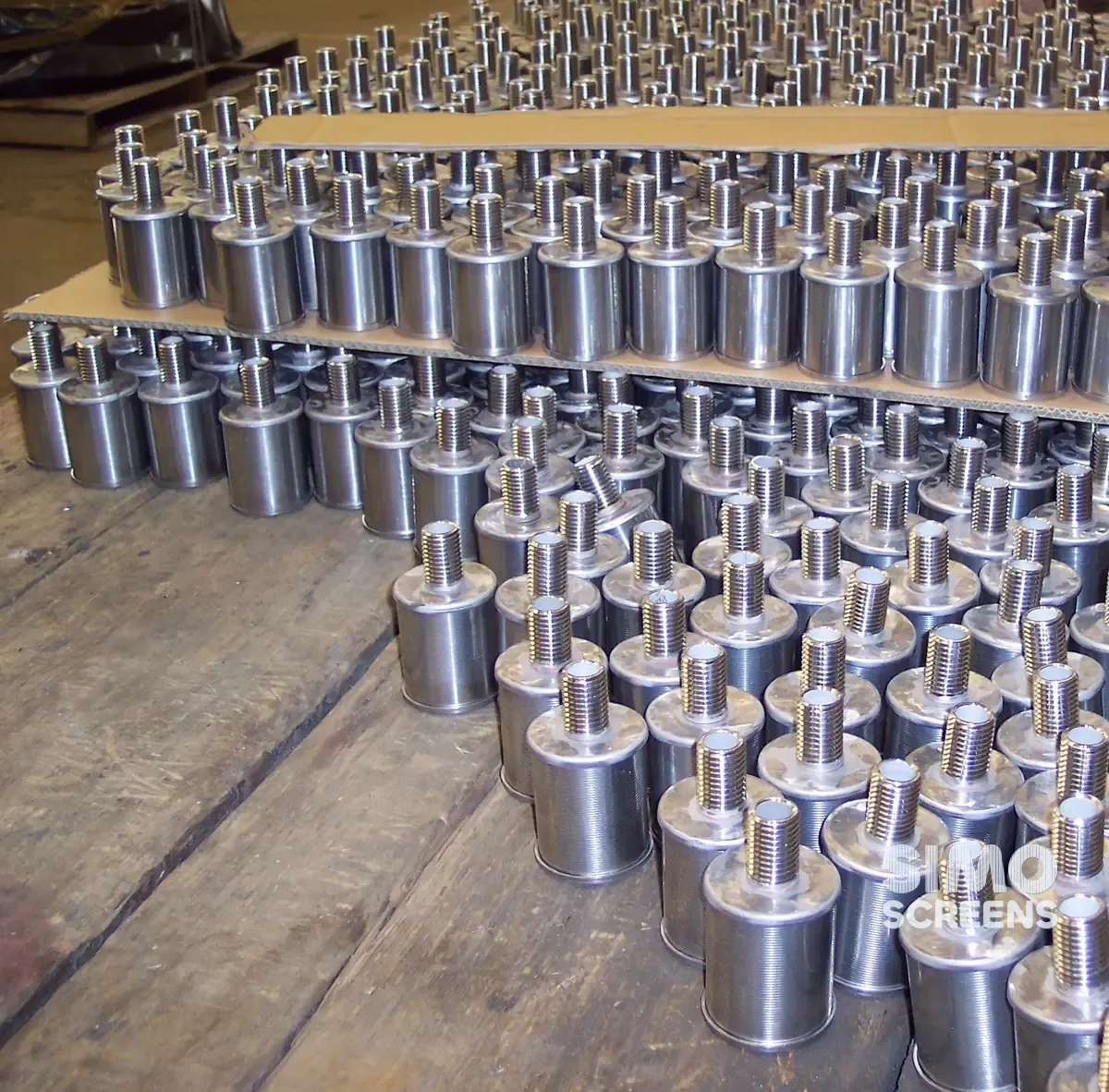
| Boiler feed water DM plant | Collects treated water, distributes regenerant and retains resin | Header and hub lateral assemblies, filter nozzles |
| DM plant outlet lines | Captures escaped resin before it reaches pumps and the boiler | Resin traps |
| Distillery spent wash screening | Removes suspended solids from spent wash ahead of treatment | Sieve bend screens |
Swipe sideways to see the whole table.
Materials and design considerations
The points below reflect general engineering practice. The selection for each plant is confirmed during engineering review.
Juice screens
Juice screens typically use slots of 0.45 to 0.8 mm on 15SB or 18SB profile wire, with 28SB used on heavier designs. Raw juice is abrasive because of the sand that arrives with the cane, so heavier profile wire gives longer wear life. A sieve bend separates at a size smaller than its slot width, and it can often be reversed to bring fresh wire edges into the flow as the upstream edges wear. SS 304 suits most juice screening, while lime, sulphitation and cleaning chemicals may call for SS 316L.
Centrifugal screens
Slot accuracy matters more in the centrifugals than anywhere else in the mill. A slot that is too wide loses sugar to molasses, and one that is too narrow slows purging and reduces output, so the slot is set by the crystal size and massecuite grade and held to a standard tolerance of plus or minus 5 percent of nominal.
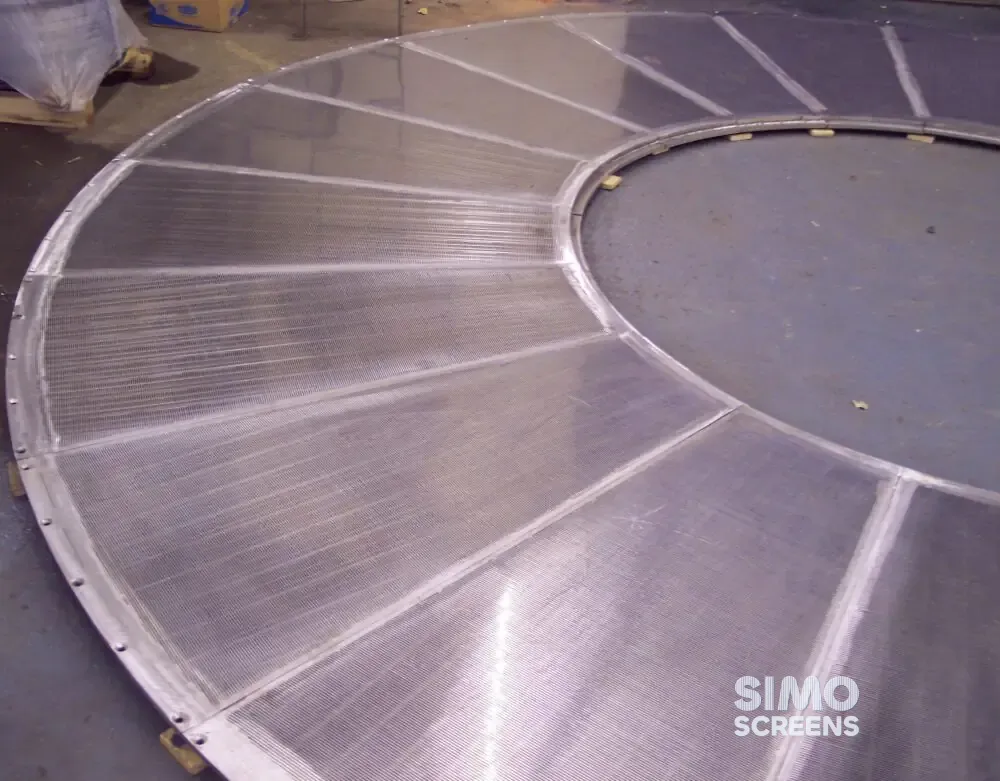
The basket must stay round at full speed. Profile wire, support rods and end rings are selected together, and FEA is used to check the structure under centrifugal load. Dynamic balancing of centrifuge baskets is arranged through approved agencies on request. The centrifuge basket guide covers basket design in more detail.
Distillery spent wash
Spent wash is hot, acidic and high in dissolved solids, and SS 316L or Duplex 2205 is selected according to the analysis.
SIMO Screens capability for sugar mills
Every basket and screen is engineered to the customer's machine and operating conditions, and replacement centrifugal screens and baskets for imported or OEM machines are made from a sample or drawing. The custom engineering process starts from the drawings, basket dimensions or site measurements and ends with a drawing approved before production.
Profile wire is formed in house to SIMO profile codes, which fix shape, head width and height, and dimensions are checked with calibrated micrometers before welding. Slot width is checked with feeler gauges at set-up, during the run and at the end of each screen, and the final inspection report records the minimum, maximum and mean slot.
Every screen ships with a Mill Test Certificate, and the dimensional inspection report is supplied on request. Production is at the SIMO works in MIDC Butibori, Nagpur, under an ISO 9001:2015 quality system.
What to send for a quotation
- Equipment: juice screen, continuous centrifugal, batch centrifugal, DM plant vessel or spent wash screen.
- For centrifugals: machine make and model, basket drawing or dimensions, and the massecuite grade.
- For juice screens: juice flow, screen width and your current slot or perforation size.
- Any problem you see today: sugar loss, blinding, wear or cracking.
- Material preference, or the juice or spent wash analysis.
- For DM plant internals: vessel drawing, flow and resin grade.
- Quantity, including spares for the season.

 Upload a drawing